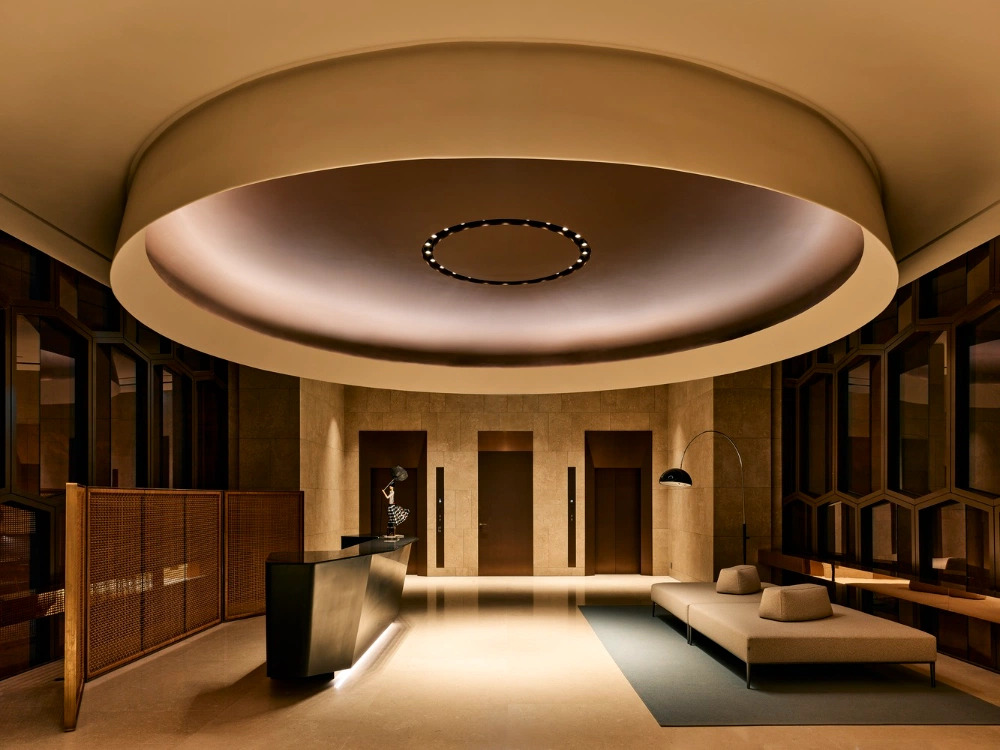
Not long ago, I was approached by a major developer considering the acquisition of a shopping centre in the United States. Like many destinations across the country, it is predominantly accessed by car.
As we began discussing the asset, the conversation naturally moved towards experiential retail, entertainment, and the customer journey. This raised a simple question: if the customer journey matters so much, where does it actually begin?
The answer was the car park.
Car parks are treated as functional spaces. Designed well, they have good lighting, clear navigation, strong graphics and, perhaps, a few considered details.
They work. They are rarely remembered.
A bad one, though, we remember vividly: leaking pipes, dark corners, confusing circulation, damaged ceilings. Bad enough, and it colours our perception of the entire destination before we have set foot inside it.
So we reversed the question. If a bad car park can define the beginning of an experience negatively, why should an extraordinary one not define it positively? If the journey begins there, perhaps the investment in experience should begin there too.
Rather than decorating the car park, we developed a narrative specific to the location, its audience, and the destination we wanted to create. The car park became the first chapter of the story.
This, for me, is where design starts moving beyond the surface.
Decoration can improve a space. Meaning can transform it; meaning creates identity, identity can create an icon, and an icon becomes memorable. Today, memorability also creates another increasingly valuable quality: shareability.
Social media has turned architecture into a form of communication. An experience created for a few thousand physical visitors can reach an audience many times larger. Miami’s Museum Garage is an obvious example. A building type normally designed to disappear became an architectural destination in its own right.
But shareability should be the consequence of memorable design rather than its objective. Designing a feature simply because people might photograph it quickly becomes another form of surface decoration. The strongest spaces are shared because people remember them and want others to experience them.
When design becomes shareable, architecture becomes earned media, and earned media creates distinction, visibility, and, ultimately, commercial value.
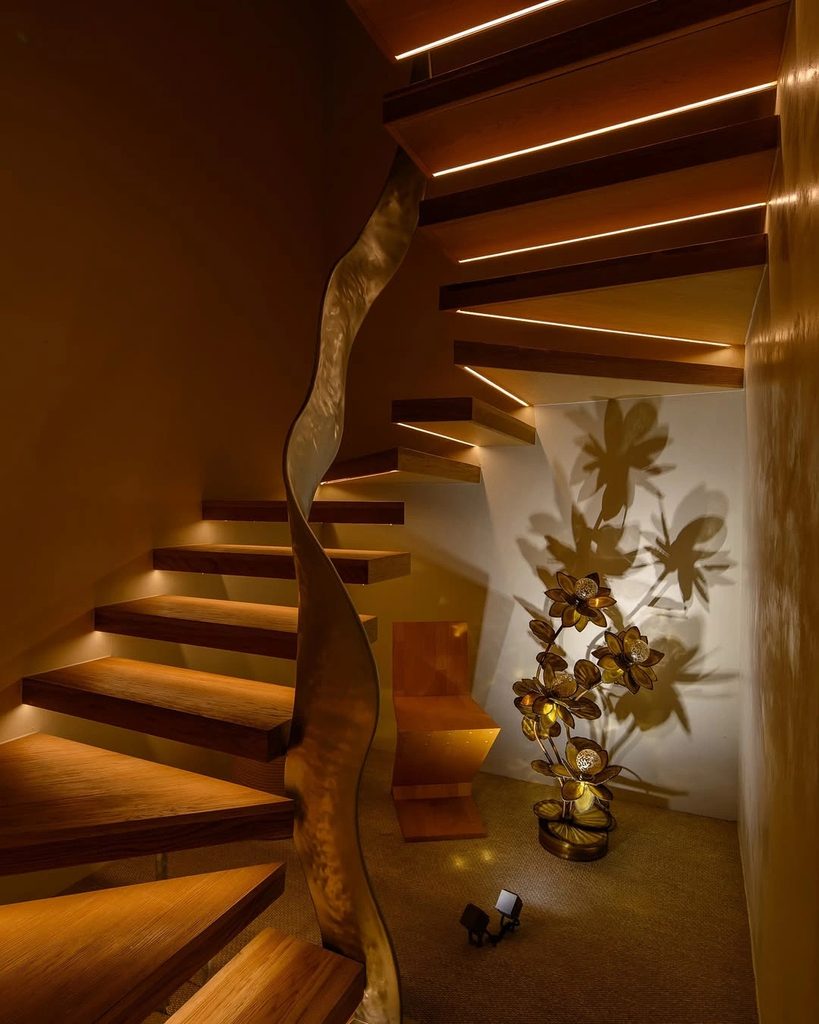
The Sangyuan House in Zhujiajiao, designed by Yvonne Liu with lighting by Frandy Fu. Photo by: Wang Zilu (https://www.cosmos.so/e/361280688)
Going Beyond the Surface
Surface-level design should not be confused with bad design.
A space can be beautiful, expensive, professionally executed and technically excellent while remaining strategically superficial. Exceptional marble, bespoke furniture and sophisticated lighting can create an impressive environment. They cannot, on their own, create meaning.
The next level does not necessarily require a larger budget. It requires another layer of thinking beneath the aesthetics.
Why should this place exist in this particular form? What is the idea behind it? Who is it for? What should the visitors remember after leaving?
Storytelling matters here, but the story has to come before the design. A narrative invented afterwards to justify an aesthetic is simply another layer of decoration. The narrative should generate the design, giving materials, colours, proportions and architectural gestures a common origin.
The customer does not need to know the story in detail. They need to feel that everything belongs to the same world.
Concentrating Impact
I encountered a different challenge while developing a new concept for Black Crows.
The brand was relatively young, but it already had something extremely valuable: a strong identity and an authentic story. We started there, looking at how the brand was born in Chamonix, the passion of the people behind it, the culture surrounding it, and, most importantly, the people who identify with it.
Consumers rarely connect with a brand’s story simply because its history is interesting.
They recognise something in that story that reflects their own identity, or perhaps the identity they aspire to. Choosing a brand becomes a way of associating themselves with its values and its world. The physical environment should reinforce that connection.
Rather than trying to make every square metre compete for attention, we concentrated the design around a strong focal point based on the concept of a nest, supported by an architectural feature that connected the space to the origins of the brand. This created one theatrical moment capable of establishing the character of the entire environment. Everything around it could then become quieter, allowing that focal point to carry greater weight.
Hospitality often works similarly. A powerful arrival, lobby, or public space can establish an expectation that influences how guests perceive everything that follows, even when other areas are intentionally more restrained.
Good design is also about knowing where to concentrate impact. It means understanding where investment can create the greatest perceptual value.
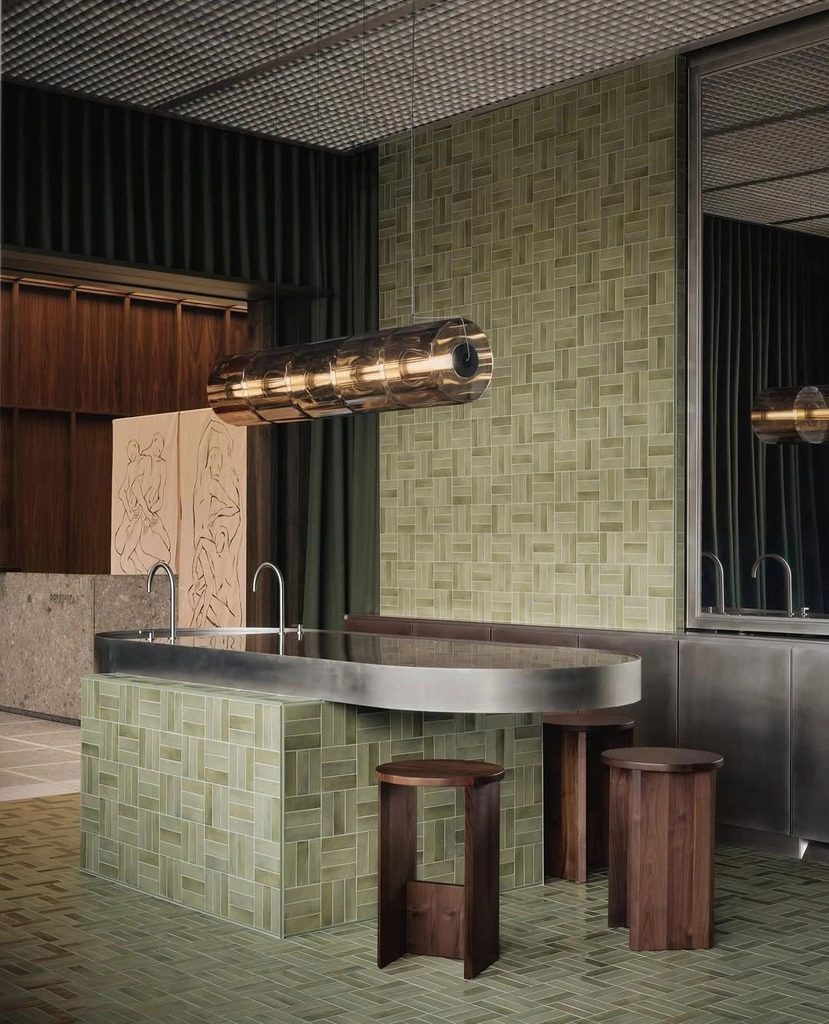
The OAKV Healthcare Space in Oakville, Canada, designed by Atelier Carle. Photo by: Alex Lesage (https://www.cosmos.so/e/1885568273)
When Identity Loses Clarity
The opposite can also happen: significant investment without the same clarity of meaning. Gucci’s New Bond Street flagship, in my opinion, provides a curious example.
The store opened in 2023 during a period of profound transition for the House, following Alessandro Michele’s departure and before a new creative direction had fully established itself. The project itself had already been in development for around two years, so its creation inevitably crossed various moments in Gucci’s recent history.
The result contains beautiful individual elements: an extraordinary historic building, significant artworks, restored architectural features and references to the Gucci archive. Yet I struggle to find a clear brand identity or a strong concept capable of holding those elements together. Traces of different periods coexist within a more generic luxury language, but the narrative that makes the environment unmistakably Gucci feels absent.
Interestingly, this search for clarity is now reflected in Kering’s own strategy for Gucci, which speaks of refocusing the brand around what makes it “unmistakably Gucci”, through clear creative direction, disciplined codes and a revitalized heritage.
In that sense, the New Bond Street store can perhaps be read as a physical expression of a particular moment of transition rather than simply as a design problem.
This is where surface-level design becomes visible. Art, craftsmanship and expensive materials can create aesthetic quality, but meaning comes from the relationship between them: from understanding what the brand represents, where it comes from and where it wants to go.
Gucci possesses extraordinary heritage and enormous resources. Yet neither can replace a clear idea and narrative.
The Whole
The importance of coherence is hardly a contemporary discovery.
At the beginning of the twentieth century, Josef Hoffmann and Koloman Moser, leading figures of the Wiener Werkstätte, developed their work around the principle of the Gesamtkunstwerk, literally the “total work of art”. Architecture, furniture, lighting, graphics, objects and craftsmanship were conceived as parts of a single vision, each reinforcing the meaning of the whole.
The aesthetic language of the Wiener Werkstätte can arguably be seen as belonging to its time. The principle does not. In fact, it could hardly be more relevant today.
We are entering an era in which experiential retail and hospitality increasingly overlap. Retail borrows from hospitality to create richer and more emotional customer journeys, while hospitality increasingly incorporates retail, branding, culture and curated experiences into its identity.
Architecture, furniture, product, service, art, digital communication and storytelling may all be developed as separate disciplines.
The Customer Experiences the Whole
The greater the number of touchpoints, the greater the need for a clear idea connecting them.
While Hoffmann and Moser’s style arguably belongs to design history, their pursuit of a total, coherent experience was ahead of its time and feels increasingly relevant today.
Finding the Harbour
Ultimately, meaningful design does not necessarily depend on budget, nor does it require centuries of heritage. It requires clarity, consistency and, above all, meaning.
Nearly two thousand years ago, in his letters to Lucilius, Seneca wrote: “When a man does not know what harbour he is making for, no wind is the right wind.”
The same principle applies to design. Before deciding how a brand should look, we need to understand where it is going, what it stands for and, crucially, who it is for. Without that clarity, the finest materials, the largest budgets and the most talented designers can still produce something beautiful but directionless.
Taking design beyond the surface, therefore, begins long before the first material is selected or the first line is drawn.
It begins by defining the harbour.
Once you know where you are going, design can take you there.
Leave a Reply