Category: Business of building brands

  • The Leather Never Declined

    The Leather Never Declined

    A hundred and seventy-five years of Swiss shoemaking is currently before a judge in a Lugano courtroom. Not because anyone forgot how to craft a quality shoe.

    I have always been fascinated by how luxury brands decline. Not from bad products. From bad leadership.

    Bally comes to mind, and this autumn it comes to mind even more, as the court is now determining the future of the company, and whether it gets to live on at all.

    Founded in 1851 by Carl Franz Bally, for over a century Bally dressed the likes of royalty, celebrities, and customers who recognised quality when they saw it. The craftsmanship was impeccable. The heritage was undeniable.

    Then the leadership rollercoaster began.

    The family lost control of the company in 1977, when a Swiss financier bought a majority stake and sold it nine months later to an armaments manufacturer. In 2008, the house passed to the Reimann family’s investment vehicle, and in August 2024, to a Beverly Hills investment firm. The creative direction went in 2022 to the founder of a Los Angeles streetwear label, who left after two seasons, then to a Gucci veteran who left for Jil Sander in 2025. The chief executive changed again in February 2026. Each arrival brought a repositioning. One wanted to go mass market. Another chased streetwear. Then back to heritage. Then contemporary. Then accessible luxury, which is the polite way of saying that no decision was taken at all.

    The artisans in the workshops kept making beautiful shoes. But nobody at the top could decide what Bally was supposed to represent anymore, and when vision changes every eighteen months, even the finest craftsmanship becomes irrelevant.
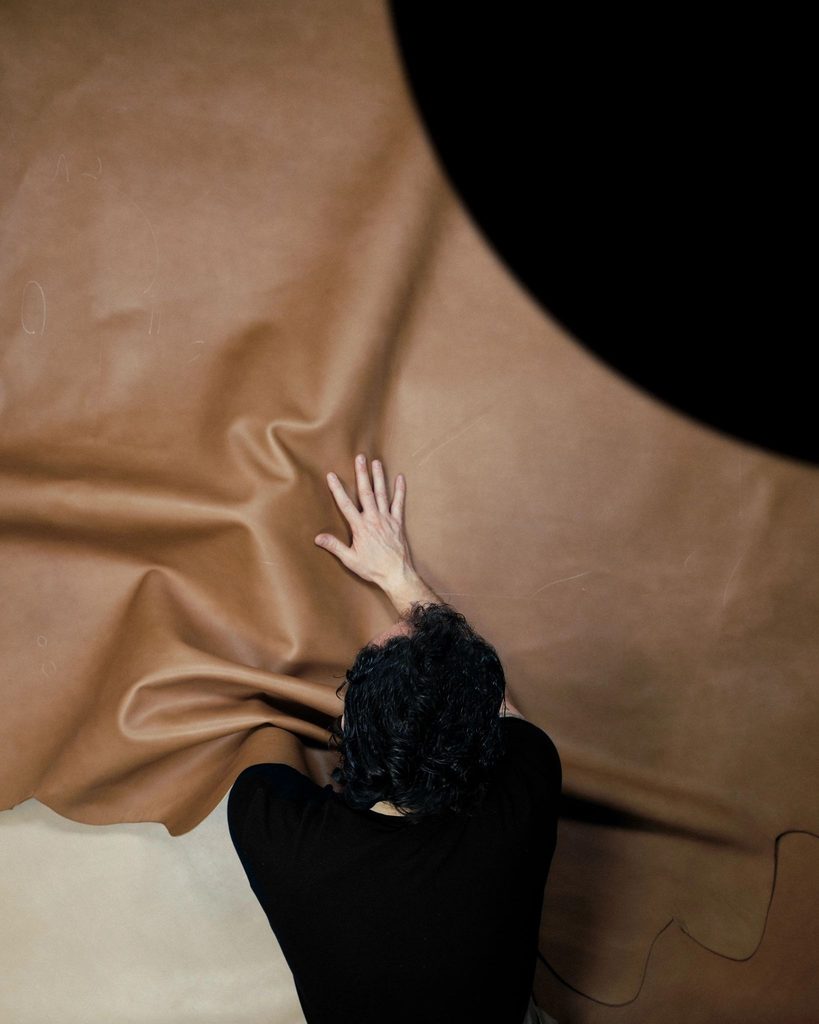
    An artisan inspects leather, a process highlighted by brands Tod’s and Berluti (https://www.cosmos.so/e/1881407287)

    I remember walking past a Bally store in Milan a few years ago. The windows looked confused. The messaging felt uncertain. You could sense the internal chaos from the street. A window is the last link in a chain that starts much further up. I would not have been able to tell you in that moment how this story would end. What I could tell was that nobody upstairs knew what the point of the shop was.

    This is where we find ourselves now: in June, the Lugano court placed Bally Schuhfabriken under a supervised debt moratorium and appointed an external administrator. Since then, the company has faced more layoffs and factory closures, the rescue bid has been turned down by the owner, and a further round of redundancies follows in September. The protection period finishes in mid-October, when the administrator must announce whether the company can be restructured or close down. A court has already blocked an attempt to move the Bally trademark to an American entity registered weeks earlier, over concerns the house’s most valuable asset might end up beyond its creditors.

    Bally’s leather quality never declined: what kept changing was the answer to what the house was for, and Lugano is now counting the cost.

    Nobody wrecked anything. Every team acted reasonably on the information it had and the time it was given. From inside, none of it looked like failure. But a team can only execute brilliantly when it understands what it is executing towards, and for twenty years nobody could say with certainty that they did. Product excellence cannot survive leadership instability. The lesson is not subtle: leadership outlasts product, always.

    It is tempting to describe this as chief executives parachuted in from industries with nothing to do with luxury, and I have described it that way myself. Having looked at the record properly, I would put it differently. The people brought in to run and design the house were mostly luxury professionals with real records. The discontinuity came from above them, from owners for whom a shoemaker was one asset among many: an armaments group in the 1970s, a consumer goods fortune later, a turnaround fund now. I have argued before that luxury speaks a specific language, and appeals to a part of the brain the mass market never reaches. An owner who has never worked with that language analyses a house the way you analyse a balance sheet, and from there everything goes consistently wrong.

    Now the part that stops this being a story about one unlucky house.

    Bottega Veneta had the same disease and survived it. Founded in Vicenza in 1966, its whole idea was announced in a 1978 advertisement Andy Warhol made for Interview magazine, under a line that has outlived everyone involved: when your own initials are enough. Then, through the loudest logo decade the industry has ever had, it went chasing trends that had nothing to do with the brand. By 2001, it was close to bankruptcy, and Gucci Group bought it for around a hundred and fifty-six million dollars.

    Tomas Maier arrived with two rules: no logos and no compromises; put the money back into the Vicenza workshops and the intrecciato artisans, and rebuild the house around a single idea rather than a season. Revenue skyrocketed from well under a hundred million dollars to more than 1.2 billion by 2016. The creative direction has changed hands several times since, to designers with very different sensibilities, and not one of them has reopened the founding question. The signal stayed the same.
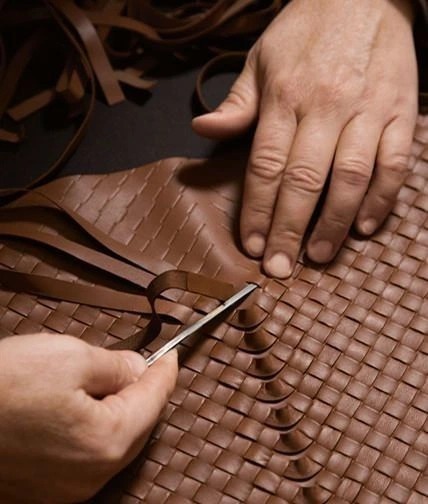
    An artisan crafts the signature Bottega Veneta Intrecciato weave. Photo by: Bottega Veneta(https://www.cosmos.so/e/2045642051)

    The difference is not luck, and not the calibre of the designers, since Bally hired amazing designers too. At Bottega Veneta, someone at the top decided what the house was, and everyone who came afterwards inherited that decision instead of relitigating it. That is the true meaning of succession. The other case is a rollercoaster.

    I am simplifying, and I know it. There are market cycles, and owners who buy in order to sell. But after seeing enough companies up close, I have stopped treating context as a sufficient explanation. Context is the same for everybody. The response to it is not.

    If you are a founder, you are almost certainly not running a house that is a hundred and seventy-five years old. The smaller scale of this problem can be even more dangerous: in a company of three people, the whole leadership structure might consist of the founder alone, and there is no framework to absorb the shifts. Change your mind about the brand direction every six months, and nobody will notice for a while. If your standard lives only in your hands and not in the company decision-making process, it will weigh you down forever. Make a move to mirror a competitor, and you are answering their strategy instead of building your own.

    I did not set out with a theory of this. Working with the people who run these houses, and watching the ones that fall apart, I kept encountering the same quiet concept. The houses that held together were led by people who knew who they were, and remained true to themselves while everything around them shifted. Where that comes from, and how a leader builds that powerful brand core, is what we will explore next.

    Because in the end, luxury is not just about the product. It is about the clarity and conviction behind why you make it. You can recover from a bad collection. You cannot recover from leaders who do not know what the brand stands for.

    Bottega Veneta proves the damage is reversible. It does not prove it is cheap.
  • Why Most Luxury Design Is Still Surface Level and How To Take It To The Next Level

    Why Most Luxury Design Is Still Surface Level and How To Take It To The Next Level

    Not long ago, I was approached by a major developer considering the acquisition of a shopping centre in the United States. Like many destinations across the country, it is predominantly accessed by car.

    As we began discussing the asset, the conversation naturally moved towards experiential retail, entertainment, and the customer journey. This raised a simple question: if the customer journey matters so much, where does it actually begin?

    The answer was the car park.

    Car parks are treated as functional spaces. Designed well, they have good lighting, clear navigation, strong graphics and, perhaps, a few considered details. 

    They work. They are rarely remembered.

    A bad one, though, we remember vividly: leaking pipes, dark corners, confusing circulation, damaged ceilings. Bad enough, and it colours our perception of the entire destination before we have set foot inside it.

    So we reversed the question. If a bad car park can define the beginning of an experience negatively, why should an extraordinary one not define it positively? If the journey begins there, perhaps the investment in experience should begin there too.

    Rather than decorating the car park, we developed a narrative specific to the location, its audience, and the destination we wanted to create. The car park became the first chapter of the story.

    This, for me, is where design starts moving beyond the surface.

    Decoration can improve a space. Meaning can transform it; meaning creates identity, identity can create an icon, and an icon becomes memorable. Today, memorability also creates another increasingly valuable quality: shareability.

    Social media has turned architecture into a form of communication. An experience created for a few thousand physical visitors can reach an audience many times larger. Miami’s Museum Garage is an obvious example. A building type normally designed to disappear became an architectural destination in its own right.

    But shareability should be the consequence of memorable design rather than its objective. Designing a feature simply because people might photograph it quickly becomes another form of surface decoration. The strongest spaces are shared because people remember them and want others to experience them.

    When design becomes shareable, architecture becomes earned media, and earned media creates distinction, visibility, and, ultimately, commercial value.

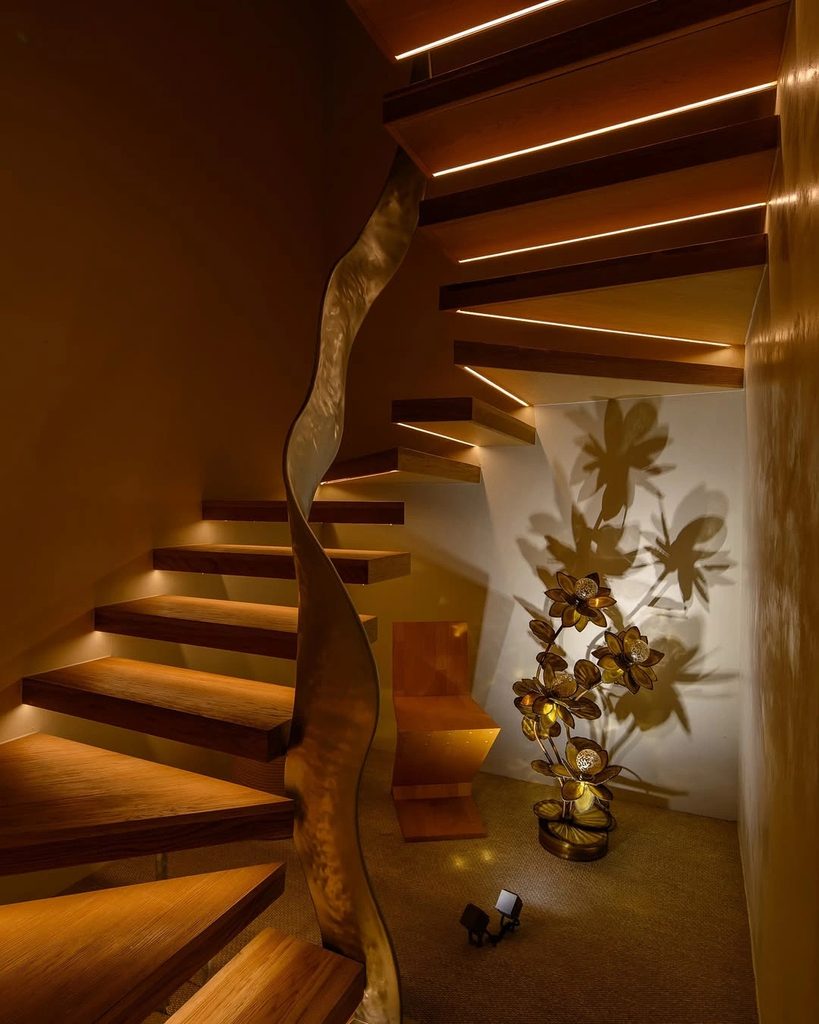
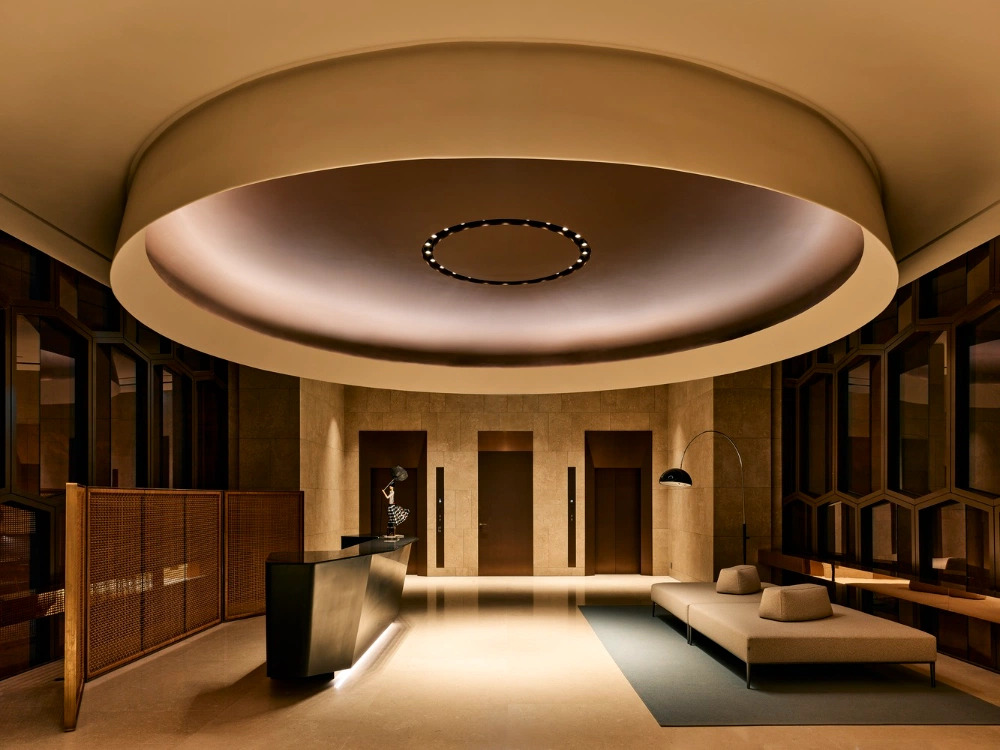
    The Sangyuan House in Zhujiajiao, designed by Yvonne Liu with lighting by Frandy Fu. Photo by: Wang Zilu (https://www.cosmos.so/e/361280688) 

    Going Beyond the Surface

    Surface-level design should not be confused with bad design.

    A space can be beautiful, expensive, professionally executed and technically excellent while remaining strategically superficial. Exceptional marble, bespoke furniture and sophisticated lighting can create an impressive environment. They cannot, on their own, create meaning.

    The next level does not necessarily require a larger budget. It requires another layer of thinking beneath the aesthetics.

    Why should this place exist in this particular form? What is the idea behind it? Who is it for? What should the visitors remember after leaving?

    Storytelling matters here, but the story has to come before the design. A narrative invented afterwards to justify an aesthetic is simply another layer of decoration. The narrative should generate the design, giving materials, colours, proportions and architectural gestures a common origin.

    The customer does not need to know the story in detail. They need to feel that everything belongs to the same world.

    Concentrating Impact

    I encountered a different challenge while developing a new concept for Black Crows.

    The brand was relatively young, but it already had something extremely valuable: a strong identity and an authentic story. We started there, looking at how the brand was born in Chamonix, the passion of the people behind it, the culture surrounding it, and, most importantly, the people who identify with it.

    Consumers rarely connect with a brand’s story simply because its history is interesting. 

    They recognise something in that story that reflects their own identity, or perhaps the identity they aspire to. Choosing a brand becomes a way of associating themselves with its values and its world. The physical environment should reinforce that connection.

    Rather than trying to make every square metre compete for attention, we concentrated the design around a strong focal point based on the concept of a nest, supported by an architectural feature that connected the space to the origins of the brand. This created one theatrical moment capable of establishing the character of the entire environment. Everything around it could then become quieter, allowing that focal point to carry greater weight.

    Hospitality often works similarly. A powerful arrival, lobby, or public space can establish an expectation that influences how guests perceive everything that follows, even when other areas are intentionally more restrained.

    Good design is also about knowing where to concentrate impact. It means understanding where investment can create the greatest perceptual value.

    The OAKV Healthcare Space in Oakville, Canada, designed by Atelier Carle. Photo by: Alex Lesage (https://www.cosmos.so/e/1885568273) 

    When Identity Loses Clarity 

    The opposite can also happen: significant investment without the same clarity of meaning. Gucci’s New Bond Street flagship, in my opinion, provides a curious example.

    The store opened in 2023 during a period of profound transition for the House, following Alessandro Michele’s departure and before a new creative direction had fully established itself. The project itself had already been in development for around two years, so its creation inevitably crossed various moments in Gucci’s recent history.

    The result contains beautiful individual elements: an extraordinary historic building, significant artworks, restored architectural features and references to the Gucci archive. Yet I struggle to find a clear brand identity or a strong concept capable of holding those elements together. Traces of different periods coexist within a more generic luxury language, but the narrative that makes the environment unmistakably Gucci feels absent.

    Interestingly, this search for clarity is now reflected in Kering’s own strategy for Gucci, which speaks of refocusing the brand around what makes it “unmistakably Gucci”, through clear creative direction, disciplined codes and a revitalized heritage.

    In that sense, the New Bond Street store can perhaps be read as a physical expression of a particular moment of transition rather than simply as a design problem.

    This is where surface-level design becomes visible. Art, craftsmanship and expensive materials can create aesthetic quality, but meaning comes from the relationship between them: from understanding what the brand represents, where it comes from and where it wants to go.

    Gucci possesses extraordinary heritage and enormous resources. Yet neither can replace a clear idea and narrative.

    The Whole

    The importance of coherence is hardly a contemporary discovery.

    At the beginning of the twentieth century, Josef Hoffmann and Koloman Moser, leading figures of the Wiener Werkstätte, developed their work around the principle of the Gesamtkunstwerk, literally the “total work of art”. Architecture, furniture, lighting, graphics, objects and craftsmanship were conceived as parts of a single vision, each reinforcing the meaning of the whole. 

    The aesthetic language of the Wiener Werkstätte can arguably be seen as belonging to its time. The principle does not. In fact, it could hardly be more relevant today.

    We are entering an era in which experiential retail and hospitality increasingly overlap. Retail borrows from hospitality to create richer and more emotional customer journeys, while hospitality increasingly incorporates retail, branding, culture and curated experiences into its identity.

    Architecture, furniture, product, service, art, digital communication and storytelling may all be developed as separate disciplines.

    The Customer Experiences the Whole

    The greater the number of touchpoints, the greater the need for a clear idea connecting them.

    While Hoffmann and Moser’s style arguably belongs to design history, their pursuit of a total, coherent experience was ahead of its time and feels increasingly relevant today.

    Finding the Harbour

    Ultimately, meaningful design does not necessarily  depend on budget, nor does it require centuries of heritage. It requires clarity, consistency and, above all, meaning.

    Nearly two thousand years ago, in his letters to Lucilius, Seneca wrote: “When a man does not know what harbour he is making for, no wind is the right wind.”

    The same principle applies to design. Before deciding how a brand should look, we need to understand where it is going, what it stands for and, crucially, who it is for. Without that clarity, the finest materials, the largest budgets and the most talented designers can still produce something beautiful but directionless.

    Taking design beyond the surface, therefore, begins long before the first material is selected or the first line is drawn.

    It begins by defining the harbour.

    Once you know where you are going, design can take you there.

  • Design as a Strategic Tool in Building Future Luxury Brands

    Design as a Strategic Tool in Building Future Luxury Brands

    Design is where strategy becomes tangible. It is the point at which every decision made in the boardroom becomes visible to the customer.

    Ask most people what makes a boutique, hotel, or restaurant feel luxurious, and they will point to aesthetics: the marble, the lighting, the way a space simply looks expensive. Ask a founder who has actually built one, and the answer changes. Design was never the finishing touch. It was one of the first strategic decisions they made, and one of the most consequential.

    Within commercial environments, and particularly in luxury, treating design as a matter of taste is a costly misreading of what it actually does.

    Design Is Not the Aesthetic Layer. It Is the Delivery Mechanism for Strategy.

    Behind every architectural decision in a well-run luxury business sits a strategic intention. Materials, proportions, lighting, circulation, and the sequence in which a space unfolds are orchestrated to communicate identity, not decorate it. Long before a product is touched or a conversation begins, a customer has already formed a judgment about the brand. The space has done its introduction.

    This is why design deserves a seat at the table alongside pricing, positioning, and capital allocation, rather than being commissioned after those decisions are made. Months of work on brand strategy, customer research, heritage, and commercial planning eventually have to converge into a physical environment. If design is brought in late, as a cosmetic finish over a polished business plan, that convergence never quite happens. The result is a space that looks luxurious without behaving like luxury.

    For founders, the implication is direct: design briefs should be written by the same people who own positioning and brand strategy, not handed off to an architect or interior designer as a separate, later workstream. If the person designing the space doesn’t understand what the brand is trying to say, the environment will inevitably communicate something else.

    Design is where strategy becomes tangible. It is the point at which every decision made in the boardroom becomes visible to the customer.

    Luxury, Aesthetics, and Design Are Not the Same Thing: Confusing Them Is Where Founders Go Wrong

    It’s worth being precise about three terms that get used interchangeably.

    Luxury defines the values and aspirations a brand wants to embody. Aesthetics is the visual and emotional vocabulary through which those values become perceptible. Design is the discipline that turns that vocabulary into physical reality: the layout, the material choices, the lighting plan, the choreography of movement through a room.

    The distinction matters because it’s possible to get the aesthetics right and the design wrong. A space can look expensive (the right materials, the right palette) and still fail to function as a luxury experience, because design isn’t concerned with how a place looks: it determines how customers interpret it, navigate it, and ultimately remember it. Aesthetics are surface-level. Design is the system. Founders who conflate the two tend to over-invest in finishes and under-invest in the underlying logic of the space, and it shows.

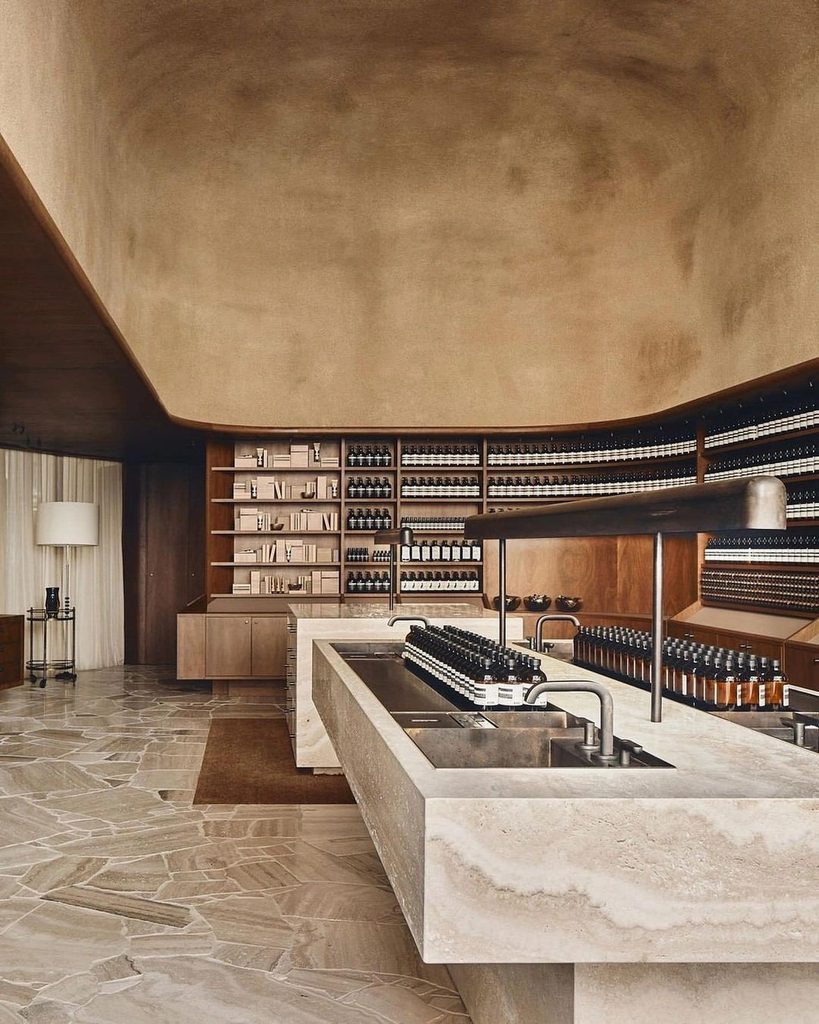
    Aesop’s second Collins Street store, designed by Clare Cousins, 2023. Photo by Peter B. Bennetts (https://www.cosmos.so/e/1137370889)

    Heritage Is a Brand’s Most Valuable Asset. Design Is How You Make It Legible.

    Unlike a product or a collection, heritage cannot be manufactured on a timeline. It is accumulated over years, sometimes generations, and it is precisely what separates a brand with genuine equity from one that is simply well-marketed. Design is the mechanism that gives that heritage physical form, so customers recognise it instantly, without being told.

    Louis Vuitton’s recurring use of the hot-air balloon is a useful case study. On the surface, it’s a decorative motif tied loosely to travel. Its actual function is more deliberate. In the nineteenth century, the hot-air balloon represented a genuine technological frontier: exploration, optimism, the belief that new inventions could change how people experienced the world. By threading that symbol through its visual language, Louis Vuitton isn’t just referencing its origins as a trunk-maker. It’s reconnecting its heritage to the pioneering spirit of early modern travel. The heritage isn’t presented as nostalgia. It’s presented as innovation, remembered, which is a far more useful story for a brand to tell about itself.

    The takeaway for founders building something new: heritage doesn’t have to mean history you don’t yet have. It can mean the founding idea, the original obsession, the reason the brand exists: encoded into a symbol, a material, a spatial gesture that gets repeated until it becomes recognisable. The mistake is waiting decades to start doing this deliberately. The brands that do it well start on day one.

    Design Also Engineers Behaviour, Not Just Meaning

    The decompression zone is the clearest example of this. It’s the transitional space just inside the entrance of a retail environment: the area that, to an untrained eye, looks like wasted square footage that could otherwise hold product.

    In practice, it’s doing real commercial work. Customers arriving from the street need a moment to disconnect: their eyes adjust to new lighting, they filter out the street noise, and they orient themselves in an unfamiliar setting. The decompression zone manages that transition while simultaneously setting the brand’s first impression. From there, attention moves naturally from the whole of the space to specific focal points, a wide shot narrowing to a close-up, and only then does the customer start engaging with individual products.

    For a founder deciding how to allocate a limited retail capacity, this matters directly. The instinct to fill every square foot with product is usually the wrong one. What appears to be empty space is, in reality, one of the most commercially productive areas of the entire store, not because it sells products directly, but because it prepares customers to perceive everything that follows. This is the kind of decision that looks like it belongs to an architect but is really a commercial call, and it should be made with the same rigour as a pricing decision.

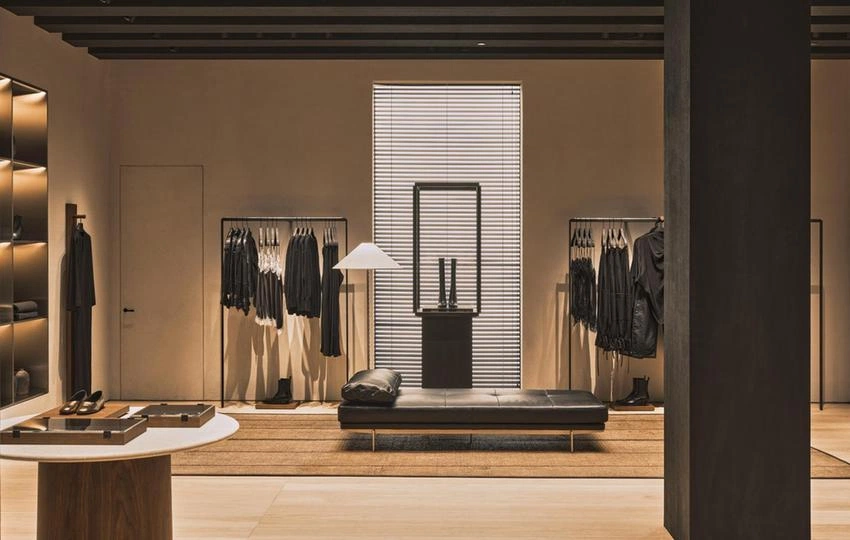
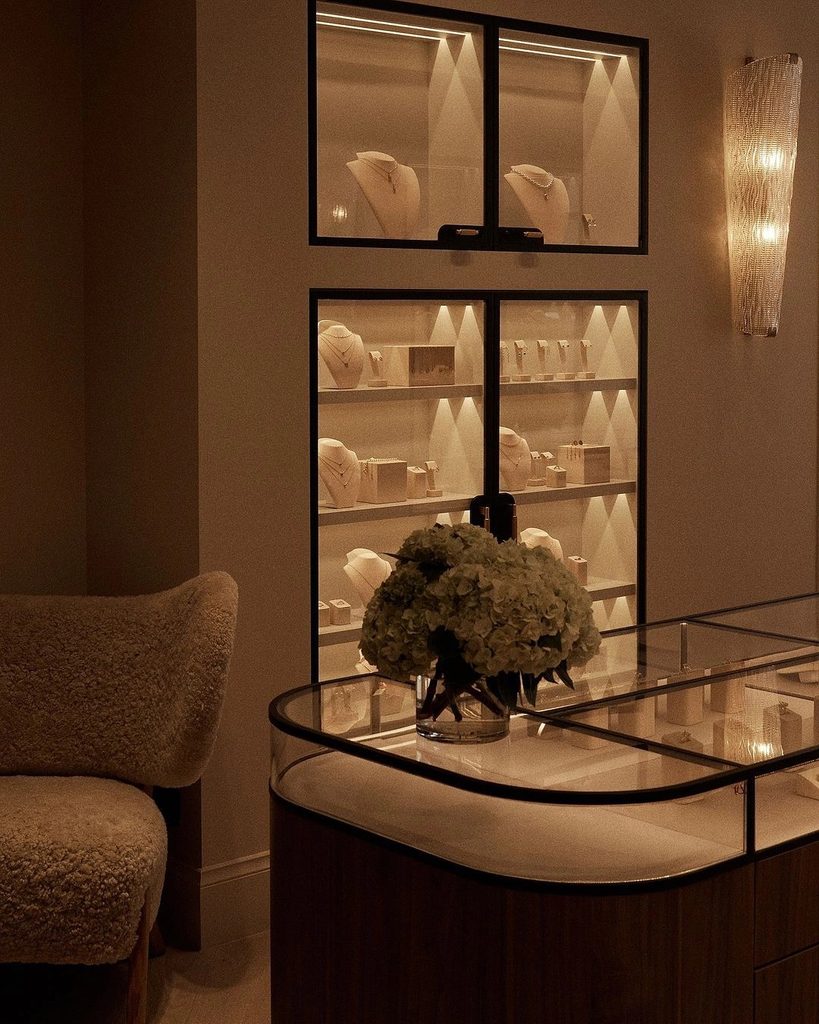
    The interior of a Natasha Schweitzer boutique. Photo by Natasha Schweitzer (https://www.cosmos.so/e/679729374)

    What This Means in Practice

    Three things follow from treating design as strategy rather than decoration:

    First, design should enter the conversation at the same stage as brand positioning, not after it. If a founder can’t yet articulate what the brand stands for, no designer can encode it into a space.

    Second, every material, symbol, and spatial decision should be traceable back to a reason. If a founder can’t explain why a finish, a motif, or a layout choice is there, it’s aesthetics without design, and customers tend to sense the difference, even if they can’t name it.

    Third, resist judging a space only by how much of it is commercial. In luxury retail, some of the most commercially effective spaces are those that do not sell anything directly; they make everything else feel more credible.

    The Real Cost of Getting This Wrong

    Brands that treat design as an afterthought don’t usually fail immediately. They open, they get attention, and the photography looks good. What they don’t understand is the true purpose of design: a space that customers read correctly, without needing it explained. That gap, between looking luxurious and functioning as luxury, is where a great deal of promising brands quietly plateau.

    The founders who understand this aren’t simply building stores, hotels, or restaurants. They’re designing meaning, on purpose, from the first decision onward. Everyone else is just decorating a strategy they never finished writing.

  • Why So Many Luxury Start-Ups Fail

    Why So Many Luxury Start-Ups Fail

    The business that looks like easy money is one of the hardest there is. What the founders who fail tend to miss.

    PERSPECTIVE VII

    Most new businesses do not survive.

    That is the plain starting point, and it is worth saying before anything about luxury, as the people who launch luxury brands are usually the first to forget it. Roughly one in five new businesses in the United States closes within its first year. Around half are gone within five, and close to two-thirds within ten. Among the more ambitious sort, the scalable ventures built to grow fast and pull in investment, the attrition is far steeper still.

    The reasons are not mysterious. When CB Insights read through hundreds of founder post-mortems, the most common cause was not a clever rival or a sudden crash. It was simpler and more uncomfortable. There was no real demand. The company made something that not enough people wanted badly enough to pay for. Running out of cash came next, although that is usually the symptom rather than the disease. Businesses rarely die in a single accident. They starve, slowly, because the venture they built never found enough people who needed it.

    Then put luxury on top of that. The instinct, when people hear you work in luxury, is that the maths must be gentler. Charge more, do less, let the margins look after themselves. It is the wrong instinct. Luxury does not make things easier; it can only add complexity. You take the ordinary obstacles that every start-up faces, and on top of it, you add people who want to operate in the luxury industry, which brings a new level of complexity. So the whole thing becomes a far more daunting quest than it looked.

    There are two things a luxury founder has to hold at the same time, and in my experience, most hold neither. The first is always the same. It is human biology. Luxury speaks a specific language and appeals to a specific part of the brain that the mass market does not. This has always been so, and it always will be, at least until we evolve into something structurally different, which is not a matter of years but of a very long time indeed. Our brains reached their present form essentially a long time ago. The size was already within the modern range around three hundred thousand years ago, and the shape settled into what we carry now, somewhere between a hundred thousand and thirty-five thousand years ago. The mechanism of desire is even older. In the timeline of any market, any brand, any business plan, none of it has changed at all. So the founder has to understand how the brain actually works, first of all. And I do not believe most of them do.

    That equipment has a fascinating feature. As desire rises, judgment falls. The more someone wants a thing, the less coldly they weigh the purchase. This is not a flaw to be corrected – it is the system luxury operates through. The founder who misses it competes on specification and price, which is exactly the ground where desire does not operate.

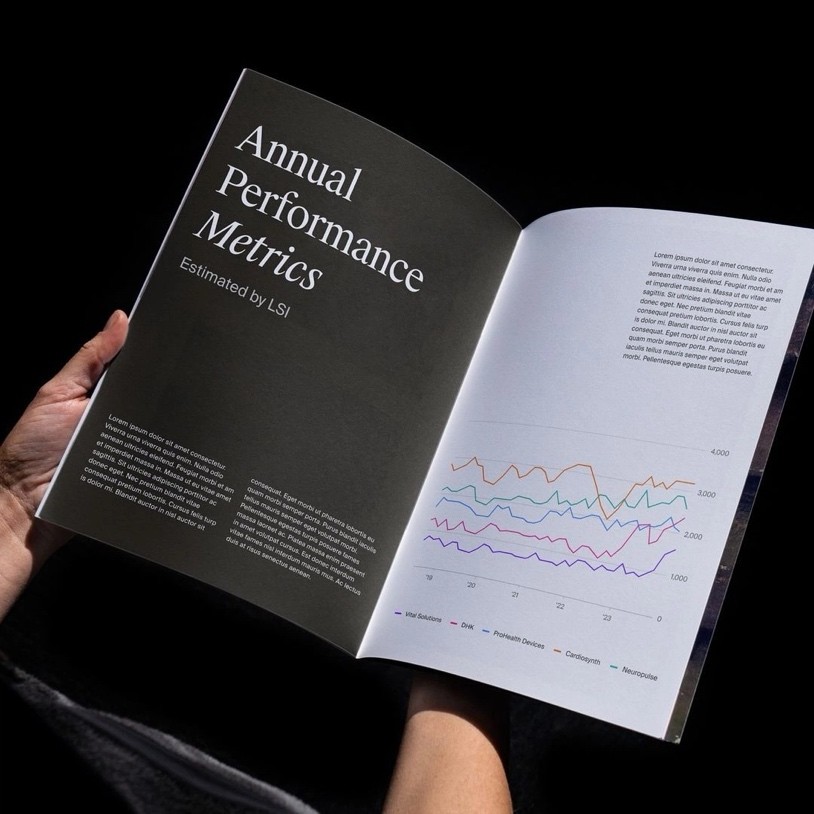
    The Annual Performance Metrics report, commissioned by LSI – Life Science Intelligence™ (https://www.cosmos.so/e/384273127)

    The second force is harder, because it asks the founder to read the world rather than the numbers. Not to follow the trend, because following the trend is the logic of fast fashion, and that logic is not what proper luxury is, or is meant to be. The task is to read the change in society, which is a different and subtler thing. Not what a trend tells us to wear, or to use, or to do today, but the slower movement underneath it: where a society is going, and what it now wants to say about itself. Trends can be followed. Change has to be read early, before it announces itself. You cannot sell a European luxury brand in China the way you could a few years ago. The object is the same. What it means is not.

    Here is the thing that the people handling beautiful brands tend not to grasp. When you handle luxury, you are handling a very precious and very delicate jewel. And you have to be careful. You cannot treat it like the little rubber ring that falls out of a packet of crisps, the kind of toy my son plays with for an afternoon and then forgets. You are dealing with something else. Something delicate. Something precious. Something that asks for a different kind of care in the way you handle it: the design, the marketing, the timing. Yet a remarkable number of brands manage the jewel as though it were the ring. They discount it, they stretch it, they put it everywhere, and then they are surprised when the magic drains out of it.

    Which brings me to positioning, the part founders most want to believe is flexible. It is not. In luxury, the rules of positioning are close to absolute. Positioning is the place a brand holds in the mind of the consumer, and that place is an asset. Move it carelessly, and you do not reposition it. You break it.

    Now look at the very top, where the money is endless, and the mistakes are still being made. In the automotive industry, a luxury legend has begun to explore the fully electric road: Ferrari, with its newest creation, the Ferrari Luce. Have a look at it. And then just look at the thing.

    It is not really just a car. It is a signal sent from above. I am not going to reach for adjectives, because I do not want to put my judgment between you and the object. Look at it and decide for yourself what it tells you about where Ferrari is going, and the risks it is taking by going there. A Ferrari has never really been about the engine (although superb, even mythological), or the figures, or the technology. Those are the explanations people reach for afterwards. The beauty itself is something else, and it has always rested on one quiet, unspoken truth. It is not for everybody. You are not everybody. That is part of what you are buying.

    Everyone is going electric, the argument runs, so Ferrari should too. But Ferrari is not everyone. The strongest brands sometimes do the opposite of what everyone else is doing. Maybe. I say maybe, because the move only works if you are Ferrari. If you are Volkswagen, go ahead, chase the crowd; it is the right thing to do, because Volkswagen is the car of the people, and that is honest work. A Ferrari that behaves like everybody else automatically stops being a Ferrari.

    Here is what surprises me most, as at these levels it ought to be understood, yet it is not. What makes a product or a service truly luxurious is the aura. You stand in front of the masterpiece, and you have to wonder how it was even possible to create it, to invent it, to craft it. I could not do it myself. That is the feeling. It is the pure essence of luxury, and it transcends the technicalities, the features, and the characteristics of the product.

    What is missing in the Ferrari Luce, for me, is exactly that. It is pure magic. A true luxury object keeps the buyer feeling that it is somehow beyond them, that they could not simply make it, or casually own it. The feeling clings even to the toy version, the small model on a shelf with no use at all, yet it is wanted anyway. The moment that feeling goes, the point of luxury goes with it.

    This is close to what Bourdieu called distinction: the object draws a line between those who belong and those who do not. None of it is rational, and that is precisely the point. People buy luxury to feel something strong, and to feel, consciously or not, that whatever they are acquiring is an object of pure desire. It is not something useful. It is a completely different dimension, a completely different paradigm. The moment a brand starts justifying itself on usefulness and value for money, it has already left luxury behind.

    Other houses felt the same pull and answered differently. Lamborghini had the same temptation to do what Ferrari is doing, and cleverly it said no, not yet, this is not us. Because there are positioning rules you have to respect, and they are rules for a reason. They are not optional.

    Then think about Jaguar. Jaguar wanted to recast itself, and you can see in real time the impact of breaking those rules. The lesson is not that electric cars are right or wrong. It is that the rules of positioning do not bend because a technology happens to be trendy at the moment.

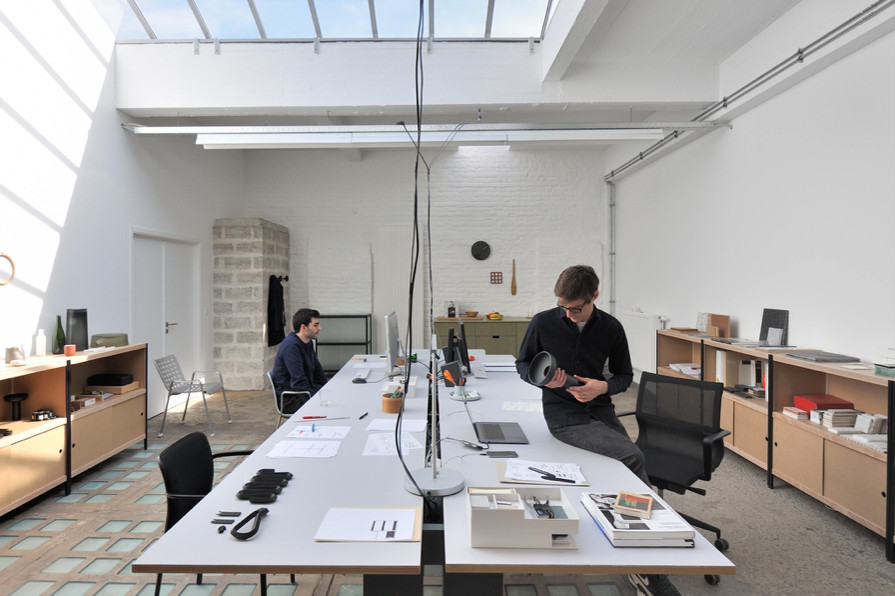
    Desk accessories designed by Parasol for Hem, 2017. Photo by Julien Renault (https://www.cosmos.so/e/296240340)

    There is one more issue, and it sits inside these companies. The large groups are driven by finance, not by creativity or vision. When a business is run by finance, it tends to be profitable in the immediate, which means it quietly loses in the long term. And then comes the hard part. How do you keep a sense of heritage while staying current with technology, AI, and the new virtual channels? How do you honour the older customer whilst simultaneously attracting the deciding factor in the future of luxury – the younger generations? By 2030, most of the spending will come from people who are young today. They have the highest spending power, yet are walking away from luxury, unconvinced by status and exclusivity alone. But what for? What is the goal? What do they actually want to spend the money on? Get that wrong, and no amount of financial discipline will save you.

    So the people handling beautiful, prestigious brands today are handling them like any other brand. But they are not any other brand. If you want the short version of what is missing right now, it is a deep understanding of what luxury actually is.

    So why do so many luxury start-ups fail? Rarely for the reason the founder gives afterwards. They fail because they bring the ordinary energy of a normal business to a game with a second, hidden set of rules, and because somewhere underneath, they believed that luxury would make the sums kinder. It does the opposite. A start-up already has a high chance of failing, and luxury does not make that easier. It makes it harder. The rules can be learned, though. Desire can be understood, society can be read, and the jewel can be handled with the care it asks for. Most of your competitors will never trouble themselves to do any of it. Which is exactly why, if you do, there is still room at the very top for you.