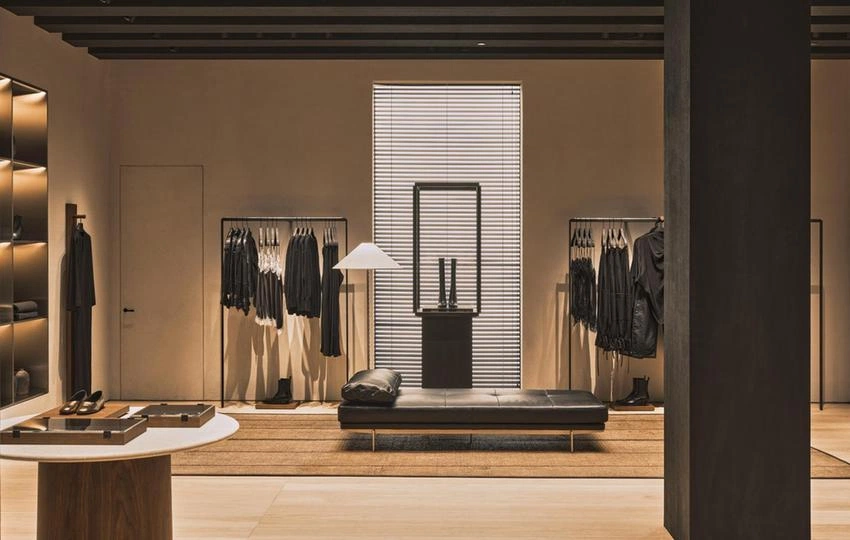
Design is where strategy becomes tangible. It is the point at which every decision made in the boardroom becomes visible to the customer.
Ask most people what makes a boutique, hotel, or restaurant feel luxurious, and they will point to aesthetics: the marble, the lighting, the way a space simply looks expensive. Ask a founder who has actually built one, and the answer changes. Design was never the finishing touch. It was one of the first strategic decisions they made, and one of the most consequential.
Within commercial environments, and particularly in luxury, treating design as a matter of taste is a costly misreading of what it actually does.
Design Is Not the Aesthetic Layer. It Is the Delivery Mechanism for Strategy.
Behind every architectural decision in a well-run luxury business sits a strategic intention. Materials, proportions, lighting, circulation, and the sequence in which a space unfolds are orchestrated to communicate identity, not decorate it. Long before a product is touched or a conversation begins, a customer has already formed a judgment about the brand. The space has done its introduction.
This is why design deserves a seat at the table alongside pricing, positioning, and capital allocation, rather than being commissioned after those decisions are made. Months of work on brand strategy, customer research, heritage, and commercial planning eventually have to converge into a physical environment. If design is brought in late, as a cosmetic finish over a polished business plan, that convergence never quite happens. The result is a space that looks luxurious without behaving like luxury.
For founders, the implication is direct: design briefs should be written by the same people who own positioning and brand strategy, not handed off to an architect or interior designer as a separate, later workstream. If the person designing the space doesn’t understand what the brand is trying to say, the environment will inevitably communicate something else.
Design is where strategy becomes tangible. It is the point at which every decision made in the boardroom becomes visible to the customer.
Luxury, Aesthetics, and Design Are Not the Same Thing: Confusing Them Is Where Founders Go Wrong
It’s worth being precise about three terms that get used interchangeably.
Luxury defines the values and aspirations a brand wants to embody. Aesthetics is the visual and emotional vocabulary through which those values become perceptible. Design is the discipline that turns that vocabulary into physical reality: the layout, the material choices, the lighting plan, the choreography of movement through a room.
The distinction matters because it’s possible to get the aesthetics right and the design wrong. A space can look expensive (the right materials, the right palette) and still fail to function as a luxury experience, because design isn’t concerned with how a place looks: it determines how customers interpret it, navigate it, and ultimately remember it. Aesthetics are surface-level. Design is the system. Founders who conflate the two tend to over-invest in finishes and under-invest in the underlying logic of the space, and it shows.
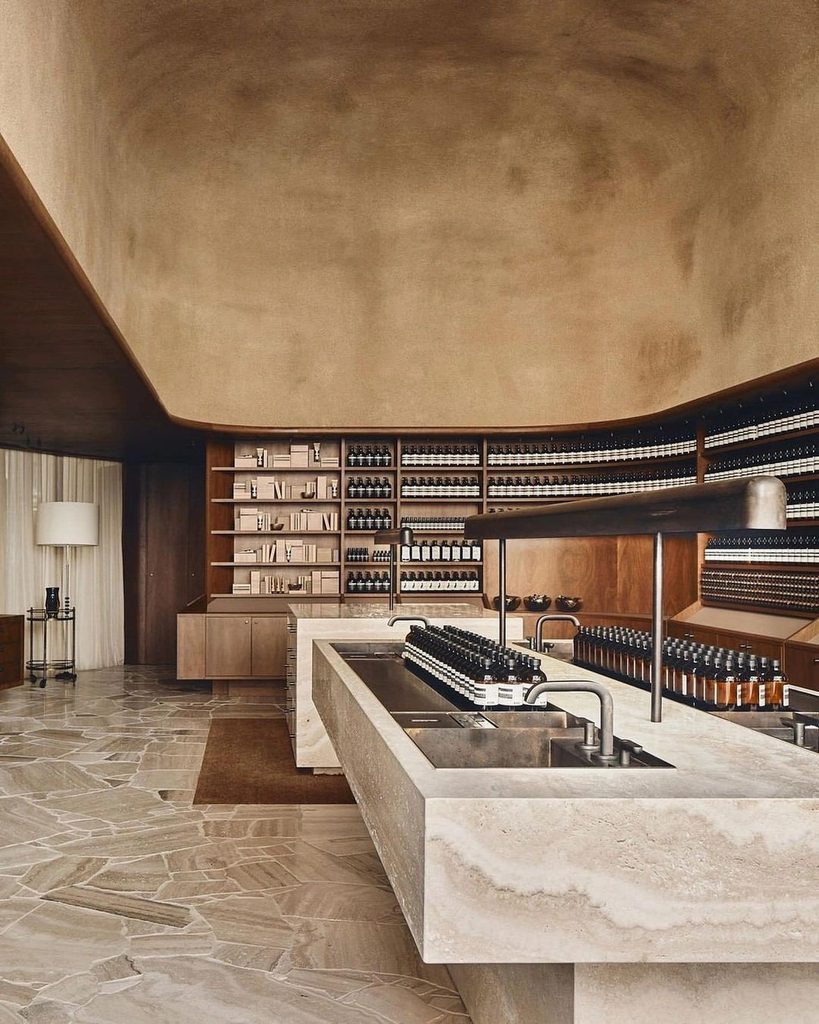
Aesop’s second Collins Street store, designed by Clare Cousins, 2023. Photo by Peter B. Bennetts (https://www.cosmos.so/e/1137370889)
Heritage Is a Brand’s Most Valuable Asset. Design Is How You Make It Legible.
Unlike a product or a collection, heritage cannot be manufactured on a timeline. It is accumulated over years, sometimes generations, and it is precisely what separates a brand with genuine equity from one that is simply well-marketed. Design is the mechanism that gives that heritage physical form, so customers recognise it instantly, without being told.
Louis Vuitton’s recurring use of the hot-air balloon is a useful case study. On the surface, it’s a decorative motif tied loosely to travel. Its actual function is more deliberate. In the nineteenth century, the hot-air balloon represented a genuine technological frontier: exploration, optimism, the belief that new inventions could change how people experienced the world. By threading that symbol through its visual language, Louis Vuitton isn’t just referencing its origins as a trunk-maker. It’s reconnecting its heritage to the pioneering spirit of early modern travel. The heritage isn’t presented as nostalgia. It’s presented as innovation, remembered, which is a far more useful story for a brand to tell about itself.
The takeaway for founders building something new: heritage doesn’t have to mean history you don’t yet have. It can mean the founding idea, the original obsession, the reason the brand exists: encoded into a symbol, a material, a spatial gesture that gets repeated until it becomes recognisable. The mistake is waiting decades to start doing this deliberately. The brands that do it well start on day one.
Design Also Engineers Behaviour, Not Just Meaning
The decompression zone is the clearest example of this. It’s the transitional space just inside the entrance of a retail environment: the area that, to an untrained eye, looks like wasted square footage that could otherwise hold product.
In practice, it’s doing real commercial work. Customers arriving from the street need a moment to disconnect: their eyes adjust to new lighting, they filter out the street noise, and they orient themselves in an unfamiliar setting. The decompression zone manages that transition while simultaneously setting the brand’s first impression. From there, attention moves naturally from the whole of the space to specific focal points, a wide shot narrowing to a close-up, and only then does the customer start engaging with individual products.
For a founder deciding how to allocate a limited retail capacity, this matters directly. The instinct to fill every square foot with product is usually the wrong one. What appears to be empty space is, in reality, one of the most commercially productive areas of the entire store, not because it sells products directly, but because it prepares customers to perceive everything that follows. This is the kind of decision that looks like it belongs to an architect but is really a commercial call, and it should be made with the same rigour as a pricing decision.
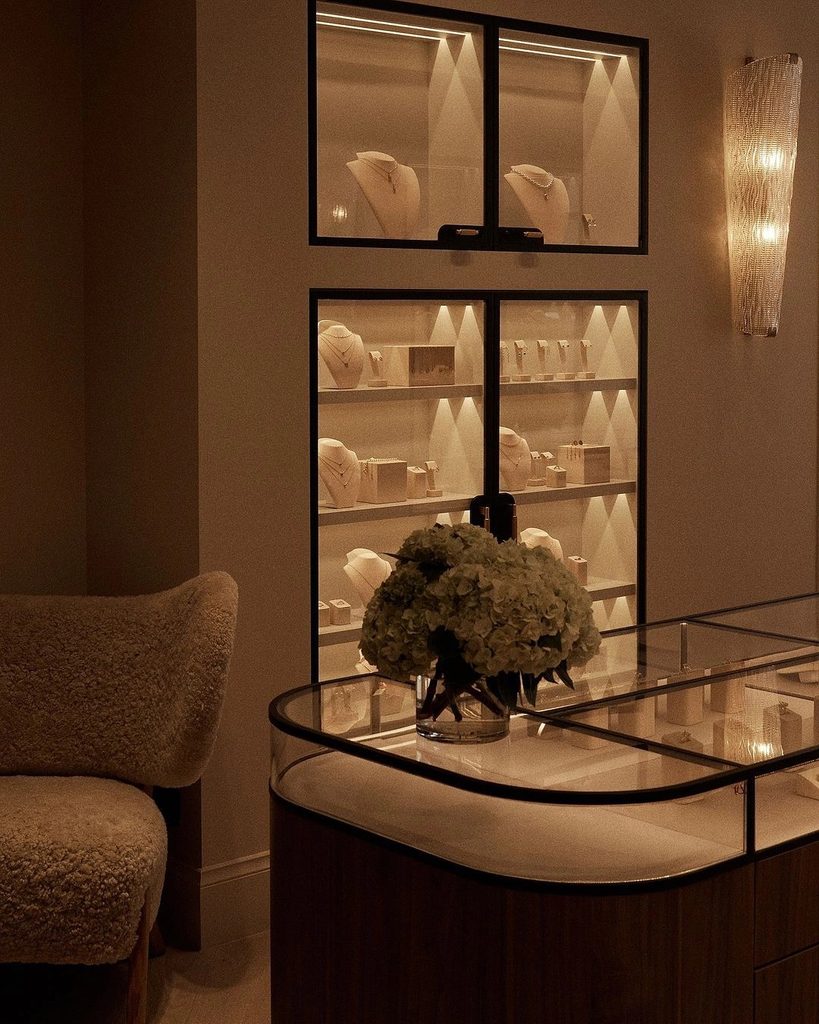
The interior of a Natasha Schweitzer boutique. Photo by Natasha Schweitzer (https://www.cosmos.so/e/679729374)
What This Means in Practice
Three things follow from treating design as strategy rather than decoration:
First, design should enter the conversation at the same stage as brand positioning, not after it. If a founder can’t yet articulate what the brand stands for, no designer can encode it into a space.
Second, every material, symbol, and spatial decision should be traceable back to a reason. If a founder can’t explain why a finish, a motif, or a layout choice is there, it’s aesthetics without design, and customers tend to sense the difference, even if they can’t name it.
Third, resist judging a space only by how much of it is commercial. In luxury retail, some of the most commercially effective spaces are those that do not sell anything directly; they make everything else feel more credible.
The Real Cost of Getting This Wrong
Brands that treat design as an afterthought don’t usually fail immediately. They open, they get attention, and the photography looks good. What they don’t understand is the true purpose of design: a space that customers read correctly, without needing it explained. That gap, between looking luxurious and functioning as luxury, is where a great deal of promising brands quietly plateau.
The founders who understand this aren’t simply building stores, hotels, or restaurants. They’re designing meaning, on purpose, from the first decision onward. Everyone else is just decorating a strategy they never finished writing.
Leave a Reply