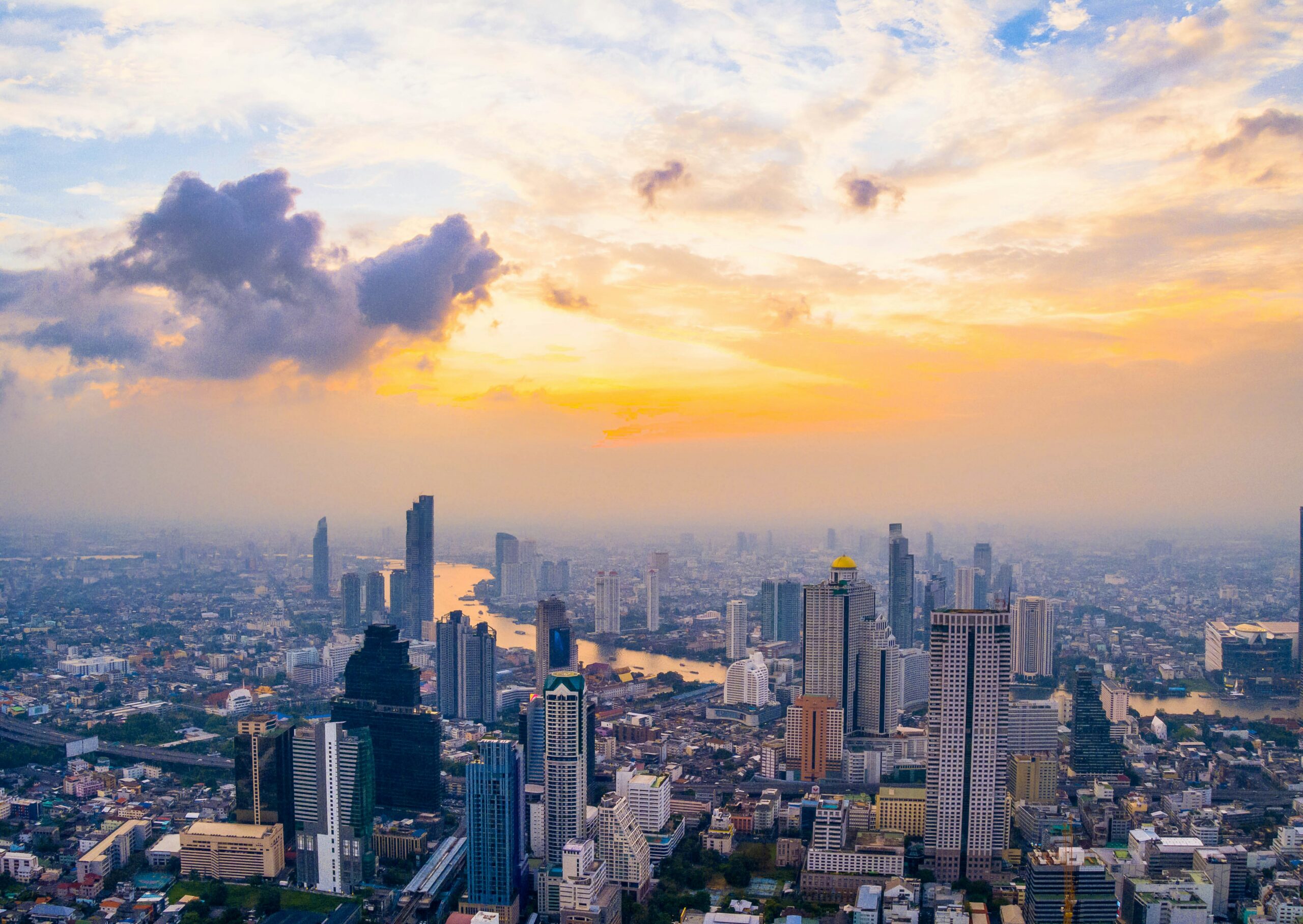
In 2005, European customers seeking a luxury experience would not fly to Asia. That has inverted, and Bangkok shows how.
My first trip to Asia began in Bangkok in 2005. It was a holiday, not a posting. I visited a tailor, ate on the street, walked through temples and then went south to Koh Samui for the beach. Nothing about that trip suggested that my work would be centred entirely on this region for the next twenty years.
I landed at Don Mueang; Suvarnabhumi would open the following year in September. What luxury retail I encountered was largely confined to arcades inside a handful of hotels. Siam Paragon opened in December of that same year. The city I walked through was fundamentally different from the Bangkok that exists today.
Set that against my own reference points. In the early nineties I travelled repeatedly to New York and Los Angeles, and Fifth Avenue was a genuine destination, because it was one of the few streets anywhere in the world where luxury houses stood side by side. Outside Paris and a small number of European addresses, there was nowhere else to go.
Yet if I were asked today where to experience luxury rather than simply buy it, I would answer Asia and name several cities. That shift happened within two decades, even as much of the outside commentary continued to reduce Asian luxury to Chinese consumer spending.
A City That Changed Shape
A decade ago, Bangkok’s luxury conversation centred on a familiar collection of addresses: Siam Paragon, Emporium, Central Chidlom and Gaysorn, joined more recently by Central Embassy and EmQuartier. Retail was organised primarily around access and convenience. Flagships were rarer, formats smaller, and brand storytelling usually followed the standard practice of putting products within reach of visitors.
The city now operates as a network of destinations, each with a distinct role. Siam Paragon carries scale and energy. Gaysorn Village offers intimacy, where private appointments feel relaxed and unhurried. Central Embassy communicates through restraint. ICONSIAM turned the riverside into a day out, combining maisons, craft, culture and a shuttle boat into a destination people plan around rather than merely drop by. EmQuartier and EmSphere, which sit alongside Emporium as the Em District, draw energy from residents’ daily routines as well as visitor traffic. One Bangkok, whose phased opening began in October 2024 and will continue through 2030, extends this logic across an entire district.
The important part is the movement between them. Clients can choose flagship theatre in one place and quieter service in another. Bangkok offers both without forcing either.
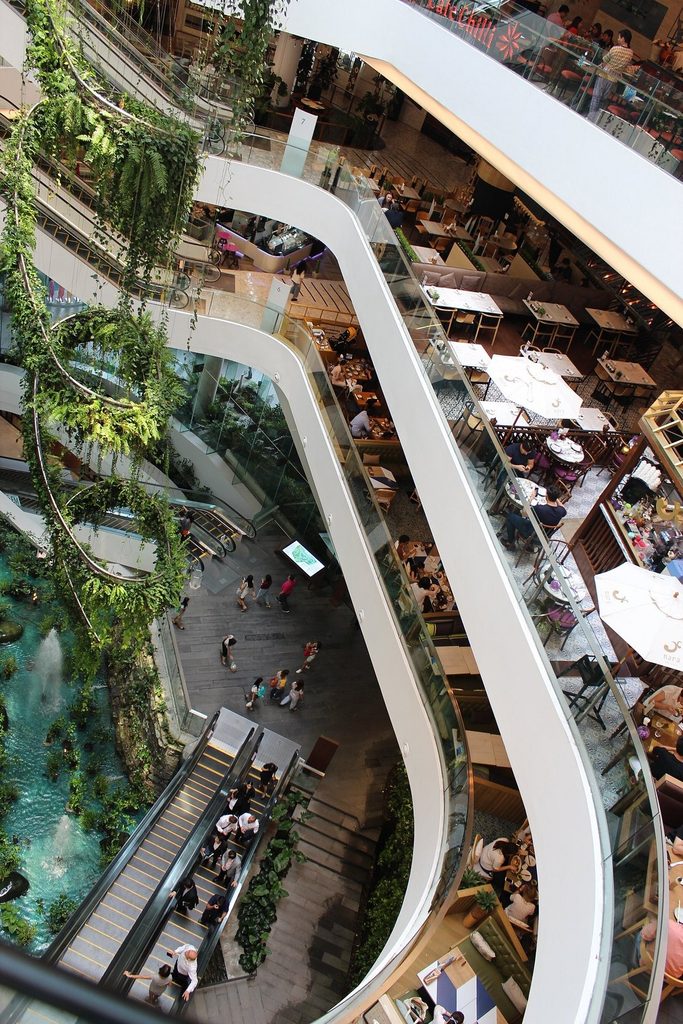
Helix EmQuartier Chandelier 6-9 Floors. Photo by: Tripadvisor Staff (https://www.tripadvisor.com/Attraction_Review-g293916-d16868062-Reviews-or20-The_EmQuartier-Bangkok.html)
What Moved Underneath
The visible change rests on shifts that are financial, demographic and geopolitical, rather than architectural alone.
The largest is the redistribution of Chinese travel. Chinese visitors were treated as the engine of Asian luxury for a decade, and Thailand built considerable capacity around that assumption. In 2025, Chinese arrivals fell by roughly a third, from 6.73 million to 4.47 million. Total foreign arrivals declined by 7.2 per cent to 32.97 million, the first annual fall in more than a decade outside the pandemic years. Malaysia regained its position as Thailand’s largest source market despite sending fewer visitors, as arrivals from China fell much faster.
The causes formed a chain rather than a single event. The high-profile abduction of Chinese actor Wang Xing, who was taken through Thailand to a scam compound in Myanmar in January 2025, damaged confidence in Thai safety. China’s economic slowdown, a stronger baht and growing regional competition added pressure. Myanmar’s earthquake, the border conflict with Cambodia and severe flooding in southern Thailand deepened a wider sense of instability during the year.
Retail moved in the opposite direction. In January 2025, Bloomberg reported that Dior, Louis Vuitton and Porsche were placing serious bets on Bangkok. Dior’s Gold House had opened weeks earlier. In March, Siam Piwat announced that fifteen further luxury brands would make new or exclusive debuts across its destinations during the year.
That investment entered a mixed market. CBRE’s 2026 outlook projects new retail supply to outpace tenant demand, with average occupancy slipping below 90 per cent. Thai consumer confidence fell for six consecutive months to July 2025, reaching its lowest level in 31 months. The result is a more polarised market, with the best-positioned assets pulling away while older properties face a harder fight for relevance.
At the same time, capital continues to concentrate at the upper end. Bangkok expects more than 4,300 new hotel rooms during 2026, primarily in the upscale and luxury segments. New downtown luxury and super-luxury residences continue to launch, with average asking prices forecast to rise by up to 15 per cent year-on-year.
The market, then, is neither broadly booming nor collapsing. Its strongest segments are attracting disproportionate investment.
Currency reinforced that sorting. By September 2025, the baht had appreciated by around 8 per cent against the US dollar, reaching a four-year high. At the time, the president of the Thai Hotels Association warned that prolonged strength would eventually affect tourism. My understanding is that it affects particular kinds of tourism. A stronger baht changes the equation for someone choosing between Bangkok and a less expensive neighbour. It matters far less to a client commissioning a piece of high jewellery.
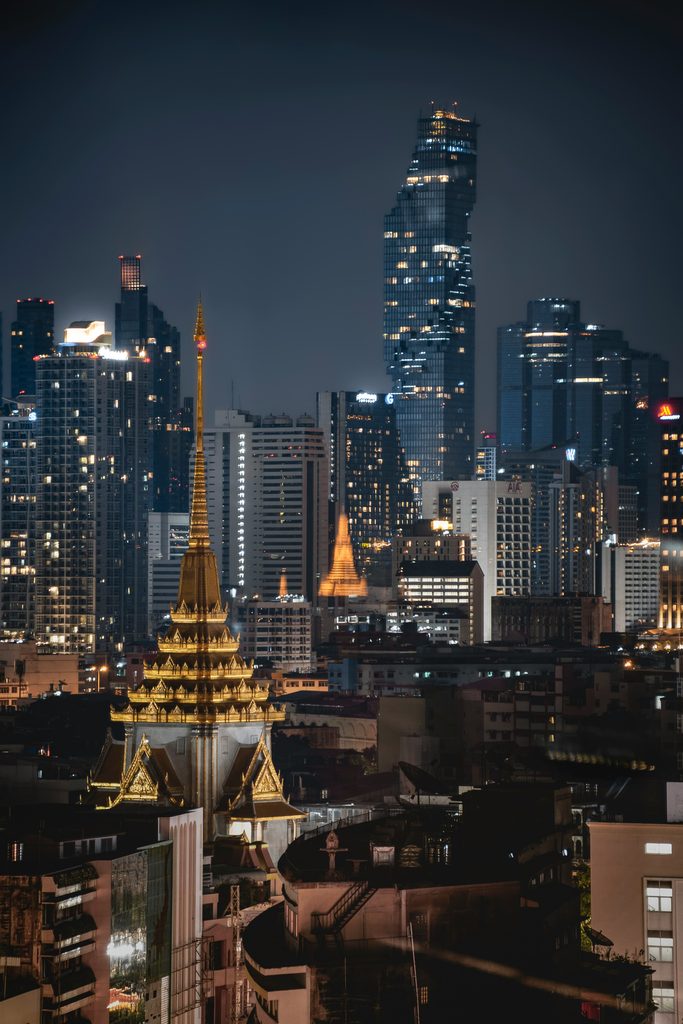
Phantom Illusion, Bangkok, 2024. Photo by: Tan Kaninthanond (https://unsplash.com/photos/a-view-of-a-city-skyline-at-night-417FF0HwyIM)
What People Buy Now
The two most significant luxury openings in Bangkok in recent years both arrived in 2024, and each extends far beyond a conventional store. Louis Vuitton’s LV The Place opened at Gaysorn Amarin in February, combining an exhibition, café, boutique and restaurant by Gaggan Anand. Dior’s Gold House opened in December, reinterpreting the façade of 30 Avenue Montaigne and bringing Thai art and craftsmanship into the interior. Today, it also includes Café Dior.
Both are capital-intensive expressions of the brand. Selling remains part of their purpose, while culture, food and place-making broaden the relationship. That combination would have been difficult to justify to a board when I first came here. It is now increasingly expected of a serious flagship in Asia.
What changed is the shape of the client’s day, and it changed differently depending on whose day it is. For a visitor, the purchase sits within an itinerary that runs from hotel to exhibition to dinner, and the boutique competes for attention alongside it. For a resident, there is no itinerary, only a routine: a Saturday that takes in a fitting, a café and a film, or a weekday lunch that ends on a shop floor. EmQuartier and EmSphere fit naturally into that second rhythm.
Residents offer a more durable opportunity because the relationship can become habitual. Once a boutique becomes part of an ordinary Saturday, the next visit requires much less persuasion.
Why The Region Moves Faster
In my view, Asia is redefining luxury more quickly than any other region. The test is not simply spending growth; it is how readily the map can be redrawn.
Luxury spending has risen almost everywhere over the past twenty years. What distinguishes Asia is how much of the physical city has changed to accommodate it. Europe’s luxury geography remains anchored in many of the same addresses that mattered in 1995, and the incentives favour protecting their position. In the twenty years since I first landed here, Bangkok has replaced its international airport, built much of its current luxury retail map and redefined what a flagship is expected to do. That pace of change remains rare elsewhere.
The second reason is greater freedom from inherited assumptions. Much of Asia’s luxury infrastructure is recent enough to have been designed around the client who exists now, rather than retrofitted for that client. ICONSIAM was conceived as a destination from the outset. That offers considerable freedom compared to a heritage address adapting a nineteenth-century building to twenty-first-century expectations.
The third is the growing confidence of domestic and regional buyers. In my work, I have watched Thai clients buying at home, and Malaysian and Indonesian clients arriving for a weekend, placing greater emphasis on craftsmanship, provenance and personal alignment. The label still matters, while inherited prestige alone carries less authority. Regional names can compete for attention alongside global maisons, while global houses increasingly build local relevance into their expression. Dior Gold House’s collaboration with Thai artists and craftspeople makes the shift visible.
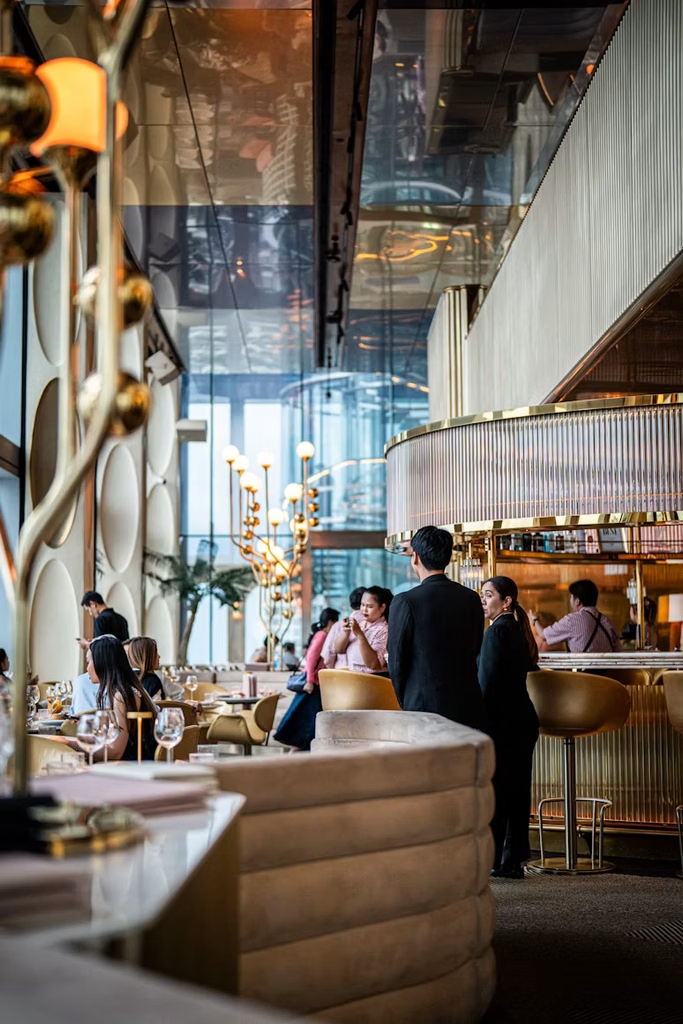
Ojo Bangkok, The Standard, Bangkok Mahanakhon, Naradhiwas Rajanagarindra Road, Si Lom, Bangkok, 2025. Photo by: Sam Lembeck (https://unsplash.com/photos/elegant-restaurant-interior-with-people-dining-and-drinking-3C8z9DfH82s)
Three Hubs, Three Answers
Having lived in Hong Kong and Singapore while working across the region, I have observed that the distinctions between Asia’s three premier luxury hubs are structural rather than superficial.
Hong Kong served as the region’s luxury retail hub for many years, and it retains commercial significance and depth of assortment. Singapore built something broader over the past twenty years, layering retail, hospitality and entertainment into a single proposition, with the integrated resorts, the Grand Prix and a global concert calendar all pulling in the same direction. It is the most deliberately engineered of the three.
Bangkok arrived at its position differently, and its wellness sector offers a good illustration. RAKxa, on Bang Krachao, combines medical diagnostics with traditional Thai, Chinese and Ayurvedic therapies. VitalLife Scientific Wellness Center, the wellness arm of Bumrungrad International Hospital, has run longevity and preventive programmes on the hospital campus since 2001. Biomarker testing, hormone optimisation and NAD infusions are now readily available across the city. A client can fly in for a week that includes a full health assessment, a boutique appointment and dinner, and the three sit comfortably together.
Evidence for this extends well past retail. Bangkok is a place people choose to live as well as visit. The cost of a high-quality life remains considerably lower than in Hong Kong or Singapore, its food culture is exceptional at every price point, and the city has become a practical base for people whose work is regional rather than fixed. Convenience and quality of life bring the client to the city. Shopping follows.
At the upper end of Asian retail, technical service standards are high across the major hubs. Bangkok’s distinction lies elsewhere: Thai hospitality draws on long-established social codes of attentiveness and welcome. Training sharpens it rather than creates it. A well-trained team executes correctly. A genuinely hospitable one makes the client feel expected. The difference is immediate, even when the client cannot name it.
The Durable Asset
Architecture creates the invitation. Hospitality creates the connection. One is capital expenditure; the other is culture.
Twenty years ago, I came here as a tourist with no professional interest in the region. What I found was a country with extraordinary hospitality and very little luxury infrastructure. The infrastructure could be built, and over twenty years it was. The hospitality never had to be. It was already in the culture, and what the new buildings did was give it somewhere to go.
Every city in Asia can build. Not every city can host.
Leave a Reply