Category: Luxury wealth and markets

  • Where Luxury Went: Twenty Years of Watching Bangkok Change

    Where Luxury Went: Twenty Years of Watching Bangkok Change

    In 2005, European customers seeking a luxury experience would not fly to Asia. That has inverted, and Bangkok shows how.

    My first trip to Asia began in Bangkok in 2005. It was a holiday, not a posting. I visited a tailor, ate on the street, walked through temples and then went south to Koh Samui for the beach. Nothing about that trip suggested that my work would be centred entirely on this region for the next twenty years.

    I landed at Don Mueang; Suvarnabhumi would open the following year in September. What luxury retail I encountered was largely confined to arcades inside a handful of hotels. Siam Paragon opened in December of that same year. The city I walked through was fundamentally different from the Bangkok that exists today.

    Set that against my own reference points. In the early nineties I travelled repeatedly to New York and Los Angeles, and Fifth Avenue was a genuine destination, because it was one of the few streets anywhere in the world where luxury houses stood side by side. Outside Paris and a small number of European addresses, there was nowhere else to go.

    Yet if I were asked today where to experience luxury rather than simply buy it, I would answer Asia and name several cities. That shift happened within two decades, even as much of the outside commentary continued to reduce Asian luxury to Chinese consumer spending.

    A City That Changed Shape

    A decade ago, Bangkok’s luxury conversation centred on a familiar collection of addresses: Siam Paragon, Emporium, Central Chidlom and Gaysorn, joined more recently by Central Embassy and EmQuartier. Retail was organised primarily around access and convenience. Flagships were rarer, formats smaller, and brand storytelling usually followed the standard practice of putting products within reach of visitors.

    The city now operates as a network of destinations, each with a distinct role. Siam Paragon carries scale and energy. Gaysorn Village offers intimacy, where private appointments feel relaxed and unhurried. Central Embassy communicates through restraint. ICONSIAM turned the riverside into a day out, combining maisons, craft, culture and a shuttle boat into a destination people plan around rather than merely drop by. EmQuartier and EmSphere, which sit alongside Emporium as the Em District, draw energy from residents’ daily routines as well as visitor traffic. One Bangkok, whose phased opening began in October 2024 and will continue through 2030, extends this logic across an entire district.

    The important part is the movement between them. Clients can choose flagship theatre in one place and quieter service in another. Bangkok offers both without forcing either.
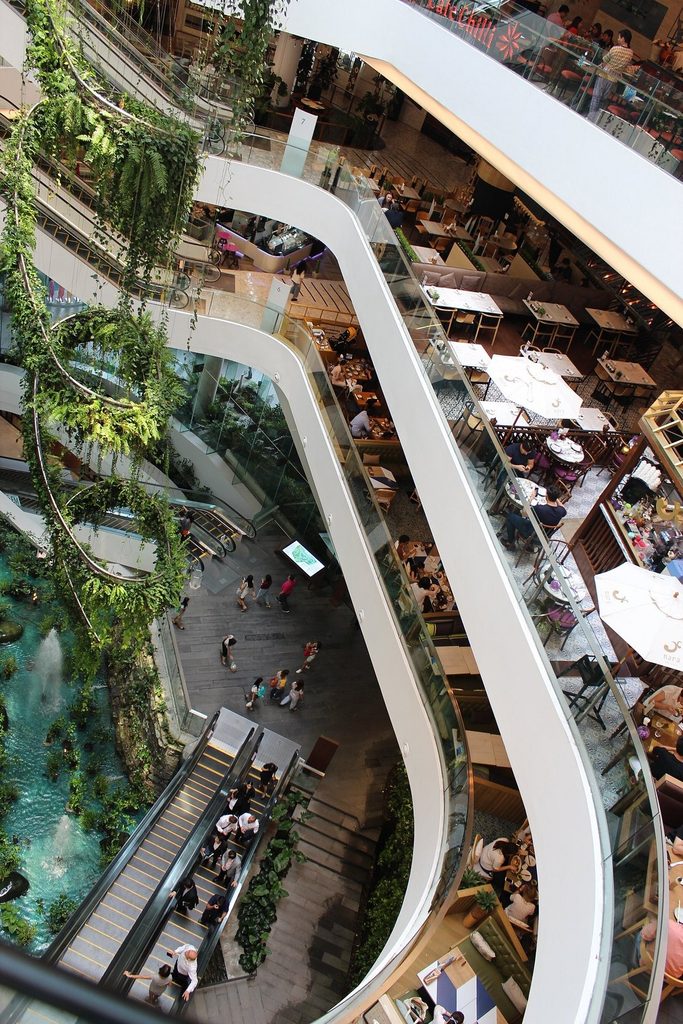
    Helix EmQuartier Chandelier 6-9 Floors. Photo by: Tripadvisor Staff (https://www.tripadvisor.com/Attraction_Review-g293916-d16868062-Reviews-or20-The_EmQuartier-Bangkok.html)

    What Moved Underneath

    The visible change rests on shifts that are financial, demographic and geopolitical, rather than architectural alone.

    The largest is the redistribution of Chinese travel. Chinese visitors were treated as the engine of Asian luxury for a decade, and Thailand built considerable capacity around that assumption. In 2025, Chinese arrivals fell by roughly a third, from 6.73 million to 4.47 million. Total foreign arrivals declined by 7.2 per cent to 32.97 million, the first annual fall in more than a decade outside the pandemic years. Malaysia regained its position as Thailand’s largest source market despite sending fewer visitors, as arrivals from China fell much faster.

    The causes formed a chain rather than a single event. The high-profile abduction of Chinese actor Wang Xing, who was taken through Thailand to a scam compound in Myanmar in January 2025, damaged confidence in Thai safety. China’s economic slowdown, a stronger baht and growing regional competition added pressure. Myanmar’s earthquake, the border conflict with Cambodia and severe flooding in southern Thailand deepened a wider sense of instability during the year.

    Retail moved in the opposite direction. In January 2025, Bloomberg reported that Dior, Louis Vuitton and Porsche were placing serious bets on Bangkok. Dior’s Gold House had opened weeks earlier. In March, Siam Piwat announced that fifteen further luxury brands would make new or exclusive debuts across its destinations during the year.

    That investment entered a mixed market. CBRE’s 2026 outlook projects new retail supply to outpace tenant demand, with average occupancy slipping below 90 per cent. Thai consumer confidence fell for six consecutive months to July 2025, reaching its lowest level in 31 months. The result is a more polarised market, with the best-positioned assets pulling away while older properties face a harder fight for relevance.

    At the same time, capital continues to concentrate at the upper end. Bangkok expects more than 4,300 new hotel rooms during 2026, primarily in the upscale and luxury segments. New downtown luxury and super-luxury residences continue to launch, with average asking prices forecast to rise by up to 15 per cent year-on-year.

    The market, then, is neither broadly booming nor collapsing. Its strongest segments are attracting disproportionate investment.

    Currency reinforced that sorting. By September 2025, the baht had appreciated by around 8 per cent against the US dollar, reaching a four-year high. At the time, the president of the Thai Hotels Association warned that prolonged strength would eventually affect tourism. My understanding is that it affects particular kinds of tourism. A stronger baht changes the equation for someone choosing between Bangkok and a less expensive neighbour. It matters far less to a client commissioning a piece of high jewellery.
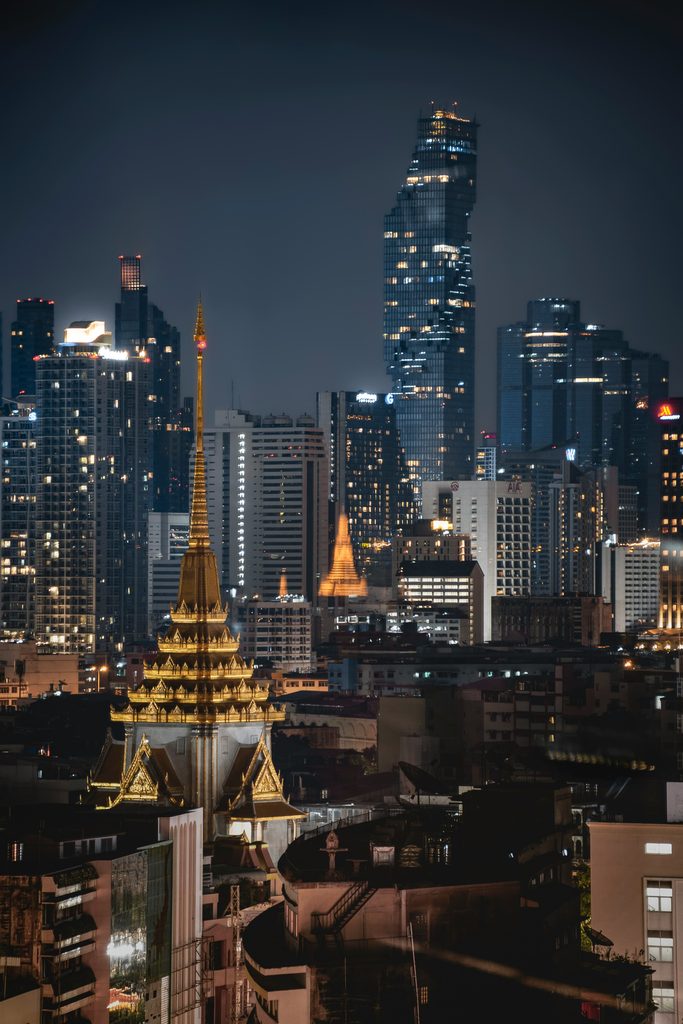
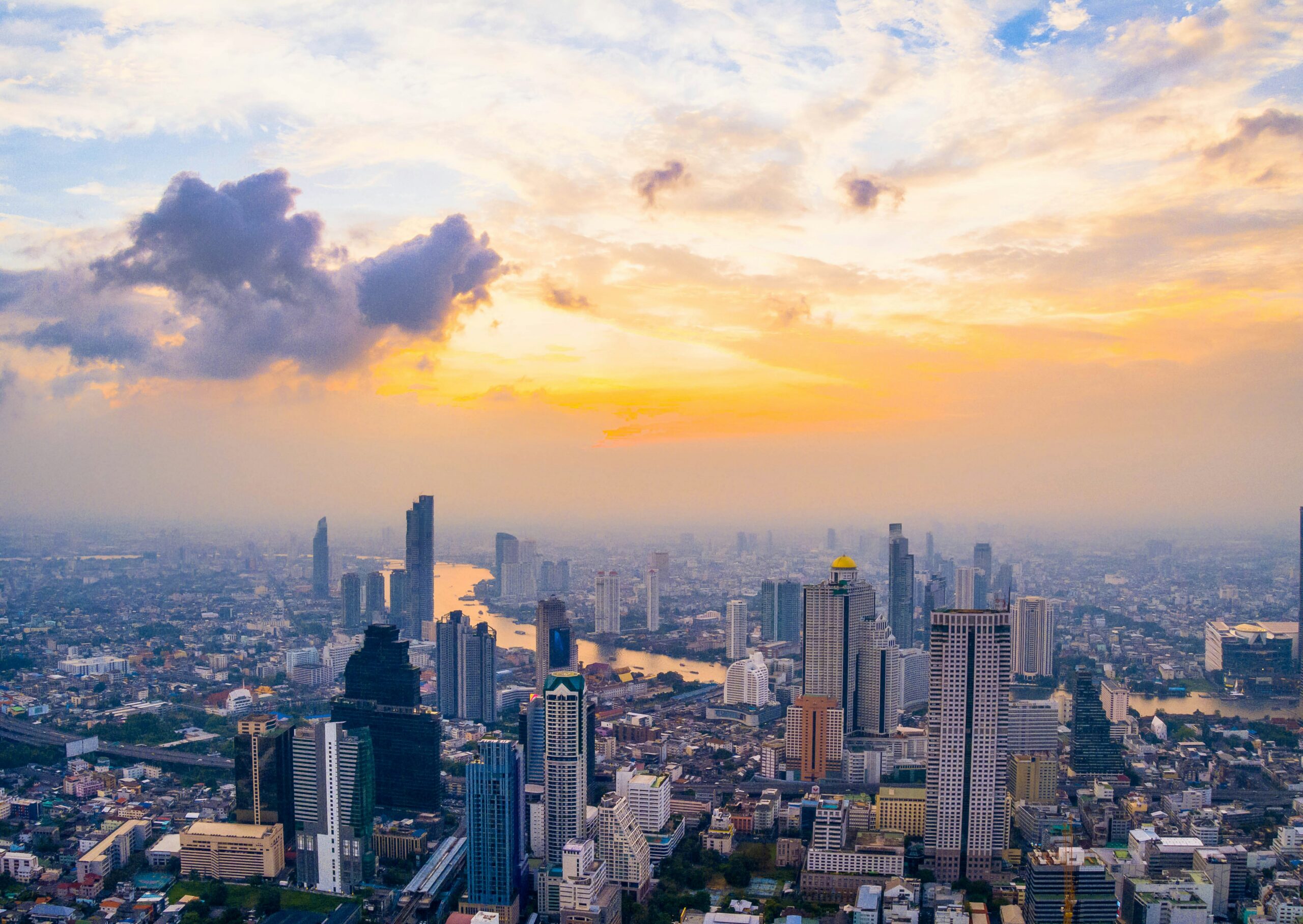
    Phantom Illusion, Bangkok, 2024. Photo by: Tan Kaninthanond (https://unsplash.com/photos/a-view-of-a-city-skyline-at-night-417FF0HwyIM)

    What People Buy Now

    The two most significant luxury openings in Bangkok in recent years both arrived in 2024, and each extends far beyond a conventional store. Louis Vuitton’s LV The Place opened at Gaysorn Amarin in February, combining an exhibition, café, boutique and restaurant by Gaggan Anand. Dior’s Gold House opened in December, reinterpreting the façade of 30 Avenue Montaigne and bringing Thai art and craftsmanship into the interior. Today, it also includes Café Dior.

    Both are capital-intensive expressions of the brand. Selling remains part of their purpose, while culture, food and place-making broaden the relationship. That combination would have been difficult to justify to a board when I first came here. It is now increasingly expected of a serious flagship in Asia.

    What changed is the shape of the client’s day, and it changed differently depending on whose day it is. For a visitor, the purchase sits within an itinerary that runs from hotel to exhibition to dinner, and the boutique competes for attention alongside it. For a resident, there is no itinerary, only a routine: a Saturday that takes in a fitting, a café and a film, or a weekday lunch that ends on a shop floor. EmQuartier and EmSphere fit naturally into that second rhythm.

    Residents offer a more durable opportunity because the relationship can become habitual. Once a boutique becomes part of an ordinary Saturday, the next visit requires much less persuasion.

    Why The Region Moves Faster

    In my view, Asia is redefining luxury more quickly than any other region. The test is not simply spending growth; it is how readily the map can be redrawn.

    Luxury spending has risen almost everywhere over the past twenty years. What distinguishes Asia is how much of the physical city has changed to accommodate it. Europe’s luxury geography remains anchored in many of the same addresses that mattered in 1995, and the incentives favour protecting their position. In the twenty years since I first landed here, Bangkok has replaced its international airport, built much of its current luxury retail map and redefined what a flagship is expected to do. That pace of change remains rare elsewhere.

    The second reason is greater freedom from inherited assumptions. Much of Asia’s luxury infrastructure is recent enough to have been designed around the client who exists now, rather than retrofitted for that client. ICONSIAM was conceived as a destination from the outset. That offers considerable freedom compared to a heritage address adapting a nineteenth-century building to twenty-first-century expectations.

    The third is the growing confidence of domestic and regional buyers. In my work, I have watched Thai clients buying at home, and Malaysian and Indonesian clients arriving for a weekend, placing greater emphasis on craftsmanship, provenance and personal alignment. The label still matters, while inherited prestige alone carries less authority. Regional names can compete for attention alongside global maisons, while global houses increasingly build local relevance into their expression. Dior Gold House’s collaboration with Thai artists and craftspeople makes the shift visible.
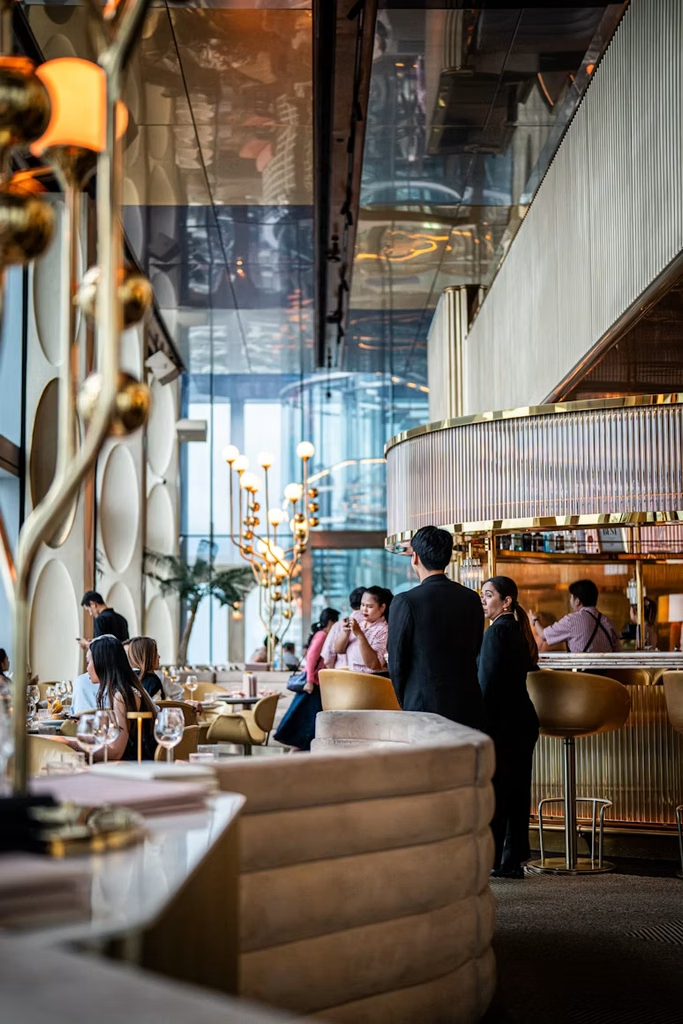
    Ojo Bangkok, The Standard, Bangkok Mahanakhon, Naradhiwas Rajanagarindra Road, Si Lom, Bangkok, 2025. Photo by: Sam Lembeck (https://unsplash.com/photos/elegant-restaurant-interior-with-people-dining-and-drinking-3C8z9DfH82s)

    Three Hubs, Three Answers

    Having lived in Hong Kong and Singapore while working across the region, I have observed that the distinctions between Asia’s three premier luxury hubs are structural rather than superficial.

    Hong Kong served as the region’s luxury retail hub for many years, and it retains commercial significance and depth of assortment. Singapore built something broader over the past twenty years, layering retail, hospitality and entertainment into a single proposition, with the integrated resorts, the Grand Prix and a global concert calendar all pulling in the same direction. It is the most deliberately engineered of the three.

    Bangkok arrived at its position differently, and its wellness sector offers a good illustration. RAKxa, on Bang Krachao, combines medical diagnostics with traditional Thai, Chinese and Ayurvedic therapies. VitalLife Scientific Wellness Center, the wellness arm of Bumrungrad International Hospital, has run longevity and preventive programmes on the hospital campus since 2001. Biomarker testing, hormone optimisation and NAD infusions are now readily available across the city. A client can fly in for a week that includes a full health assessment, a boutique appointment and dinner, and the three sit comfortably together.

    Evidence for this extends well past retail. Bangkok is a place people choose to live as well as visit. The cost of a high-quality life remains considerably lower than in Hong Kong or Singapore, its food culture is exceptional at every price point, and the city has become a practical base for people whose work is regional rather than fixed. Convenience and quality of life bring the client to the city. Shopping follows.

    At the upper end of Asian retail, technical service standards are high across the major hubs. Bangkok’s distinction lies elsewhere: Thai hospitality draws on long-established social codes of attentiveness and welcome. Training sharpens it rather than creates it. A well-trained team executes correctly. A genuinely hospitable one makes the client feel expected. The difference is immediate, even when the client cannot name it.

    The Durable Asset

    Architecture creates the invitation. Hospitality creates the connection. One is capital expenditure; the other is culture.

    Twenty years ago, I came here as a tourist with no professional interest in the region. What I found was a country with extraordinary hospitality and very little luxury infrastructure. The infrastructure could be built, and over twenty years it was. The hospitality never had to be. It was already in the culture, and what the new buildings did was give it somewhere to go.

    Every city in Asia can build. Not every city can host.
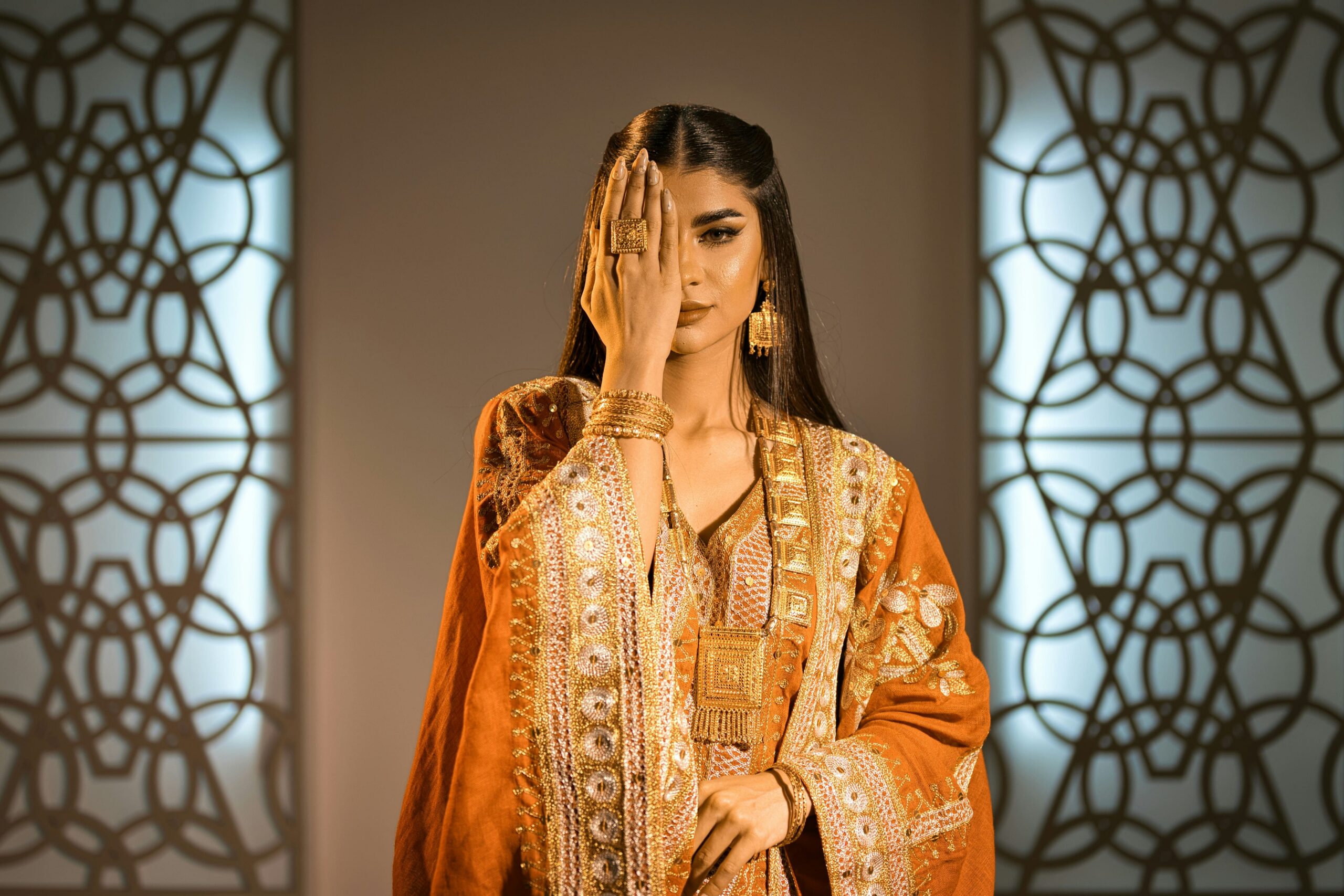
  • Fire and Facets: The New Wave of Revolution From Homegrown Middle Eastern Haute Joaillerie Geniuses

    Fire and Facets: The New Wave of Revolution From Homegrown Middle Eastern Haute Joaillerie Geniuses

    For nearly a century, the high-luxury landscape of the Gulf Cooperation Council and the wider Levant was defined by a highly profitable, yet asymmetric, relationship with Europe. The historic salons of Paris’s Place Vendôme and London’s Bond Street viewed the Middle East primarily as an ultra-lucrative, passive consumer demographic. It was considered in the recent past as a market to be courted with sweeping romanticized narratives of the “Orient” and standardized collections of diamonds and platinum.

    Today, however, a profound paradigm shift is underway. A vibrant, highly sophisticated cohort of homegrown independent jewelers from Beirut, Jeddah, Dubai, and Amman is dismantling this velvet hegemony. By reclaiming their own cultural archives, ranging from pre-Islamic archaeological motifs and Bedouin symbolism to avant-garde Arabic typography, these designers are asserting a new form of creative sovereignty. They are no longer merely consumers of luxury; they are its authors.

    To understand the rise of these designers, one must first analyze the semiotic shift in their design language. For decades, Western luxury conglomerates considered the Middle East through generic design codes relying on repetitive mosaic patterns or literal interpretations of “Thousand and One Nights” folklore. Designers originating from Arabic countries are systematically decolonizing this aesthetic, replacing external fantasies with authentic, deeply lived regional narratives.

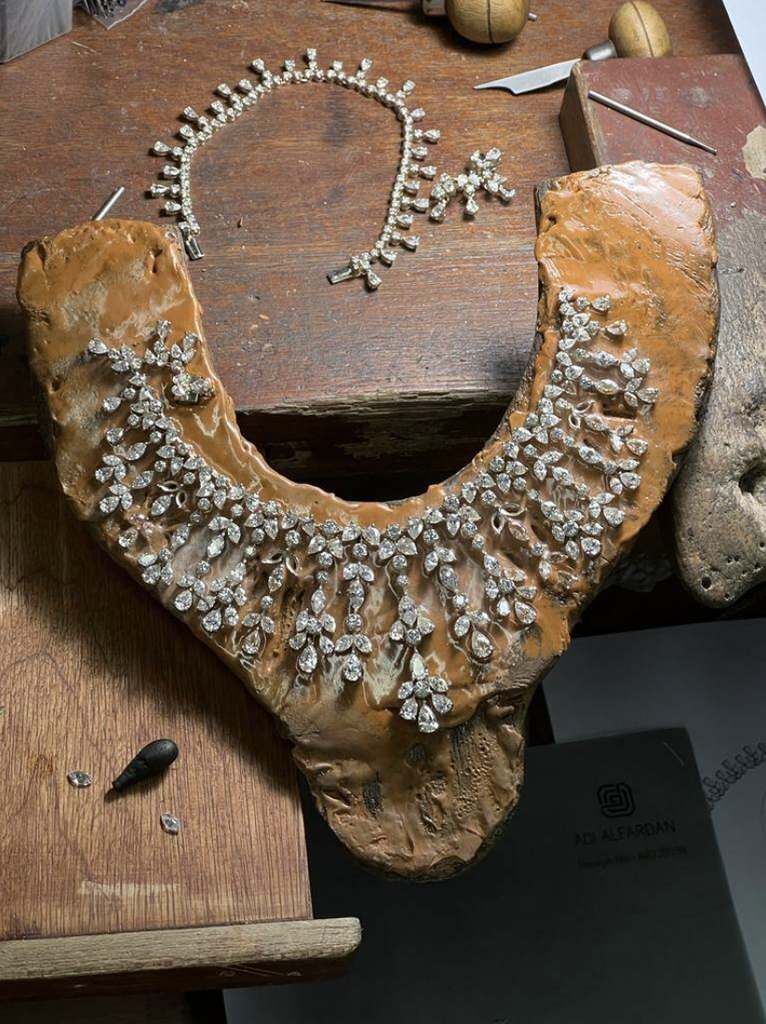
    Necklace with diamonds at the Adi Alfardan Jewelry studio, 2023. Photo by: Adi Alfardan Jewelry (https://likeabeautifuljewel.com/en/jewellery/adi-al-fardan-the-passion-for-jewellery-in-heritage) 

    This is not superficial folklore; it is a highly intellectualized design lexicon. Arabic calligraphy, for example, is stripped of its purely calligraphic or religious traditionalism. Instead, it is treated as a structural, modernist architectural element. Letters are deconstructed into minimalist geometric lines, transforming words of poetry or protection into abstract wearable sculptures.

    Consider Adi Alfardan, the Dubai-based high jewelry house that exemplifies this new era of sovereign luxury. Alfardan does not merely design jewelry; he curates legacy. By sourcing the world’s rarest natural pearls and mounting them in contemporary settings of colored diamonds, Alfardan bypasses the standardized vocabulary of European high jewelry. His pieces offer regional collectors something Place Vendôme cannot: an authentic, localized lineage fused with unparalleled bespoke craft.

    Similarly, Beirut’s L’Atelier Nawbar uses jewelry as a medium for narrative storytelling. Founded by sisters Dima and Tania Nawbar, the brand represents a multi-generational Lebanese heritage that translates Levantine mysticism, cosmic talismans, and regional resilience into vibrant, hand-painted enamel and hand-carved gemstones. In Dubai, Gafla reimagines traditional Bedouin symbols, such as the Merwed (the classic stick used to apply kohl), transforming them into sleek, diamond-encrusted contemporary pendants that speak directly to a shared regional memory.

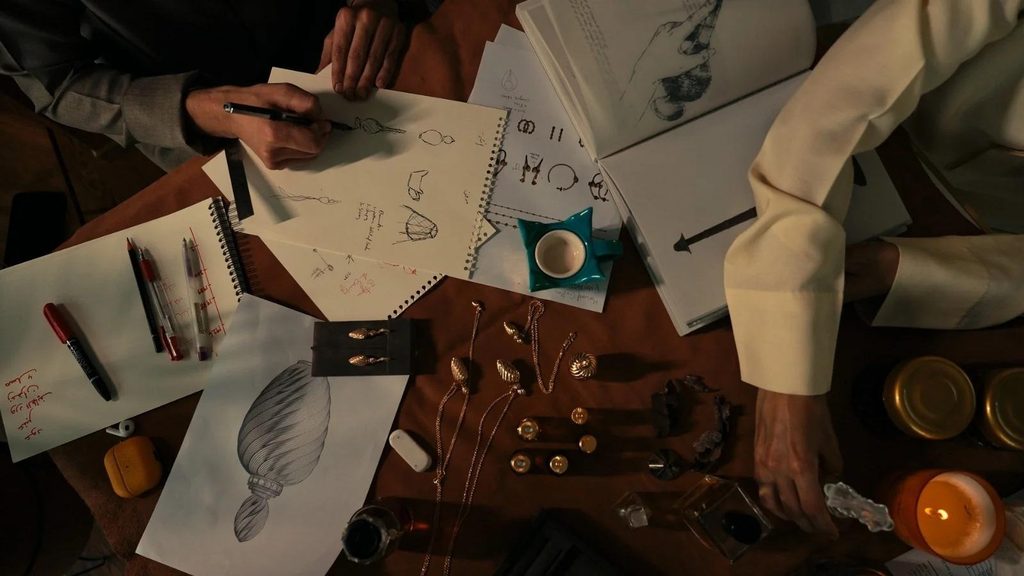
    Gafla’s redesigning process for Merwed collection, 2024. Photo by: Gafla Jewellery (https://gaflajewellery.com/en-fr/blogs/news/merwad-collection?srsltid=AfmBOorV78al9SadkO6cmx6TuaXuvDK7L1RaKlLZ_NTZT9gmx42bfKiW) 

    All these local designers and Maisons and using a powerful Indo-Arabian axis reimagining the Historic Trade Winds.

    A critical, often overlooked dimension of this creative renaissance is the strategic revival of the Indo-Arabian Axis. The relationship between India, the historic jewel in the crown of global lapidary arts, and the Middle East is not new; it is a centuries-old maritime romance. Historically, Gulf merchants traded prized natural pearls for Indian diamonds, rubies, and emeralds; a trading which was at its climax during the Mughal Empire.

    Today’s Middle Eastern designers are actively using this historic trade corridor to bypass the rigid, Euro-centric supply chains of Switzerland and France. Rather than relying on Parisian ateliers, regional designers are collaborating directly with master artisans in Jaipur and Mumbai.

    This is a masterstroke of provenance arbitrage. By marrying Middle Eastern creative direction with India’s unparalleled expertise in specialized techniques, local designers are creating a hybrid aesthetic that is deeply rooted on both sides. Jaipur’s lapidary ateliers allow Middle Eastern designers to source and custom-cut colored gemstones with an organic quality; one quality contrasting sharply with the clinical, machine-perfect cuts favored by Western corporate luxury brands. This Indo-Arabian synergy allows for a more agile, expressive, and culturally resonant form of High Jewelry. The Middle East becomes slowly but surely an autonomous incubator for new high jewellery.

    This creative awakening is not happening in a vacuum; it is supported by a robust, state-level institutional infrastructure. Across the GCC, governments have recognized that luxury and creative industries are vital pillars of post-oil economic diversification and cultural diplomacy.

    In Saudi Arabia, the Saudi Fashion Commission, particularly through its groundbreaking 100 Brands initiative, provides rigorous mentorship, financial advisory, and global showcase opportunities to emerging jewelers. Similarly, the Dubai Design District also known as d3 has created a physical and regulatory ecosystem where local designers can co-exist, collaborate, and access international markets.

    Crucially, the financial architecture of the region has shifted. Local venture capital firms and prominent family offices are increasingly redirecting their investment portfolios away from minority stakes in European luxury conglomerates toward direct equity investments in local creative talents. This infusion of smart capital allows independent brands to scale their supply chains, invest in secure inventory, and establish high-profile retail footprints.

    Simultaneously, the traditional historic department stores of Europe have been effectively bypassed. The hyper-digitization of the Middle Eastern market, led by luxury e-commerce behemoths like Ounass and bespoke personal shopping networks like Thread Styling, has democratized access to the consumer. Local designers no longer need the validation of a Paris Maison to reach their audience; they have direct, intimate, and immediate access to the world’s most active luxury consumers through digital platforms. 

    This strong strategic positioning allows luxury analysts to examine the difference between “Intimate Luxury” vs. “Institutional Legacy”.

    Analyzing the competitive landscape requires understanding a fundamental shift in the psychology of the modern Middle Eastern collector. The contemporary GCC consumer is among the most sophisticated in the world. They are globally educated, highly traveled, and already possess the iconic, widely available collections of the major French and Italian houses.

    Consequently, the allure of “Institutional Legacy”, the safe, predictable luxury of wearing the same diamond bracelet as thousands of others, is waning. It is being replaced by a desire for “Intimate Luxury”, pieces that carry emotional resonance, intellectual depth, and cultural specificity.

    GCC designers do not seek to compete with European Maisons on sheer volume or marketing spend. Instead, they win on cultural intimacy. A piece of jewelry from a local designer is a conversation starter, a statement of identity, and a declaration of pride in the region’s booming creative renaissance.

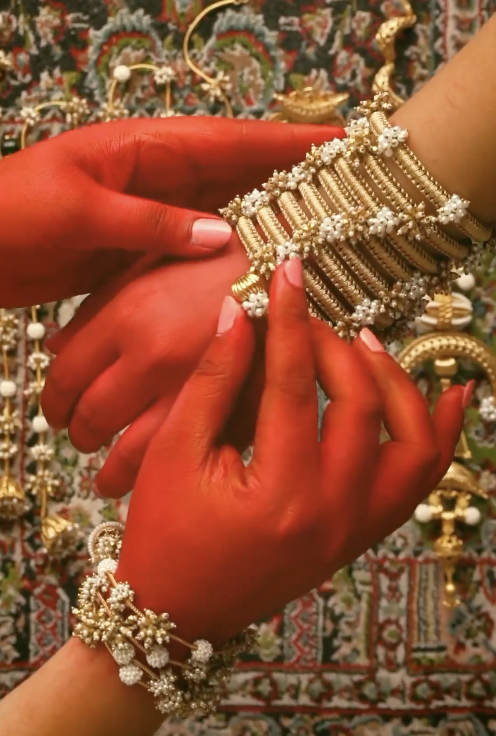
    Jewelry from the BASRAA Collection by Amama, 2024. Photo by Umang Kapoor (https://www.cosmos.so/e/562517543) 

    This situation is so unique that we can question the possible risks and, first, the natural regional ceiling these brands can reach.

    The most pressing strategic question facing GCC designers is scalability beyond their domestic market. The cultural intimacy that gives these brands their competitive edge , Bedouin symbolism, Emirati pearl-diving heritage, Levantine talismanic motifs , is also, paradoxically, what limits their legibility to non-regional consumers despite the fact that Middle East has inspired as well European Maisons in the past.

    A collector in Riyadh intuitively understands the emotional weight of a Merwed-inspired pendant. A client in Shanghai or São Paulo does not. European maisons solved this problem decades ago by building universal mythologies (Cartier’s panther, Van Cleef’s Alhambra clover) , symbols deliberately emptied of specific cultural content to travel globally without friction. Middle Eastern brands have yet to develop a strategic framework for translating cultural specificity into global desirability without diluting the very authenticity that defines them. Until they do, the risk of remaining high-end regional brands even if they are respected is real.

    The Indo-Arabian supply chain is a genuine strategic advantage, but it carries significant operational vulnerabilities. The master artisans in Jaipur and Mumbai upon whom many of these brands depend on, represent an aging labor pool. Skilled Kundan setters and Meenakari enamelers, whose artistry is irreplaceable, are retiring faster than new artisans can take their place. A young entrepreneur who builds their entire value proposition on hand-carved Indian gemstones and artisanal techniques must confront a hard question: what happens when the hands disappear?

    Furthermore, quality control across geographically fragmented ateliers is inherently difficult. Where a single flawed setting can destroy a piece worth tens of thousands of dollars, maintaining the consistency required for high jewelry demands physical presence, deep relationships, and rigorous protocols that take years to build.

    It would be analytically naive to treat European luxury houses as passive incumbents. They are not. Cartier, Van Cleef, Bvlgari, and Chanel Haute Joaillerie have significantly increased their Middle Eastern cultural programming from region-specific high jewelry collections to local atelier partnerships and Arabic-language brand storytelling. They possess vastly superior marketing budgets, global distribution networks, and decades of accumulated brand equity. The competitive moat of homegrown designers is real but narrow. It must be continuously deepened through innovation, not merely defended through rhetoric.

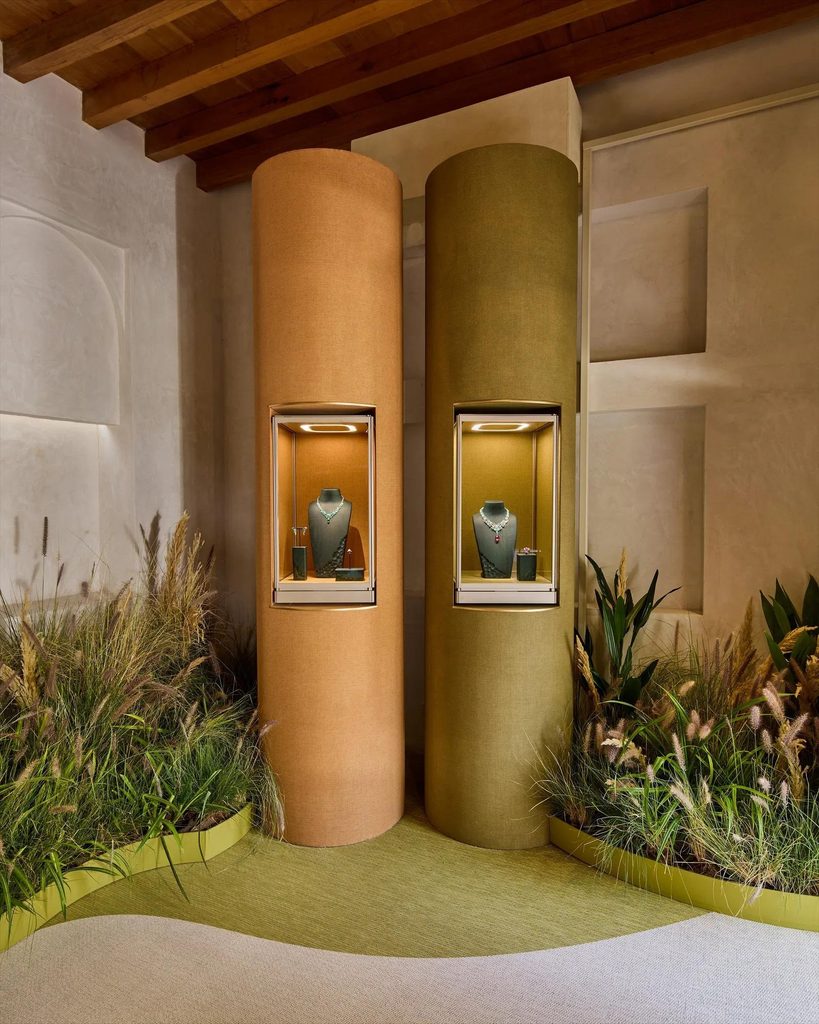
    Still from the Journey of Wonders showcase by Cartier in Dubai, 2025. Photo by: Cartier (https://www.voguearabia.com/article/cartier-a-journey-of-wonders-exhibition-al-shindagha-museum) 

    As “heritage-driven design” becomes commercially validated, the temptation to treat culture as a marketing input rather than a lived practice grows. Superficial deployment of calligraphic motifs or archaeological references without natural genuine scholarly depth or community engagement risks producing a form of self-exoticism that is ultimately as hollow as the Orientalist tropes it claims to replace. Expert consumers will detect this inauthenticity quickly. Doing this will have a severe impact on brand reputation accused of cultural over usage for commercial purposes in a region where cultural pride and symbolism is one of the strongest in the world. As for European brands, the usage of local culture must be cleverly done with details more than a full yearly work and collections inspired by local culture as the one and only inspiration.

    The rise of independent jewelry designers across Beirut, Jeddah, Dubai, and Amman is far more than a fleeting trend; it is a structural realignment of the global luxury economy. By leveraging their rich historical archives, reclaiming the ancient Indo-Arabian trade routes for artisanal production, and utilizing state-backed infrastructure, these designers have successfully built globally competitive brands.

    As they continue to capture the hearts and portfolios of the region’s elite, these “Desert Diamonds” are proving that the future of luxury lies not in the homogenization of global brands, but in the fierce, uncompromising celebration of localized, sovereign heritage. The new Silk Road of Haute Joaillerie has been paved, and this time, the creative direction is coming entirely from within.

  • The Quiet Shift: Why Stablecoins Are Becoming Part of Modern Luxury Business

    The Quiet Shift: Why Stablecoins Are Becoming Part of Modern Luxury Business

    Luxury has always adapted to the way wealth moves.

    Credit cards once seemed unconventional for high-value purchases. International bank transfers transformed global commerce. Today, another shift is underway, one that many luxury entrepreneurs are only beginning to notice.

    Stablecoins, digital currencies linked to traditional currencies such as the US dollar or euro, are quietly becoming part of the financial infrastructure behind luxury transactions. While headlines often focus on cryptocurrency speculation, the more interesting story is how affluent consumers and businesses are choosing to pay.

    For founders building luxury brands today, understanding this trend is becoming less about technology and more about customer experience.

    Beyond Bitcoin

    When many people hear “crypto,” they think of Bitcoin’s price swings and market volatility.

    Stablecoins are something different.

    A stablecoin is a digital currency designed to maintain a fixed value, typically one US dollar or one euro. The most widely used examples, USDC and USDT, combine the speed and global reach of blockchain networks with the predictability of traditional money.

    In practical terms, they allow funds to move internationally within minutes, twenty-four hours a day, without relying on multiple intermediary banks.

    For a luxury business with clients in Dubai, Singapore, New York, Monaco, or London, that creates possibilities that traditional payment infrastructure often struggles to match.

    Luxury is Already Using Them

    The adoption of stablecoins in luxury is not a future prediction. It is already happening.

    Real estate has emerged as one of the most active sectors. Across Dubai, developers such as Emaar, DAMAC, Sobha, Nakheel, and Ellington have embraced digital asset payments for both completed and off-plan properties. For international buyers, particularly those already holding digital assets, the ability to complete large transactions quickly and efficiently has become increasingly attractive.

    The automotive sector has followed a similar path. Ferrari introduced cryptocurrency payments in North America before expanding into Europe, while a growing number of Lamborghini, Bentley, Rolls-Royce, and Bugatti dealerships now facilitate transactions using digital assets through regulated payment partners.

    Yachts and private aviation were perhaps inevitable candidates. These industries have always catered to globally mobile clients who value convenience and speed. Several major yacht brokers and private jet operators now accept stablecoin payments for purchases and charter services, with transactions ranging from six figures to several million dollars.

    The art world, often an early adopter of new forms of wealth, has also embraced the trend. Major auction houses now regularly facilitate purchases using digital assets, particularly among younger collectors and technology entrepreneurs.

    Luxury hospitality, fashion, private aviation, art, and yachting have all embraced digital asset payments in recent years. Select hotels, resorts, galleries, yacht brokers, private jet operators, department stores, and flagship retail locations now allow customers to pay using digital currencies while merchants continue receiving traditional currency in their accounts.

    Well-known luxury brands have already embraced this shift. Ferrari accepts crypto payments in several markets, Aeroaffaires offers stablecoin payments for private jet charters, Maddox Gallery facilitates artwork purchases using digital assets, and Yacht Hub Group enables clients to pay for yacht sales and charters with cryptocurrency.

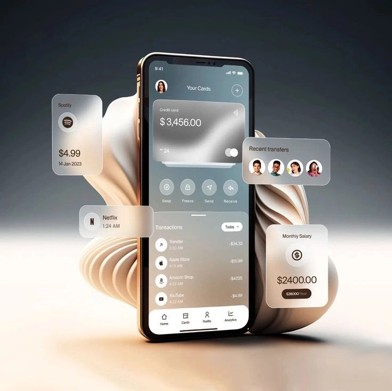
    A mobile banking UI/UX concept with a glassmorphism style, created by Praan Studio (https://www.cosmos.so/e/837821583 )

    What This Means for Young Luxury Brands

    For entrepreneurs in the early stages of building a luxury business, the question is not whether every customer wants to pay with stablecoins.

    Most do not.

    The more important question is whether some of your most valuable future customers will.

    Many luxury startups spend years refining packaging, customer service, showroom design, and digital experiences. Payments are often treated as an afterthought. Yet for international clients making significant purchases, the payment experience can become a surprisingly important part of the overall brand experience.

    A buyer willing to spend €50,000 on a watch collection or €500,000 on a property investment generally expects the transaction process to be smooth. Any unnecessary friction can feel out of place. After all, luxury is fundamentally about convenience, efficiency, and removing obstacles. Clients who are accustomed to concierge services, private travel, and personalised experiences rarely expect the final stage of a transaction to involve lengthy banking delays, multiple intermediaries, or avoidable administrative hurdles. 

    The Good News: You Do Not Need To Become a Crypto Company

    One of the biggest misconceptions is that accepting stablecoin payments means holding cryptocurrency on a company’s balance sheet.

    In most cases, it does not.

    Modern payment providers can receive a customer’s stablecoin payment, convert it instantly into euros, dollars, or pounds, and deposit the funds into a traditional business bank account. The merchant never needs to manage wallets, trading platforms, or cryptocurrency custody.

    From an operational perspective, the process often feels closer to receiving a bank transfer than participating in the crypto economy.

    This distinction matters because it shifts the conversation away from speculation and toward customer convenience.

    Photo by Karolina Grabowska (https://www.cosmos.so/e/969072838)

    Why Demand is Growing

    Part of the answer lies in how wealth is changing.

    A growing share of high-net-worth individuals now hold digital assets as part of their broader portfolios. Many founders, investors, and entrepreneurs who generated wealth through technology, venture capital, or crypto-native businesses are accustomed to managing significant portions of their liquidity digitally.

    There is also a less discussed but equally important reason. In many parts of the world, local currencies have experienced significant depreciation over the past decade. As a result, businesses and individuals increasingly use US dollar-backed stablecoins as a way to preserve purchasing power and store value. In markets across Latin America, Africa, Eastern Europe, and parts of Asia, stablecoins have become a practical financial tool rather than a speculative investment.

    For luxury brands serving international clients, this matters. A customer may hold substantial wealth in stablecoins not because they are a crypto enthusiast, but because it has become one of the most efficient ways to hold and move dollars internationally.

    There is also a generational factor at play. The next generation of luxury buyers grew up with smartphones, digital banking, and global online commerce. They are comfortable moving capital digitally and often expect the same level of convenience from luxury brands that they receive from modern financial services.

    For them, payment flexibility increasingly signals that a business understands how contemporary wealth works.

    Looking Ahead

    The infrastructure supporting stablecoins is maturing rapidly.

    Regulation is becoming clearer. Financial institutions are becoming more involved. Large payment networks are investing heavily in digital settlement systems. Real estate, collectibles, and other assets are beginning to be represented digitally on blockchain networks.

    None of this means traditional banking will disappear. Far from it.

    What it does suggest is that businesses will gradually gain more options for how they receive and move money internationally.

    For luxury entrepreneurs, the takeaway is simple.

    You do not need to become an expert in blockchain technology. You do not need to follow cryptocurrency markets every day. But understanding how affluent customers increasingly transact is becoming part of understanding modern luxury itself.

    The most successful luxury brands have always paid attention to emerging shifts in customer behaviour before they became mainstream.

    Stablecoins may prove to be another example.

    Not a revolution that arrives with fanfare, but a quiet change that, over time, becomes difficult to imagine doing business without.