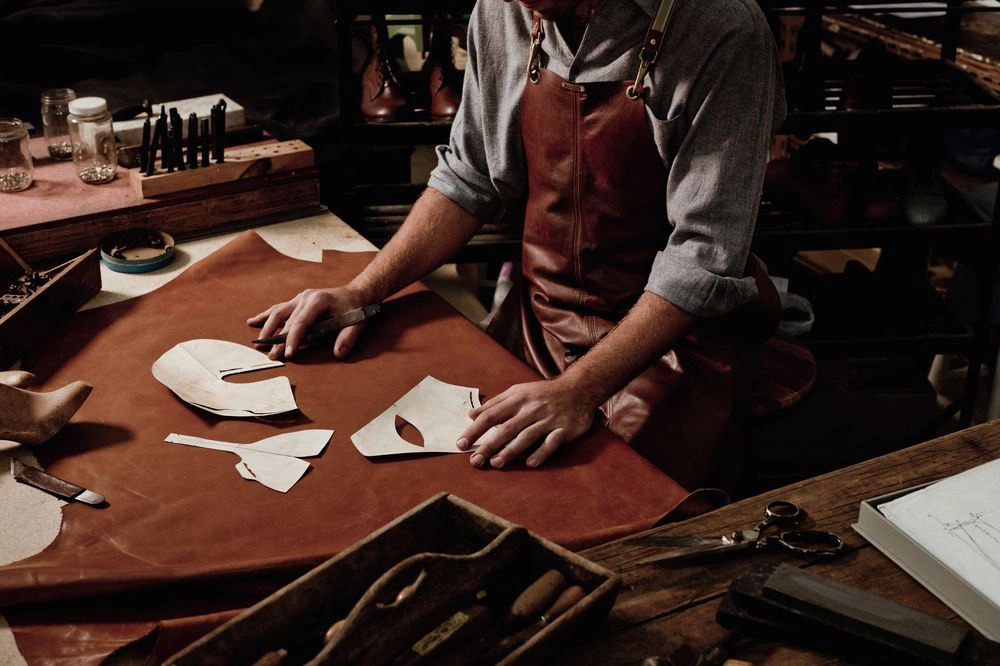
A hundred and seventy-five years of Swiss shoemaking is currently before a judge in a Lugano courtroom. Not because anyone forgot how to craft a quality shoe.
I have always been fascinated by how luxury brands decline. Not from bad products. From bad leadership.
Bally comes to mind, and this autumn it comes to mind even more, as the court is now determining the future of the company, and whether it gets to live on at all.
Founded in 1851 by Carl Franz Bally, for over a century Bally dressed the likes of royalty, celebrities, and customers who recognised quality when they saw it. The craftsmanship was impeccable. The heritage was undeniable.
Then the leadership rollercoaster began.
The family lost control of the company in 1977, when a Swiss financier bought a majority stake and sold it nine months later to an armaments manufacturer. In 2008, the house passed to the Reimann family’s investment vehicle, and in August 2024, to a Beverly Hills investment firm. The creative direction went in 2022 to the founder of a Los Angeles streetwear label, who left after two seasons, then to a Gucci veteran who left for Jil Sander in 2025. The chief executive changed again in February 2026. Each arrival brought a repositioning. One wanted to go mass market. Another chased streetwear. Then back to heritage. Then contemporary. Then accessible luxury, which is the polite way of saying that no decision was taken at all.
The artisans in the workshops kept making beautiful shoes. But nobody at the top could decide what Bally was supposed to represent anymore, and when vision changes every eighteen months, even the finest craftsmanship becomes irrelevant.
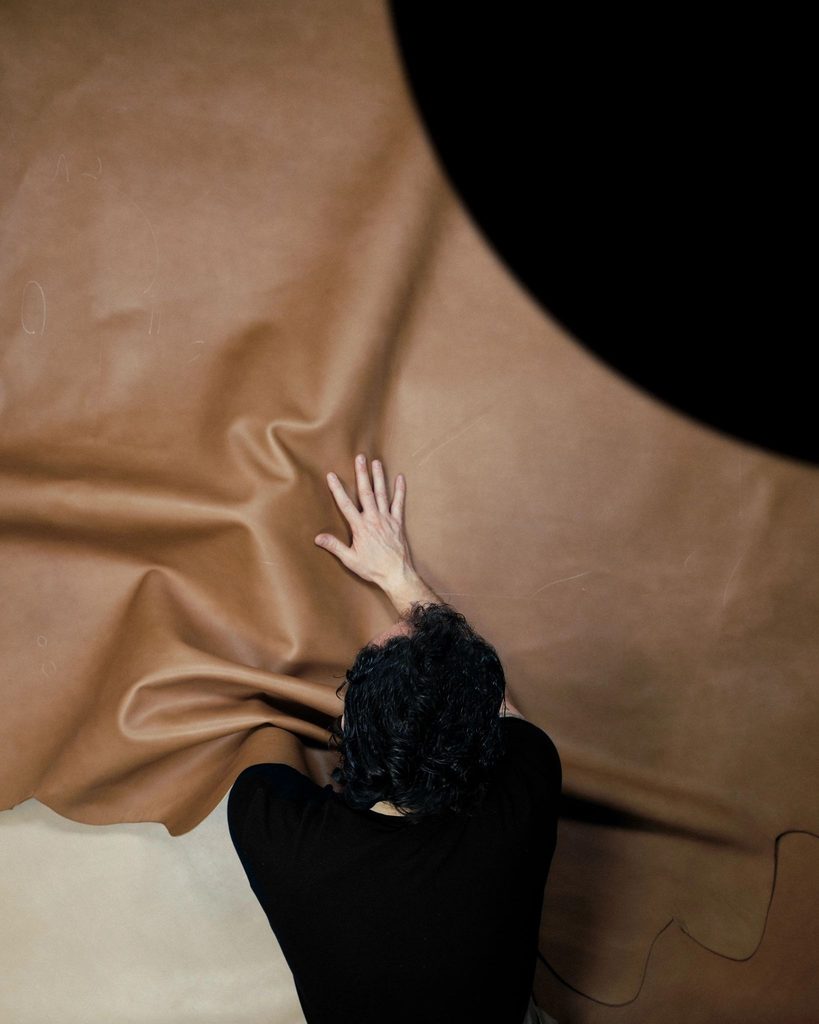
An artisan inspects leather, a process highlighted by brands Tod’s and Berluti (https://www.cosmos.so/e/1881407287)
I remember walking past a Bally store in Milan a few years ago. The windows looked confused. The messaging felt uncertain. You could sense the internal chaos from the street. A window is the last link in a chain that starts much further up. I would not have been able to tell you in that moment how this story would end. What I could tell was that nobody upstairs knew what the point of the shop was.
This is where we find ourselves now: in June, the Lugano court placed Bally Schuhfabriken under a supervised debt moratorium and appointed an external administrator. Since then, the company has faced more layoffs and factory closures, the rescue bid has been turned down by the owner, and a further round of redundancies follows in September. The protection period finishes in mid-October, when the administrator must announce whether the company can be restructured or close down. A court has already blocked an attempt to move the Bally trademark to an American entity registered weeks earlier, over concerns the house’s most valuable asset might end up beyond its creditors.
Bally’s leather quality never declined: what kept changing was the answer to what the house was for, and Lugano is now counting the cost.
Nobody wrecked anything. Every team acted reasonably on the information it had and the time it was given. From inside, none of it looked like failure. But a team can only execute brilliantly when it understands what it is executing towards, and for twenty years nobody could say with certainty that they did. Product excellence cannot survive leadership instability. The lesson is not subtle: leadership outlasts product, always.
It is tempting to describe this as chief executives parachuted in from industries with nothing to do with luxury, and I have described it that way myself. Having looked at the record properly, I would put it differently. The people brought in to run and design the house were mostly luxury professionals with real records. The discontinuity came from above them, from owners for whom a shoemaker was one asset among many: an armaments group in the 1970s, a consumer goods fortune later, a turnaround fund now. I have argued before that luxury speaks a specific language, and appeals to a part of the brain the mass market never reaches. An owner who has never worked with that language analyses a house the way you analyse a balance sheet, and from there everything goes consistently wrong.
Now the part that stops this being a story about one unlucky house.
Bottega Veneta had the same disease and survived it. Founded in Vicenza in 1966, its whole idea was announced in a 1978 advertisement Andy Warhol made for Interview magazine, under a line that has outlived everyone involved: when your own initials are enough. Then, through the loudest logo decade the industry has ever had, it went chasing trends that had nothing to do with the brand. By 2001, it was close to bankruptcy, and Gucci Group bought it for around a hundred and fifty-six million dollars.
Tomas Maier arrived with two rules: no logos and no compromises; put the money back into the Vicenza workshops and the intrecciato artisans, and rebuild the house around a single idea rather than a season. Revenue skyrocketed from well under a hundred million dollars to more than 1.2 billion by 2016. The creative direction has changed hands several times since, to designers with very different sensibilities, and not one of them has reopened the founding question. The signal stayed the same.
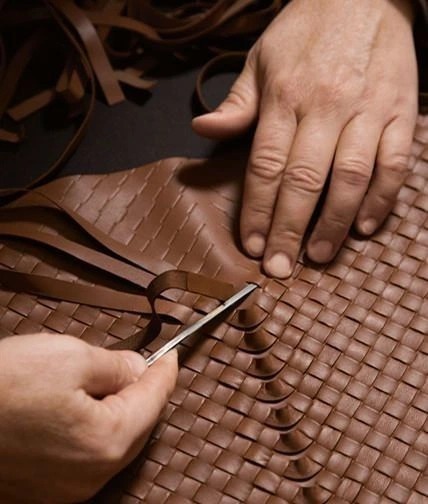
An artisan crafts the signature Bottega Veneta Intrecciato weave. Photo by: Bottega Veneta(https://www.cosmos.so/e/2045642051)
The difference is not luck, and not the calibre of the designers, since Bally hired amazing designers too. At Bottega Veneta, someone at the top decided what the house was, and everyone who came afterwards inherited that decision instead of relitigating it. That is the true meaning of succession. The other case is a rollercoaster.
I am simplifying, and I know it. There are market cycles, and owners who buy in order to sell. But after seeing enough companies up close, I have stopped treating context as a sufficient explanation. Context is the same for everybody. The response to it is not.
If you are a founder, you are almost certainly not running a house that is a hundred and seventy-five years old. The smaller scale of this problem can be even more dangerous: in a company of three people, the whole leadership structure might consist of the founder alone, and there is no framework to absorb the shifts. Change your mind about the brand direction every six months, and nobody will notice for a while. If your standard lives only in your hands and not in the company decision-making process, it will weigh you down forever. Make a move to mirror a competitor, and you are answering their strategy instead of building your own.
I did not set out with a theory of this. Working with the people who run these houses, and watching the ones that fall apart, I kept encountering the same quiet concept. The houses that held together were led by people who knew who they were, and remained true to themselves while everything around them shifted. Where that comes from, and how a leader builds that powerful brand core, is what we will explore next.
Because in the end, luxury is not just about the product. It is about the clarity and conviction behind why you make it. You can recover from a bad collection. You cannot recover from leaders who do not know what the brand stands for.
Bottega Veneta proves the damage is reversible. It does not prove it is cheap.
Leave a Reply