Learn how to build a financially healthy business, understand your numbers, and prepare for future investment. From cash flow and financial planning to investor readiness, this masterclass covers the financial foundations every founder should master.
Something exceptional is in the making. We’re carefully curating every detail to create an unforgettable experience for our members. More information will be announced soon
Something exceptional is in the making. We’re carefully curating every detail to create an unforgettable experience for our members. More information will be announced soon
Subtitle:Bringing together the founders shaping luxury’s next decade.
Date: To be announced Location: To be announced
Join founders, investors, and industry leaders for a day of inspiring conversations, thought-provoking masterclasses, and networking. Designed to bring together ambitious minds shaping the future of luxury.
We will feature a lineup of world-class speakers and curated experiences.
Date: 18 October 2026 Time: 19:00 CEST Format: Online Expert: Cédric Laforge
Expert bio: With over 15 years of experience in the luxury industry, Cédric Laforge has held senior positions across houses including Hermès, Cartier, Chopard and Vacheron Constantin.
His expertise spans luxury brand strategy, international operations and high horology, bringing both an industry and academic perspective to the evolving challenges facing luxury today.
Description: Luxury has always been shaped by tension: heritage and relevance, exclusivity and growth, intimacy and scale.
Luxury in Tension explores the strategic trade-offs shaping the industry today, examining how luxury can evolve without losing the codes, culture and desirability that give it lasting value.
Through real-world cases and contrasting perspectives, the conference brings together established luxury expertise and the thinking of a new generation shaping what comes next.
footer note: Every participant receives an official Sapēre Certificate of Completion following the masterclass.
My work has placed me across the US, Europe, the Middle East, and Asia, inside the private world of the top one percent: collectors, royal networks, family offices, and connoisseurs whose decisions move categories long before the market registers them. That vantage point produces one unavoidable conclusion.
The people who will define luxury between now and 2050 are not being formed inside graduate programmes. They are forming themselves outside them.
The End of The Inherited Pathway
For half a century, entering luxury followed a single script. The right degree. A rotation through a major house. A slow ascent through hierarchy, measured in decades and rewarded with proximity to decisions rather than authority over them. That script is dissolving. Houses consolidate. Hierarchies compress. Graduate programmes produce fluency in systems that are themselves being restructured. The distance between a graduate and a meaningful decision has never been wider inside the institution, and never been narrower outside it.
This is not a generational complaint. It is a structural reading. The institutions that once manufactured luxury leaders now primarily manufacture luxury operators. Leadership has migrated elsewhere.
From Career Logic to Founder Logic
Career logic asks how to be selected. Founder logic asks what deserves to exist.
The evidence sits at the very top of the market. The most sophisticated clients I encounter no longer default to legacy names. Independent watchmaking commands waiting lists that legacy production cannot replicate. Niche fragrance has redrawn the economics of an entire industry. Collectible design, private cultural experience, digital craftsmanship: whole categories now exist because individuals refused to wait for permission, and because the top one percent rewarded them for it.
This is the signal young founders must read correctly. The wealthiest clients in the world are not buying scale. They are buying conviction, scarcity, and intellect. That is precisely what a founder can offer and an institution cannot.
The Five Foundations
Relevance in this new structure is not granted by employers. It is constructed by individuals. Five foundations determine who constructs it.
EXPERTISE. Depth precedes visibility. The market has become ruthless toward shallow fluency, because the clients of the future are themselves connoisseurs. Real expertise is knowledge that survives contact with a superior mind. It is built through obsessive study, direct exposure to objects and craft, and years of intellectual honesty about what one does not yet understand.
CULTURAL INTELLIGENCE. Luxury is a cultural system before it is a commercial one. The founder who reads shifts in taste, meaning, and value across geographies holds an advantage no capital can replicate. Cultural intelligence means understanding why the Gulf collects differently from Geneva, why heritage codes are being rewritten in Seoul and Shanghai, and where desire will migrate before the market prices it.
CREDIBILITY. Credibility is the compounding asset of a founding career. It is built in public and verified in private: published thinking, institutional association, and work that circulates among serious people. A graduate with a title borrows credibility from an employer. A founder must generate it independently, which is harder and permanently more valuable.
RELATIONSHIPS. Networks are not contact lists. They are infrastructure. In my experience, the relationships that matter at the highest level of this industry are never built on transaction. They are built on intellectual contribution, discretion, and time. Access precedes opportunity, and access is earned years before it is used.
STRATEGIC POSITIONING. Position is chosen, then defended. The graduate accepts the terms by which the institution judges them. The founder defines the terms by which the market judges the category. Positioning is not communication. It is the architecture of how a founder is understood, and it must be designed with the same rigour as any product.
The New Rules
Read together, the foundations resolve into doctrine.
Enter through knowledge, never through employment.
Build a body of thought before building a business.
Treat credibility as capital and spend it with precision.
Construct relationships as infrastructure, not as networking.
Choose a position the incumbents cannot occupy.
None of this excludes the great houses. Some of the most consequential founders of the next decade will pass through them. But they will pass through as students of the system, not applicants to it.
The Horizon to 2050
Between now and 2050, luxury will be reshaped less by its incumbents than by its entrants. Wealth is transferring across generations at historic scale. Taste is decentralising across geographies. The connoisseur class is younger, more global, and more intellectually demanding than at any point in the industry’s history.
The founders who understand this will stop asking how to enter the industry and start asking what the industry is missing. The distance between graduate and founder is no longer measured in years of service. It is measured in intellectual preparation.
That preparation is the work. This publication exists to serve it.
The business that looks like easy money is one of the hardest there is. What the founders who fail tend to miss.
PERSPECTIVE VII
Most new businesses do not survive.
That is the plain starting point, and it is worth saying before anything about luxury, as the people who launch luxury brands are usually the first to forget it. Roughly one in five new businesses in the United States closes within its first year. Around half are gone within five, and close to two-thirds within ten. Among the more ambitious sort, the scalable ventures built to grow fast and pull in investment, the attrition is far steeper still.
The reasons are not mysterious. When CB Insights read through hundreds of founder post-mortems, the most common cause was not a clever rival or a sudden crash. It was simpler and more uncomfortable. There was no real demand. The company made something that not enough people wanted badly enough to pay for. Running out of cash came next, although that is usually the symptom rather than the disease. Businesses rarely die in a single accident. They starve, slowly, because the venture they built never found enough people who needed it.
Then put luxury on top of that. The instinct, when people hear you work in luxury, is that the maths must be gentler. Charge more, do less, let the margins look after themselves. It is the wrong instinct. Luxury does not make things easier; it can only add complexity. You take the ordinary obstacles that every start-up faces, and on top of it, you add people who want to operate in the luxury industry, which brings a new level of complexity. So the whole thing becomes a far more daunting quest than it looked.
There are two things a luxury founder has to hold at the same time, and in my experience, most hold neither. The first is always the same. It is human biology. Luxury speaks a specific language and appeals to a specific part of the brain that the mass market does not. This has always been so, and it always will be, at least until we evolve into something structurally different, which is not a matter of years but of a very long time indeed. Our brains reached their present form essentially a long time ago. The size was already within the modern range around three hundred thousand years ago, and the shape settled into what we carry now, somewhere between a hundred thousand and thirty-five thousand years ago. The mechanism of desire is even older. In the timeline of any market, any brand, any business plan, none of it has changed at all. So the founder has to understand how the brain actually works, first of all. And I do not believe most of them do.
That equipment has a fascinating feature. As desire rises, judgment falls. The more someone wants a thing, the less coldly they weigh the purchase. This is not a flaw to be corrected – it is the system luxury operates through. The founder who misses it competes on specification and price, which is exactly the ground where desire does not operate.
The second force is harder, because it asks the founder to read the world rather than the numbers. Not to follow the trend, because following the trend is the logic of fast fashion, and that logic is not what proper luxury is, or is meant to be. The task is to read the change in society, which is a different and subtler thing. Not what a trend tells us to wear, or to use, or to do today, but the slower movement underneath it: where a society is going, and what it now wants to say about itself. Trends can be followed. Change has to be read early, before it announces itself. You cannot sell a European luxury brand in China the way you could a few years ago. The object is the same. What it means is not.
Here is the thing that the people handling beautiful brands tend not to grasp. When you handle luxury, you are handling a very precious and very delicate jewel. And you have to be careful. You cannot treat it like the little rubber ring that falls out of a packet of crisps, the kind of toy my son plays with for an afternoon and then forgets. You are dealing with something else. Something delicate. Something precious. Something that asks for a different kind of care in the way you handle it: the design, the marketing, the timing. Yet a remarkable number of brands manage the jewel as though it were the ring. They discount it, they stretch it, they put it everywhere, and then they are surprised when the magic drains out of it.
Which brings me to positioning, the part founders most want to believe is flexible. It is not. In luxury, the rules of positioning are close to absolute. Positioning is the place a brand holds in the mind of the consumer, and that place is an asset. Move it carelessly, and you do not reposition it. You break it.
Now look at the very top, where the money is endless, and the mistakes are still being made. In the automotive industry, a luxury legend has begun to explore the fully electric road: Ferrari, with its newest creation, the Ferrari Luce. Have a look at it. And then just look at the thing.
It is not really just a car. It is a signal sent from above. I am not going to reach for adjectives, because I do not want to put my judgment between you and the object. Look at it and decide for yourself what it tells you about where Ferrari is going, and the risks it is taking by going there. A Ferrari has never really been about the engine (although superb, even mythological), or the figures, or the technology. Those are the explanations people reach for afterwards. The beauty itself is something else, and it has always rested on one quiet, unspoken truth. It is not for everybody. You are not everybody. That is part of what you are buying.
Everyone is going electric, the argument runs, so Ferrari should too. But Ferrari is not everyone. The strongest brands sometimes do the opposite of what everyone else is doing. Maybe. I say maybe, because the move only works if you are Ferrari. If you are Volkswagen, go ahead, chase the crowd; it is the right thing to do, because Volkswagen is the car of the people, and that is honest work. A Ferrari that behaves like everybody else automatically stops being a Ferrari.
Here is what surprises me most, as at these levels it ought to be understood, yet it is not. What makes a product or a service truly luxurious is the aura. You stand in front of the masterpiece, and you have to wonder how it was even possible to create it, to invent it, to craft it. I could not do it myself. That is the feeling. It is the pure essence of luxury, and it transcends the technicalities, the features, and the characteristics of the product.
What is missing in the Ferrari Luce, for me, is exactly that. It is pure magic. A true luxury object keeps the buyer feeling that it is somehow beyond them, that they could not simply make it, or casually own it. The feeling clings even to the toy version, the small model on a shelf with no use at all, yet it is wanted anyway. The moment that feeling goes, the point of luxury goes with it.
This is close to what Bourdieu called distinction: the object draws a line between those who belong and those who do not. None of it is rational, and that is precisely the point. People buy luxury to feel something strong, and to feel, consciously or not, that whatever they are acquiring is an object of pure desire. It is not something useful. It is a completely different dimension, a completely different paradigm. The moment a brand starts justifying itself on usefulness and value for money, it has already left luxury behind.
Other houses felt the same pull and answered differently. Lamborghini had the same temptation to do what Ferrari is doing, and cleverly it said no, not yet, this is not us. Because there are positioning rules you have to respect, and they are rules for a reason. They are not optional.
Then think about Jaguar. Jaguar wanted to recast itself, and you can see in real time the impact of breaking those rules. The lesson is not that electric cars are right or wrong. It is that the rules of positioning do not bend because a technology happens to be trendy at the moment.
There is one more issue, and it sits inside these companies. The large groups are driven by finance, not by creativity or vision. When a business is run by finance, it tends to be profitable in the immediate, which means it quietly loses in the long term. And then comes the hard part. How do you keep a sense of heritage while staying current with technology, AI, and the new virtual channels? How do you honour the older customer whilst simultaneously attracting the deciding factor in the future of luxury – the younger generations? By 2030, most of the spending will come from people who are young today. They have the highest spending power, yet are walking away from luxury, unconvinced by status and exclusivity alone. But what for? What is the goal? What do they actually want to spend the money on? Get that wrong, and no amount of financial discipline will save you.
So the people handling beautiful, prestigious brands today are handling them like any other brand. But they are not any other brand. If you want the short version of what is missing right now, it is a deep understanding of what luxury actually is.
So why do so many luxury start-ups fail? Rarely for the reason the founder gives afterwards. They fail because they bring the ordinary energy of a normal business to a game with a second, hidden set of rules, and because somewhere underneath, they believed that luxury would make the sums kinder. It does the opposite. A start-up already has a high chance of failing, and luxury does not make that easier. It makes it harder. The rules can be learned, though. Desire can be understood, society can be read, and the jewel can be handled with the care it asks for. Most of your competitors will never trouble themselves to do any of it. Which is exactly why, if you do, there is still room at the very top for you.
Long before there was a single logo, there was fire.
A man who could make warmth where there had been only cold did not need to announce himself. The light did it for him. He was the one others moved toward in the dark, and the movement was the first status our species ever knew. Luxury, in the beginning, was not an object you owned. It was something you could do that others could not. Ease where there had been struggle. Warmth where there had been winter. The better hunter, the deeper well, the cave that did not flood. We have spent forty thousand years forgetting that this is what the word has always meant.
Comfort was the first luxury, and it was shown, because to be resourceful was to belong. The tribe gathered around usefulness. To hold the surplus was to hold a seat at the fire, a say in the hunt, a place in the line of the living. Status and survival were the same animal. There was no vulgarity in it yet, because there was nothing to falsify. You could not fake the warmth. Either the fire burned, or it did not.
Then, slowly, the warmth became a symbol of itself. The thing that signaled ease replaced the ease itself. We moved from what a man could do to what a man could hold, and from what he could hold to what others could not. Beauty now meant scarcity. The point of the object was no longer that it served you. The point was that another could not have it. The logos arrived to make possession legible at a distance so that the signal could travel faster than any conversation.
For a long time, this held, because a logo still promised quality. If it was rare, it was good. Then the promise broke. The logo went everywhere. The price climbed while the product it was fixed to grew simpler. And somewhere in the last decade, an entire generation began paying immense sums for objects that do nothing, hold nothing, and mean nothing, then performing peace about it for an audience that was doing the same. We called it taste. It was noise wearing the costume of taste.
Look closely at the last loud thing you bought. Underneath it sits a question you never asked aloud. Is it worth it? Not the money. The meaning. You bought it to be set apart, and ten thousand strangers bought the same thing to be set apart in the same direction. Anyone can copy a logo. That is the whole quiet tragedy of it. The product you reached for to be individualistic is what made you identical. The signal you paid the most for is the one that sets you apart the least.
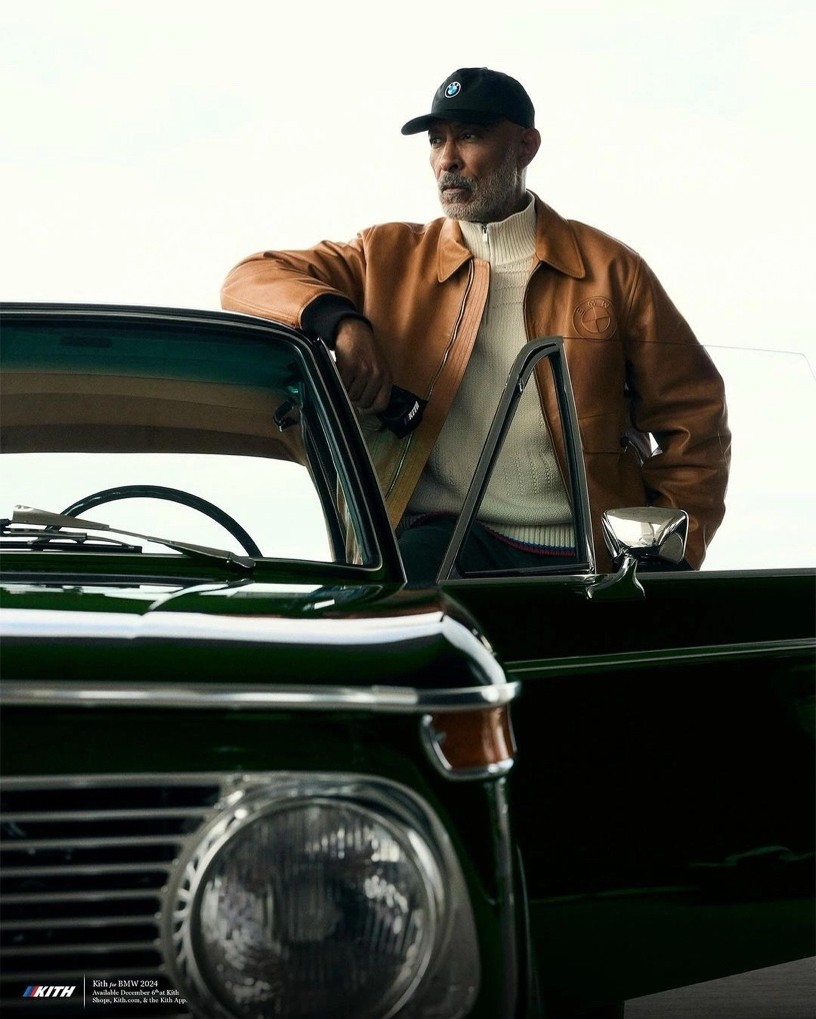
An editorial for the Kith for BMW 2024 collection, featuring a vintage car from Ronnie Fieg’s personal collection (https://www.cosmos.so/e/902111897)
What no one says, because it is uncomfortable to say, is this. Status does not die. It cannot. Status is energy. It is neither created nor destroyed. It only changes its shape. The man who swears he is humble is reading the room as closely as anyone, scanning for signal in others and in himself, because the mind is built for it and will not be argued out of it. So the question was never whether to want status. The question is, which form are you still chasing after, after the old one turned out to be embarrassing?
And it has turned embarrassing. In 2023, shelves in North America carried forty percent fewer heavily logoed goods than the year before. The quiet market, the one that refuses to announce itself, was worth $137 billion and is climbing toward $278 billion. Three in four aspiring buyers now place quality above exclusivity, above price, above any famous name attached to it. More than half of high earners would rather spend on an experience than on a thing. The crowd did not stop wanting status. The crowd is only learning, late, what the secure have always known. The supreme signal is the one you can send without explaining. Respect, without asking for it. Dominance, without showing it. Effortlessness returned.
I once watched two men across a single evening. The first described a thing his family had lived through, a real feeling, and the room went still and warm and forgot its phones. The second listed his cars. By the third car, the listing had become a kind of begging. I have not thought about one of those cars since. I think about the first man often.
That is the whole shift, in one room. A logo can be copied by morning. An experience cannot be copied at all. A friend of mine still keeps a bookmark from a hotel, a seemingly ordinary object, because the people there had noticed he read, had noticed he kept coming back across the years, and chose to show him they had been paying attention. He has told that story a hundred times. The bookmark became a sign of luxury. Not the marble. Not the price. The attention. The new status is made of knowledge, of art, of taste, of the things a person had to live in order to carry. You cannot buy the story. You had to have been there.
And the frontier is moving again, past the body, past even the mind. We live drowning in stimulation, lit by a thousand small fires a day, and in a world like this, the rarest possession on earth is a calm nervous system. The places that understand this are the ones the powerful now disappear into. An Aman. An Oberoi. A silence you can afford. They sell almost nothing you can hold. They sell the return of a person to himself. The final luxury is not a watch or a wing of a house. It is presence. The capacity to be here, unhurried, while the world claws at your attention and comes away with nothing.
So the old luxury wanted to be seen, and spent everything arranging the seeing. The new luxury would rather be known by the few who can read it.
And here is where it closes. Status never left the room. It only found a harder thing to wear. The world has grown so abundant that wealth can buy almost anyone now, and almost anything. A name, an hour, a loyalty, a view. Everything carries a price, and most people quietly carry one too. The single thing that has refused to be bought is peace. You cannot purchase it, cannot inherit it, cannot fake it across a dinner. You can only build it slowly, or be given the rare conditions in which it is allowed to arrive.
That is the whole opening left for anyone who makes things. A brand no longer wins by adding to a person. It wins by adding to their peace. The car, the cloth, the room, the object, if it deepens the calm of the one who carries it, it has earned its place in this new order. If it adds noise, complication, one more small fire to tend, it belongs to the old world already, already dying, whatever the logo on it. So this is where status went. Not away. Inward. The calm man in the room is not above the game. He is winning a harder version of it. And the only luxury still worth selling, the one thing all this abundance can never flood, is a quieter mind.
Redefining Value In a World Saturated with Information
We are living through the largest democratization of information in human history.
Today, anyone with a smartphone can access more knowledge in a few minutes than most specialists would gather in days, only a generation ago. Naturally, this raises a question: if information is now effectively free, what remains valuable? Why invest years in learning anything when AI can explain almost everything?
The answer is that information was never a scarce resource. Judgment was.
AI has democratized access to knowledge, but it has not democratized the ability to recognise quality, authenticity, significance, or value. That ability, the essence of connoisseurship, is gaining value quicker than ever.
The anxiety surrounding artificial intelligence often assumes that expertise is primarily a matter of possessing information. If machines can access and reproduce knowledge at scale, what remains for human experts? Yet this assumption misunderstands what expertise has historically been and, in many ways, continues to be. For centuries, we confused expertise with information because information was difficult to obtain. Books and archives were expensive and inaccessible. Specialised knowledge lived inside institutions and professions. The expert appeared valuable because they possessed facts that others did not.
AI has shattered that arrangement almost overnight. As barriers to knowledge acquisition tumbled, people stopped turning to specialists and instead placed their trust in technology. Information became universal. Exceptional talent did not become less relevant; remarkably, it became more appreciated over time. Judgment was, and remains, its defining mark.
Connoisseurship is traditionally associated with art collecting; the term refers to expert discernment in matters of quality, authenticity, and taste. A connoisseur is not someone who possesses knowledge and information. A connoisseur is someone who has spent enough time looking, comparing, handling, tasting, observing, and evaluating that they can recognise quality when they encounter it.
This kind of expertise has always been difficult to explain because it does not exist primarily in language. A language model can describe the taste profile of Barolo. It can explain tannins, terroir, and vintage variation. It can summarise the opinions of critics and reproduce decades of wine literature. But none of this is the same thing as tasting hundreds of wines over twenty years and developing a sensory memory sophisticated enough to recognise a vintage blindly.
The difference seems obvious when framed this way, yet much of the current discussion around AI ignores it. What AI excels at is explicit knowledge: information that can be written down. Facts, definitions, explanations, summaries – these are the forms of knowledge that dominated education and intellectual status throughout much of the modern era.
Through his famous observation, “We know more than we can tell, ” philosopher Michael Polanyi argued that a great deal of human knowledge operates differently and cannot be conceptualized, almost like an instinct acquired through experience. A master violin maker cannot fully articulate every judgment that goes into evaluating a piece of wood. An experienced photographer often sees qualities in an image before being able to explain them. A jeweler notices details indiscernible to a novice. A chef recognises balance long before it can be reduced to a recipe. This level of insight is only cultivated through years of hands-on work in the retrospective field. And it is precisely this kind of expertise that gains visibility as informational knowledge becomes commoditised.
Historically, connoisseurs were valuable for exactly this reason. Nineteenth-century art scholar Giovanni Morelli became famous for attributing paintings by studying minute details such as ears and hands. Later, Bernard Berenson built one of the most influential careers in the art world through attribution and authentication based largely on cultivated visual judgment.
Their advantage was perception and experience, which wasn’t available to everyone. This distinction becomes increasingly important in the age of AI as we enter a world saturated with simulated knowledge. You can instantly access tons of information, essays, and recommendations. For the first time in history, information itself is becoming cheap enough to be taken for granted. When that happens, value migrates elsewhere. Luxury has always followed scarcity.
When books were rare, libraries were a luxury. When global travel was inaccessible, seeing distant places was a luxury. When expertise required years of research, knowledge itself functioned as a luxury good.
In the modern day and age, information is no longer scarce. This may be the most important cultural consequence of AI. Far from destroying connoisseurship, it transforms it into a new form of premium value. Connoisseurship cannot be mass-produced. We can take the winemaking sector as an example. An AI model can summarise the history of Burgundy wine, but it cannot spend years tasting it, accumulating sensory memory, and developing preferences through experience.
The same principle applies far beyond wine. Watches, furniture, architecture, fashion,
photography, literature, gemstones, music, design, food, every field where quality must be recognised rather than merely described becomes more valuable as information becomes easier to generate.
In this sense, AI does not diminish expertise. It separates expertise from information and reveals what was always underneath. Possessing endless data and knowledge is no longer an advantage when AI assistants are accessible at a few clicks on a phone. The real advantage is knowing what matters.
In a world flooded with generated content, opinions, recommendations, and aesthetics, the more valuable people are the ones whose judgments others trust.
This is why connoisseurship should not be confused with elitism. A person of affected taste uses taste to signal status, while a connoisseur pays attention to details to develop understanding. The difference matters because connoisseurship is not a social rank.
The future belongs neither to those who know the most facts nor to those who generate the most content. It belongs to those who can exercise judgment in conditions of abundance. And that is why connoisseurship is not disappearing.
Ultimately, the question arises: what forms of understanding gain value precisely due to the existence of AI?
Luxury has always adapted to the way wealth moves.
Credit cards once seemed unconventional for high-value purchases. International bank transfers transformed global commerce. Today, another shift is underway, one that many luxury entrepreneurs are only beginning to notice.
Stablecoins, digital currencies linked to traditional currencies such as the US dollar or euro, are quietly becoming part of the financial infrastructure behind luxury transactions. While headlines often focus on cryptocurrency speculation, the more interesting story is how affluent consumers and businesses are choosing to pay.
For founders building luxury brands today, understanding this trend is becoming less about technology and more about customer experience.
Beyond Bitcoin
When many people hear “crypto,” they think of Bitcoin’s price swings and market volatility.
Stablecoins are something different.
A stablecoin is a digital currency designed to maintain a fixed value, typically one US dollar or one euro. The most widely used examples, USDC and USDT, combine the speed and global reach of blockchain networks with the predictability of traditional money.
In practical terms, they allow funds to move internationally within minutes, twenty-four hours a day, without relying on multiple intermediary banks.
For a luxury business with clients in Dubai, Singapore, New York, Monaco, or London, that creates possibilities that traditional payment infrastructure often struggles to match.
Luxury is Already Using Them
The adoption of stablecoins in luxury is not a future prediction. It is already happening.
Real estate has emerged as one of the most active sectors. Across Dubai, developers such as Emaar, DAMAC, Sobha, Nakheel, and Ellington have embraced digital asset payments for both completed and off-plan properties. For international buyers, particularly those already holding digital assets, the ability to complete large transactions quickly and efficiently has become increasingly attractive.
The automotive sector has followed a similar path. Ferrari introduced cryptocurrency payments in North America before expanding into Europe, while a growing number of Lamborghini, Bentley, Rolls-Royce, and Bugatti dealerships now facilitate transactions using digital assets through regulated payment partners.
Yachts and private aviation were perhaps inevitable candidates. These industries have always catered to globally mobile clients who value convenience and speed. Several major yacht brokers and private jet operators now accept stablecoin payments for purchases and charter services, with transactions ranging from six figures to several million dollars.
The art world, often an early adopter of new forms of wealth, has also embraced the trend. Major auction houses now regularly facilitate purchases using digital assets, particularly among younger collectors and technology entrepreneurs.
Luxury hospitality, fashion, private aviation, art, and yachting have all embraced digital asset payments in recent years. Select hotels, resorts, galleries, yacht brokers, private jet operators, department stores, and flagship retail locations now allow customers to pay using digital currencies while merchants continue receiving traditional currency in their accounts.
Well-known luxury brands have already embraced this shift. Ferrari accepts crypto payments in several markets, Aeroaffaires offers stablecoin payments for private jet charters, Maddox Gallery facilitates artwork purchases using digital assets, and Yacht Hub Group enables clients to pay for yacht sales and charters with cryptocurrency.
For entrepreneurs in the early stages of building a luxury business, the question is not whether every customer wants to pay with stablecoins.
Most do not.
The more important question is whether some of your most valuable future customers will.
Many luxury startups spend years refining packaging, customer service, showroom design, and digital experiences. Payments are often treated as an afterthought. Yet for international clients making significant purchases, the payment experience can become a surprisingly important part of the overall brand experience.
A buyer willing to spend €50,000 on a watch collection or €500,000 on a property investment generally expects the transaction process to be smooth. Any unnecessary friction can feel out of place. After all, luxury is fundamentally about convenience, efficiency, and removing obstacles. Clients who are accustomed to concierge services, private travel, and personalised experiences rarely expect the final stage of a transaction to involve lengthy banking delays, multiple intermediaries, or avoidable administrative hurdles.
The Good News: You Do Not Need To Become a Crypto Company
One of the biggest misconceptions is that accepting stablecoin payments means holding cryptocurrency on a company’s balance sheet.
In most cases, it does not.
Modern payment providers can receive a customer’s stablecoin payment, convert it instantly into euros, dollars, or pounds, and deposit the funds into a traditional business bank account. The merchant never needs to manage wallets, trading platforms, or cryptocurrency custody.
From an operational perspective, the process often feels closer to receiving a bank transfer than participating in the crypto economy.
This distinction matters because it shifts the conversation away from speculation and toward customer convenience.
Part of the answer lies in how wealth is changing.
A growing share of high-net-worth individuals now hold digital assets as part of their broader portfolios. Many founders, investors, and entrepreneurs who generated wealth through technology, venture capital, or crypto-native businesses are accustomed to managing significant portions of their liquidity digitally.
There is also a less discussed but equally important reason. In many parts of the world, local currencies have experienced significant depreciation over the past decade. As a result, businesses and individuals increasingly use US dollar-backed stablecoins as a way to preserve purchasing power and store value. In markets across Latin America, Africa, Eastern Europe, and parts of Asia, stablecoins have become a practical financial tool rather than a speculative investment.
For luxury brands serving international clients, this matters. A customer may hold substantial wealth in stablecoins not because they are a crypto enthusiast, but because it has become one of the most efficient ways to hold and move dollars internationally.
There is also a generational factor at play. The next generation of luxury buyers grew up with smartphones, digital banking, and global online commerce. They are comfortable moving capital digitally and often expect the same level of convenience from luxury brands that they receive from modern financial services.
For them, payment flexibility increasingly signals that a business understands how contemporary wealth works.
Looking Ahead
The infrastructure supporting stablecoins is maturing rapidly.
Regulation is becoming clearer. Financial institutions are becoming more involved. Large payment networks are investing heavily in digital settlement systems. Real estate, collectibles, and other assets are beginning to be represented digitally on blockchain networks.
None of this means traditional banking will disappear. Far from it.
What it does suggest is that businesses will gradually gain more options for how they receive and move money internationally.
For luxury entrepreneurs, the takeaway is simple.
You do not need to become an expert in blockchain technology. You do not need to follow cryptocurrency markets every day. But understanding how affluent customers increasingly transact is becoming part of understanding modern luxury itself.
The most successful luxury brands have always paid attention to emerging shifts in customer behaviour before they became mainstream.
Stablecoins may prove to be another example.
Not a revolution that arrives with fanfare, but a quiet change that, over time, becomes difficult to imagine doing business without.