Fifty million luxury customers walked away in two years. They were supposed to be loyal. What actually drove them away, and what should founders focus on instead?
Loyalty has been the luxury industry’s favourite word for as long as I have worked in it. The loyal client, the loyalty programme, the lifetime value model. Whole departments exist to measure it. And then the numbers arrived. According to Bain and Altagamma, the active customer base for personal luxury goods fell from a peak of around 400 million in 2022 to roughly 330 million in 2025. Claudia D’Arpizio, who leads the study, put it without decoration: fifty million luxury consumers have either opted out of the market or been forced out of it in the space of two years.
Fifty million people. That is not a soft quarter. That is a walkout.
So the question in the title is worth asking properly, because the industry’s instinct is to answer it with a tool. More CRM, more points, more personalisation, another app. Deloitte surveyed 420 luxury executives for its 2026 report and found customer experience and loyalty named as the single strongest growth opportunity, ahead of everything else. They can see the problem. I am not convinced they fully grasp the root of the problem.
Start with what loyalty in luxury actually was, because it was never what the spreadsheets said it was. It was not repeat purchase. Repeat purchase was the symptom. Underneath it sat a contract, mostly unspoken, between the brand and the client: you give me the feeling, and I will keep coming back. The feeling of distinction, of belonging to the few, of holding something that draws a line between those who understand and those who do not. The logo was the receipt for that feeling of exclusivity. The industry, being run increasingly by finance rather than by creative vision, made the classic mistake of confusing the evidence with the cause.
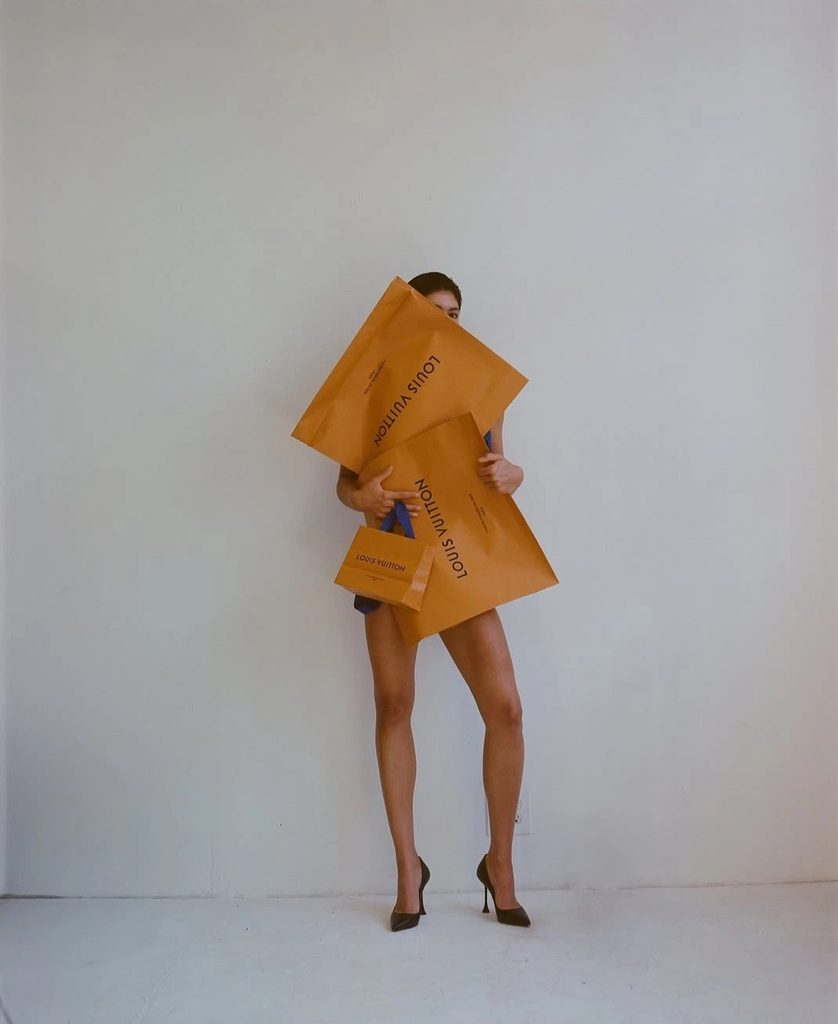
Silent Majority, an exclusive editorial collaboration with Louis Vuitton, 2025. Photo by: Kevin Alexander (https://www.cosmos.so/e/1276579880)
Then the receipt system stopped working. McKinsey and the Business of Fashion found that one in three American consumers had bought a dupe in the previous twelve months, and these are not the sad fakes of twenty years ago but extremely well-made look-alikes. Legal advisers now warn openly that overexposure to dupes and super-fakes degrades the perceived scarcity and exclusivity of the authentic article.
Meanwhile, Bain reports that prices of the iconic bags rose between 50 and 70 per cent from 2019 to 2025, while genuinely new hero products became rare. Hold those two facts together. The brands raised the price of the promise while the promise itself was being photocopied on every street corner. No loyalty programme survives that arithmetic. You cannot bill someone more every year for a feeling you are delivering less of.
And the feeling is the whole game. We discussed previously the biology of desire in the Building Luxury Brands pillar: people do not buy luxury rationally, and the moment a brand asks to be judged on usefulness and value for money, it has already left the luxury paradigm behind. Loyalty was never a rational calculation either, but an emotional state that happened to produce a facade of rational behaviour. Therefore, the question in the title is not completely accurate. Emotional engagement is not replacing brand loyalty. Emotional engagement is what brand loyalty was made of all along. What has changed is where people go to find the emotion.
That change is well-documented. According to Bain, this tectonic shift was detected as early as 2024: spending migrated from products to experiences, hospitality, fine dining, travel, and wellness. In 2025, personal luxury goods sat roughly flat at around 358 billion euros, while experiences continued to outpace the wider market.
There is respectable science underneath this. Research by Van Boven and Gilovich, running back to 2003, shows that experiential purchases make people measurably happier than material ones, that people revisit them in memory far more often, and, crucially, that experiences resist comparison. A handbag can be overshadowed by a bigger, shinier logo at the next table; yet a week that changed how you perceive your marriage cannot be overshadowed. It stays with you, part of who you are. Objects sit beside the self. Experiences get woven into it. If you are selling an emotion, that is a structural advantage, not a fashion.
Now add the generation that will decide the future of luxury to the formula. Bain projects that by 2030, younger generations will account for close to 80 per cent of luxury purchases. But the behavioural finding is already measured: these clients are less loyal in the traditional sense, and they evaluate brands on cultural relevance rather than status. They started buying luxury at fifteen. They have money to spend. And they are precisely the fifty million problem in embryo, because a customer who was never loyal to your logo cannot be retained by your logo.

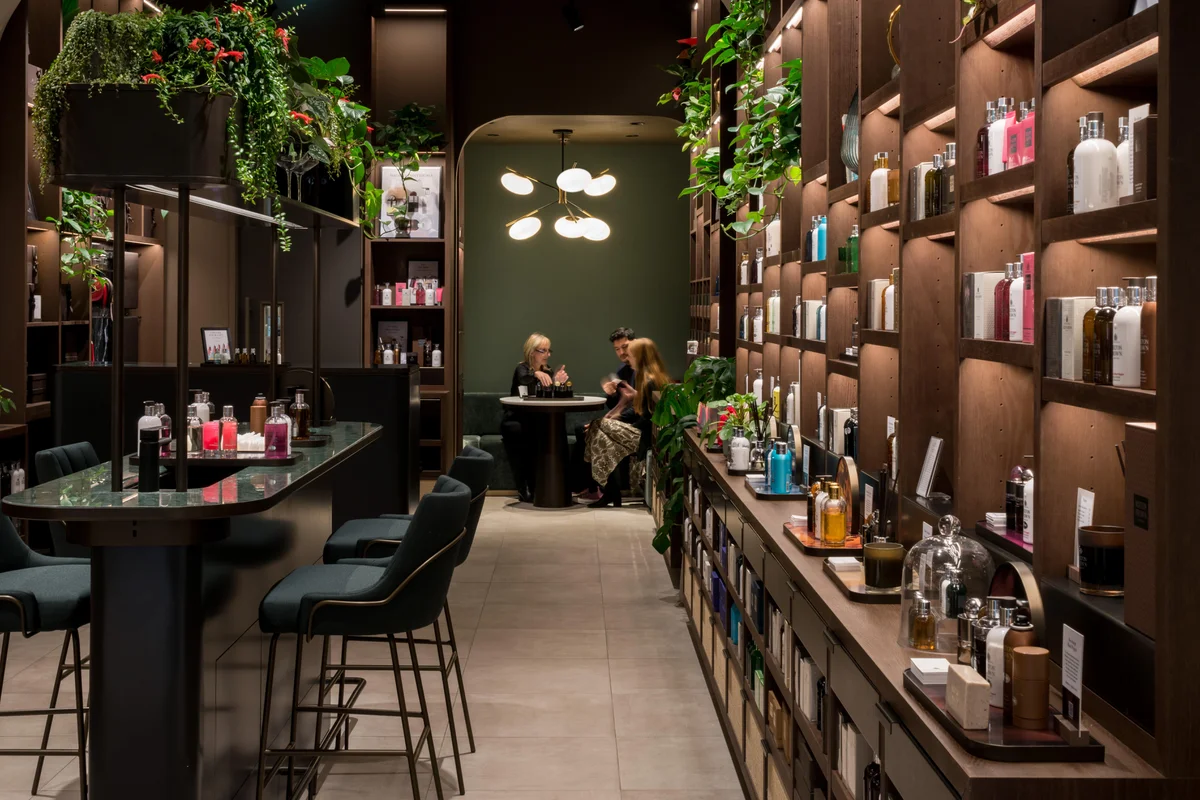
A gathering at the TIMBRE wellness studio. Photo by Virginie Bichet (https://www.cosmos.so/e/394212145)
Here is the case that intrigues me, because there is one category where loyalty is not dying at all: watches. Rolex, Patek Philippe, and Audemars Piguet all benefit from year-long waitlists, clients cultivating relationships with authorised dealers the way one cultivates a friendship, collectors who describe the years of waiting as part of the pleasure. Look at what is actually being sold there. Not a logo. A relationship, a ritual, an apprenticeship, an entry into a community of experts. The watch industry did not defend loyalty by defending the product. It defended loyalty by turning the product into an experience. That, to me, is the pivotal example. Loyalty did not disappear; it shifted the perception of the product, attaching it to relationships and rituals, not monograms.
Though the migration to experiences is a genuine development, it is worth noting what comes with it. Experiences commodify, too. Tourism researchers now document travellers scripting and timing their activities purely for shareability, and a luxury holiday performed for Instagram is doing exactly the social work a logo used to do, only with better lighting. If what really drives all of this is distinction, the old Bourdieu machinery of drawing lines between those who belong and those who do not, then the migration from logos to experiences is not an escape from the status race. It is the race’s next venue. Which suggests where the frontier already lies: the private, the unphotographable, the room you cannot post from. When everyone can screenshot the experience, the true luxury becomes the thing that leaves no screenshot.
So what does a founder in the first five years do with all this? Stop building loyalty programmes and start building the conditions for emotion. Loyalty programme points reward purchases; yet nobody ever feels celebrated by points. Ask instead what your client will feel at every interaction with your brand, what ritual you are inviting them into, what relationship you are offering that a dupe cannot copy and discount. Fifty million did not leave because the products got worse. They left because the feeling stopped arriving, and they found it somewhere else. Loyalty was never yours to keep. It was only ever the shadow cast by an emotion you were managing. Manage that emotion, and the shadow follows on its own.
Leave a Reply