Blog

  • Behind Every Founder Story is a Series of Invisible Decisions 

    Behind Every Founder Story is a Series of Invisible Decisions 

    Founder stories usually get told once everything has already worked out. Looking back, the story always sounds obvious: the idea, the difficult stretch, the breakthrough, then success. Mistakes become lessons, and lucky moments become part of the plan. It sounds far more intentional than it actually was. 

    The reality is messier. Building a company is mostly small decisions nobody talks about: wondering why an email still has not been answered after two weeks, figuring out which supplier to trust after the first shipment arrives wrong, debating whether to keep a name every focus group hated because it still feels right. None of these moments make it into the founder story. They are too ordinary. But they are often the moments that shape a company the most. 

    From the outside, people remember milestones. Founders remember decisions: keep working with a supplier whose prices are excellent but whose practices do not sit right, or overlook a top performer’s behavior because they are one of the best. These decisions rarely get announced, but they reveal far more about a company’s values than any funding round or press release ever could. 

    Confidence has almost become part of the job description. Investors want conviction, employees want direction, customers want reassurance, so founders learn to sound certain long before they actually are, making the best decision they can with incomplete information. 

    The Myth of the Natural Eye 

    There is a version of leadership sold as always knowing what to do and moving fast. That myth is loudest in fields where taste is supposed to be innate, fashion especially. Either you have an eye, or you do not; as if it were a birthmark. It almost never works that way. It gets built, year by year, out of decisions that looked unremarkable at the time, and luxury brands make this especially visible, because a deal that looks like a win on paper can damage the brand years later. 
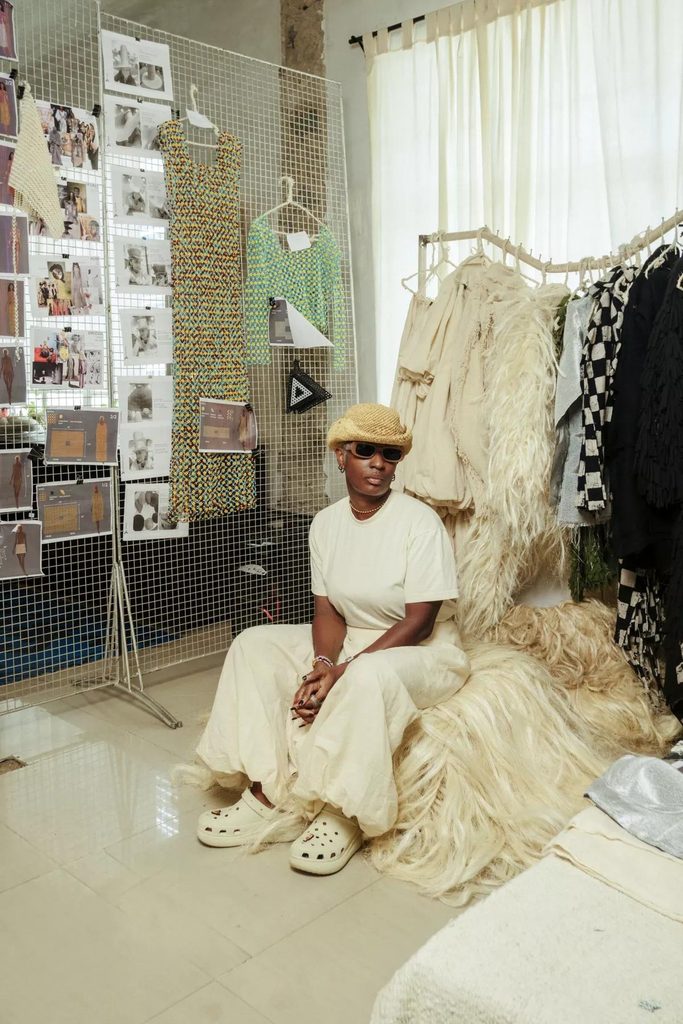
    Still from a documentary capturing Bubu Ogisi in her studio in Lagos. Photo: Zalando (https://www.voguescandinavia.com/articles/iamisigo-designer-bubu-ogisi-cphfw-debut) 

    Careers Built Before Anyone Was Watching 

    Bubu Ogisi is a good example. Born in Lagos and shaped by time in London, Paris, and Ghana, she founded IAMISIGO in 2009, built around natural dyes made from indigo, charcoal, and walnut that behave differently with every batch. Most fashion houses would treat that unpredictability as a flaw to engineer out. Ogisi built her design process around it instead. Recognition eventually followed, including a showing at Copenhagen Fashion Week and the label’s 2025 Zalando Visionary Award, but she has said plainly that Western validation was never the actual goal. She keeps returning to a different question: years from now, what will this generation of African designers have left behind? That comes from years of choosing to work a certain way with no proof it would ever be recognized. 
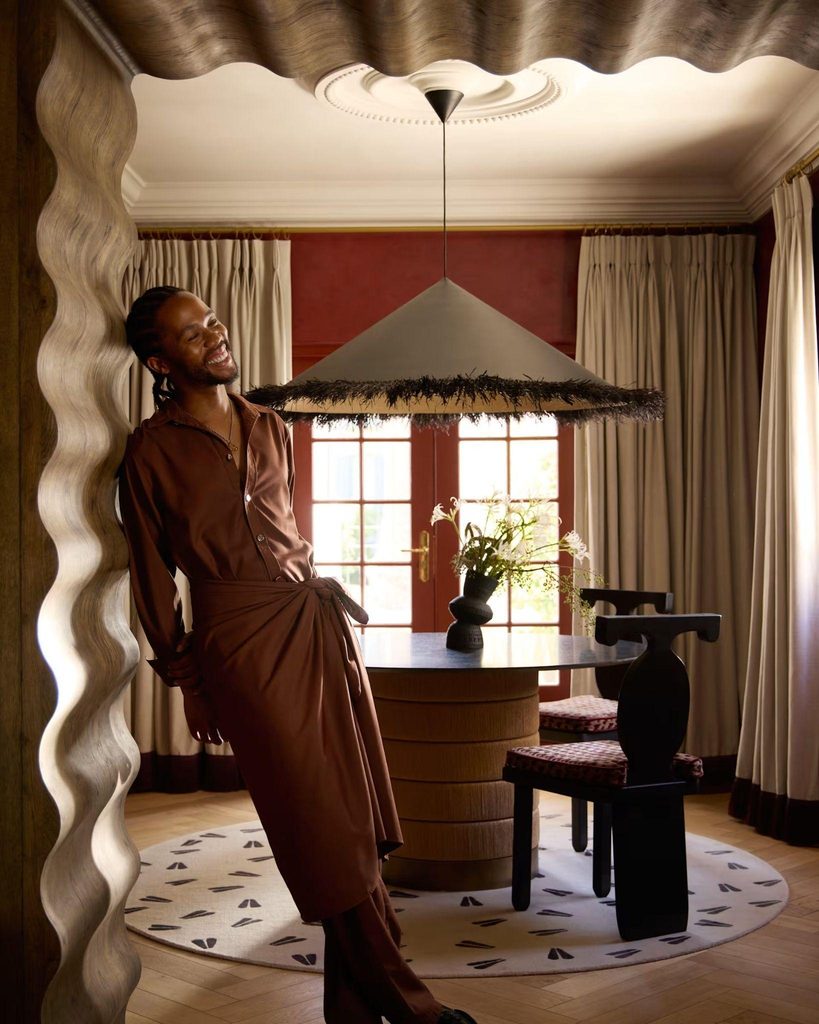
    Thebe Magugu for Belmond interview, 2026. Photo by: Inge Prins (https://www.belmond.com/en/stories/interview-meet-thebe-magugu?srsltid=AfmBOopgWZZEBR9HVNRN4OB6rMBFBbSnk06KxkT5yFs7ohrWqrE8IGAD) 

    Thebe Magugu’s story runs on a similar track. Born in Kimberley and based in Johannesburg, he grew up in a house full of women: his mother, his aunt, his grandmother, whose ordinary belongings became the raw material of his collections. Before any of that turned into fabric, he studied fashion alongside photography and media rather than design alone, and worked for other labels first to learn production before starting his own in 2017. His signature is a stubborn decision to look inward instead of outward, drawing from his family’s history rather than chasing what Paris or Milan were doing. When he won the LVMH Prize in 2019, the first African designer to do so, everyone talked about the win. Fewer talked about the years of hard work that came before it, spent on collections that were not clearly commercial. One of said collections was about women who had worked as informants during apartheid, women he tracked down and interviewed himself. 

    In both cases, the moment the world remembers was confirmation of something decided years earlier, on faith, with no evidence it would pay off. 

    Instinct, Identity, and the Trouble With Correcting Course 

    Founders get praised for trusting their gut. But instinct can just be a nicer word for habit, fear, or overconfidence. Someone who has succeeded a few times starts to treat it as proof their judgment is unusually good. 

    This is where identity gets tangled up in the decision. A company can feel like an extension of the founder, so its success feels like personal validation, and its criticism feels personal too. Once that happens, changing course gets hard: a strategy persists because the founder defended it publicly, and a harmful hire stays because removing them means admitting a mistake. 

    Good leadership requires some distance from one’s own choices: a founder has to be able to say, I made this call, and I might have been wrong. That does not erase responsibility. It is what makes fixing things possible. 

    Where Values Actually Get Tested 

    Ethics in a company usually get discussed in big, vague terms: sustainability, purpose, inclusion. The real tests are specific, answered through small, unwitnessed decisions like who takes the hit when margins get tight. Values only mean something once they cost you something. 

    This is why saying “no” matters. Some of the most important founder decisions are refusals: money with the wrong strings attached, growth that would weaken the company, a partnership

    that looks good but breaks trust. These calls frustrate investors, and they are also why a company still recognizes itself years later. 

    A founder who cannot admit uncertainty starts hiding risk instead. Healthier companies make space for disagreement before a crisis forces the issue. One bad decision can be an exception; repeated enough, it becomes the culture. Founders build products, teams, and markets, but they also build a way of deciding things. The most lasting companies are not the ones that never got it wrong. What matters is whether they could look again and live up to the principles they claimed to hold. 

    A Story of My Own 

    I have my own version of such a story. The idea of working in education had always been somewhere in the back of my mind. But it took a life changing encounter in the middle of a lagoon in the Solomon Islands to turn that vague intuition into a direction.

    I was in the Solomon Islands when I found myself having a conversation that I initially thought was simply another exchange about education and children. I was casually talking with a group of youths about the challenges children faced in learning, and what stayed with me was the gap between what adults expected from children and the conditions in which those children were actually being asked to succeed.

    Sitting there, surrounded by water and far removed from the institutional environments in which educational decisions are usually made, I began to see the problem differently. The question was not simply how to help an individual child perform better. It was what happens when the expectations placed on a child are shaped by parents, teachers, institutions, and wider social structures that may not always be aligned.

    That conversation stayed with me because it shifted the level at which I was thinking about the problem. I began to understand that educational outcomes could not always be separated from the environments in which children were expected to achieve them. That realization eventually led me to pivot toward supporting children’s educational development and academic success.

    Going into this field unprepared for the distinct challenges that emerged at each level, I experienced them as separate problems to solve. A conversation with a parent called for one kind of patience. A classroom called for another. An institution required something different again, closer to diplomacy than teaching.  At the time, I did not see these experiences as connected. Only later, with enough distance, did I begin to recognize the pattern.

    Many of the difficulties we attribute to individual children or families are inseparable from the expectations, judgments, and institutional structures that shape the environments in which they are expected to succeed. None of that was obvious from where I started. It emerged through repeated decisions.

    It meant staying in that lagoon conversation long enough to actually hear what was being said. It meant continuing to work with parents when results were slow to appear. It meant entering classrooms and allowing what happened there to challenge assumptions formed elsewhere. And eventually, it meant being willing to rebuild an entire approach once the pattern became visible.

    Looking back, it would be easy to describe that journey as though I had understood the destination from the beginning. I had not. The direction emerged because I kept making decisions in response to what I was learning.

    That, perhaps, is the part of founder stories that is easiest to miss. We often imagine that people first discover their purpose and then build toward it. In reality, purpose can become visible only after years of choosing, adjusting, questioning, and choosing again.

    The Applause Comes Later 

    Behind every founder story is a stack of decisions that will never make the official version. Some saved the company. Some nearly wrecked it. Some revealed who the founder already was, long before anyone was watching. 

    The applause, if it ever comes, arrives much later, for reasons that have little to do with how certain anyone felt while deciding.


    Sources: 

    Dixon, E. (2019). Designer Thebe Magugu wins the 2019 LVMH prize. [online] CNN. Available at: https://edition.cnn.com/style/article/thebe-magugu-lvmh-prize

    Halliday, S. (2025). Bubu Ogisi’s Iamisigo is winner of Zalando Visionary Award 2025. [online] Fashion Network. Available at: https://uk.fashionnetwork.com/news/Bubu-ogisi-s-iamisigo-is-winner-of-zalando-visionary-award-2025,1698255.html.

    Kentane, S. (2023). Sign in – google accounts. [online] Industrieafrica.com. Available at: https://industrieafrica.com/perspectives/articles/in-the-spotlight-sustainable-african-luxury-fashion-origins-iamisigo

    Shiffman, A.S. (2025). Get to know IAMISIGO designer Bubu Ogisi ahead of the brand’s anticipated CPHFW debut. [online] Vogue Scandinavia. Available at: https://www.voguescandinavia.com/articles/iamisigo-designer-bubu-ogisi-cphfw-debut

  • The Roundtable

    Subtitle: AN ONLINE MONTHLY GATHERING FOR LUXURY FOUNDERS.
    Date: November 9th, 2026
    Time: 19:00 CET
    CTA Text: RSVP FOR THE ROUNDTABLE
    Highlight: We believe real progress happens in the right room, with the right people.
    Footer: Available to all Sapēre members.

    The Roundtable is an intimate, structured space where members come together to share real challenges, exchange ideas, and support one another through honest conversation and collective intelligence.

  • Is Emotional Engagement Replacing Brand Loyalty?

    Is Emotional Engagement Replacing Brand Loyalty?

    Fifty million luxury customers walked away in two years. They were supposed to be loyal. What actually drove them away, and what should founders focus on instead?

    Loyalty has been the luxury industry’s favourite word for as long as I have worked in it. The loyal client, the loyalty programme, the lifetime value model. Whole departments exist to measure it. And then the numbers arrived. According to Bain and Altagamma, the active customer base for personal luxury goods fell from a peak of around 400 million in 2022 to roughly 330 million in 2025. Claudia D’Arpizio, who leads the study, put it without decoration: fifty million luxury consumers have either opted out of the market or been forced out of it in the space of two years.

    Fifty million people. That is not a soft quarter. That is a walkout.

    So the question in the title is worth asking properly, because the industry’s instinct is to answer it with a tool. More CRM, more points, more personalisation, another app. Deloitte surveyed 420 luxury executives for its 2026 report and found customer experience and loyalty named as the single strongest growth opportunity, ahead of everything else. They can see the problem. I am not convinced they fully grasp the root of the problem.

    Start with what loyalty in luxury actually was, because it was never what the spreadsheets said it was. It was not repeat purchase. Repeat purchase was the symptom. Underneath it sat a contract, mostly unspoken, between the brand and the client: you give me the feeling, and I will keep coming back. The feeling of distinction, of belonging to the few, of holding something that draws a line between those who understand and those who do not. The logo was the receipt for that feeling of exclusivity. The industry, being run increasingly by finance rather than by creative vision, made the classic mistake of confusing the evidence with the cause.

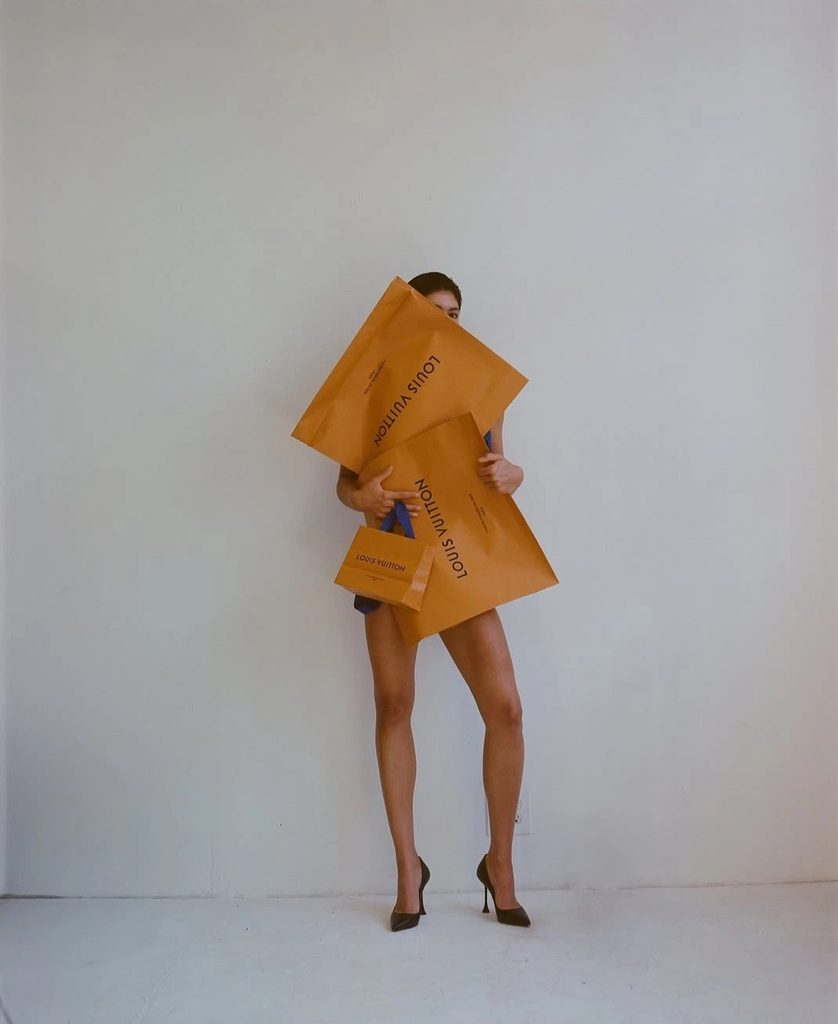
    Silent Majority, an exclusive editorial collaboration with Louis Vuitton, 2025. Photo by: Kevin Alexander (https://www.cosmos.so/e/1276579880)

    Then the receipt system stopped working. McKinsey and the Business of Fashion found that one in three American consumers had bought a dupe in the previous twelve months, and these are not the sad fakes of twenty years ago but extremely well-made look-alikes. Legal advisers now warn openly that overexposure to dupes and super-fakes degrades the perceived scarcity and exclusivity of the authentic article.

    Meanwhile, Bain reports that prices of the iconic bags rose between 50 and 70 per cent from 2019 to 2025, while genuinely new hero products became rare. Hold those two facts together. The brands raised the price of the promise while the promise itself was being photocopied on every street corner. No loyalty programme survives that arithmetic. You cannot bill someone more every year for a feeling you are delivering less of.

    And the feeling is the whole game. We discussed previously the biology of desire in the Building Luxury Brands pillar: people do not buy luxury rationally, and the moment a brand asks to be judged on usefulness and value for money, it has already left the luxury paradigm behind. Loyalty was never a rational calculation either, but an emotional state that happened to produce a facade of rational behaviour. Therefore, the question in the title is not completely accurate. Emotional engagement is not replacing brand loyalty. Emotional engagement is what brand loyalty was made of all along. What has changed is where people go to find the emotion.

    That change is well-documented. According to Bain, this tectonic shift was detected as early as 2024: spending migrated from products to experiences, hospitality, fine dining, travel, and wellness. In 2025, personal luxury goods sat roughly flat at around 358 billion euros, while experiences continued to outpace the wider market.

    There is respectable science underneath this. Research by Van Boven and Gilovich, running back to 2003, shows that experiential purchases make people measurably happier than material ones, that people revisit them in memory far more often, and, crucially, that experiences resist comparison. A handbag can be overshadowed by a bigger, shinier logo at the next table; yet a week that changed how you perceive your marriage cannot be overshadowed. It stays with you, part of who you are. Objects sit beside the self. Experiences get woven into it. If you are selling an emotion, that is a structural advantage, not a fashion.

    Now add the generation that will decide the future of luxury to the formula. Bain projects that by 2030, younger generations will account for close to 80 per cent of luxury purchases. But the behavioural finding is already measured: these clients are less loyal in the traditional sense, and they evaluate brands on cultural relevance rather than status. They started buying luxury at fifteen. They have money to spend. And they are precisely the fifty million problem in embryo, because a customer who was never loyal to your logo cannot be retained by your logo.

    A gathering at the TIMBRE wellness studio. Photo by Virginie Bichet (https://www.cosmos.so/e/394212145)

    Here is the case that intrigues me, because there is one category where loyalty is not dying at all: watches. Rolex, Patek Philippe, and Audemars Piguet all benefit from year-long waitlists, clients cultivating relationships with authorised dealers the way one cultivates a friendship, collectors who describe the years of waiting as part of the pleasure. Look at what is actually being sold there. Not a logo. A relationship, a ritual, an apprenticeship, an entry into a community of experts. The watch industry did not defend loyalty by defending the product. It defended loyalty by turning the product into an experience. That, to me, is the pivotal example. Loyalty did not disappear; it shifted the perception of the product, attaching it to relationships and rituals, not monograms.

    Though the migration to experiences is a genuine development, it is worth noting what comes with it. Experiences commodify, too. Tourism researchers now document travellers scripting and timing their activities purely for shareability, and a luxury holiday performed for Instagram is doing exactly the social work a logo used to do, only with better lighting. If what really drives all of this is distinction, the old Bourdieu machinery of drawing lines between those who belong and those who do not, then the migration from logos to experiences is not an escape from the status race. It is the race’s next venue. Which suggests where the frontier already lies: the private, the unphotographable, the room you cannot post from. When everyone can screenshot the experience, the true luxury becomes the thing that leaves no screenshot.

    So what does a founder in the first five years do with all this? Stop building loyalty programmes and start building the conditions for emotion. Loyalty programme points reward purchases; yet nobody ever feels celebrated by points. Ask instead what your client will feel at every interaction with your brand, what ritual you are inviting them into, what relationship you are offering that a dupe cannot copy and discount. Fifty million did not leave because the products got worse. They left because the feeling stopped arriving, and they found it somewhere else. Loyalty was never yours to keep. It was only ever the shadow cast by an emotion you were managing. Manage that emotion, and the shadow follows on its own.

  • Session 2 – Roberta Lee

    Session 2 – Roberta Lee

    Speaker: Roberta Lee
    Role: Founder Ethical Brand Directory
    Date: November 4th, 2026
    Time: 19:00 CET
    Caption: Polpharma Biologics office space designed by Marta Chrapka
    Coming Soon: Yes

  • Fire and Facets: The New Wave of Revolution From Homegrown Middle Eastern Haute Joaillerie Geniuses

    Fire and Facets: The New Wave of Revolution From Homegrown Middle Eastern Haute Joaillerie Geniuses

    For nearly a century, the high-luxury landscape of the Gulf Cooperation Council and the wider Levant was defined by a highly profitable, yet asymmetric, relationship with Europe. The historic salons of Paris’s Place Vendôme and London’s Bond Street viewed the Middle East primarily as an ultra-lucrative, passive consumer demographic. It was considered in the recent past as a market to be courted with sweeping romanticized narratives of the “Orient” and standardized collections of diamonds and platinum.

    Today, however, a profound paradigm shift is underway. A vibrant, highly sophisticated cohort of homegrown independent jewelers from Beirut, Jeddah, Dubai, and Amman is dismantling this velvet hegemony. By reclaiming their own cultural archives, ranging from pre-Islamic archaeological motifs and Bedouin symbolism to avant-garde Arabic typography, these designers are asserting a new form of creative sovereignty. They are no longer merely consumers of luxury; they are its authors.

    To understand the rise of these designers, one must first analyze the semiotic shift in their design language. For decades, Western luxury conglomerates considered the Middle East through generic design codes relying on repetitive mosaic patterns or literal interpretations of “Thousand and One Nights” folklore. Designers originating from Arabic countries are systematically decolonizing this aesthetic, replacing external fantasies with authentic, deeply lived regional narratives.

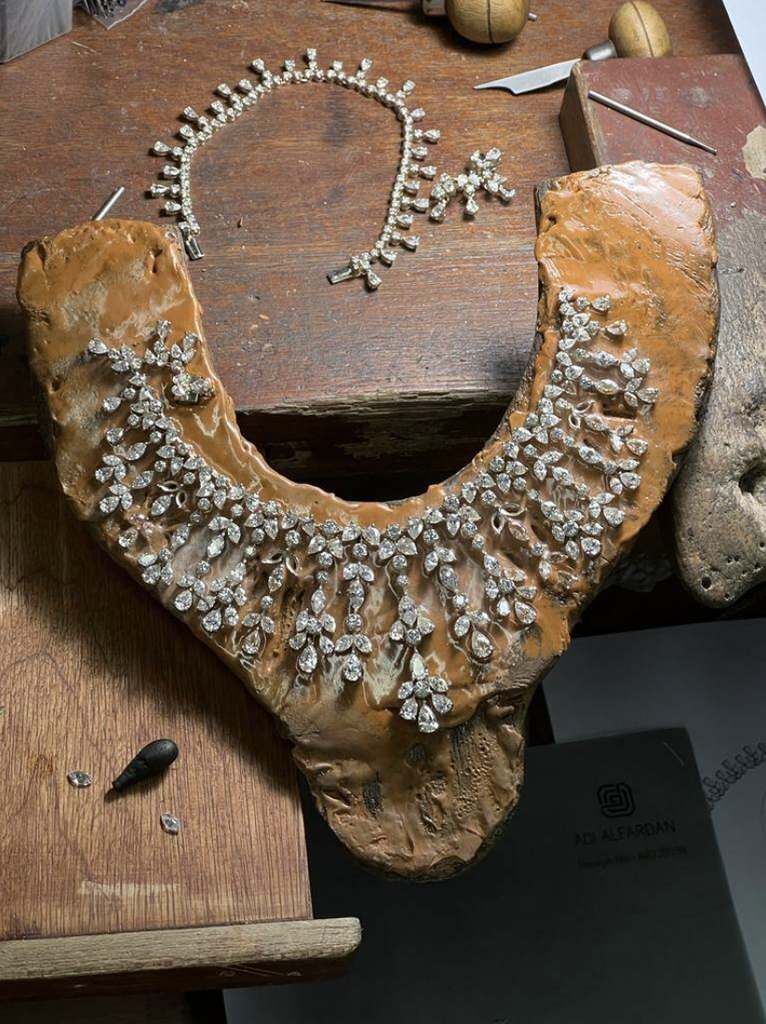
    Necklace with diamonds at the Adi Alfardan Jewelry studio, 2023. Photo by: Adi Alfardan Jewelry (https://likeabeautifuljewel.com/en/jewellery/adi-al-fardan-the-passion-for-jewellery-in-heritage) 

    This is not superficial folklore; it is a highly intellectualized design lexicon. Arabic calligraphy, for example, is stripped of its purely calligraphic or religious traditionalism. Instead, it is treated as a structural, modernist architectural element. Letters are deconstructed into minimalist geometric lines, transforming words of poetry or protection into abstract wearable sculptures.

    Consider Adi Alfardan, the Dubai-based high jewelry house that exemplifies this new era of sovereign luxury. Alfardan does not merely design jewelry; he curates legacy. By sourcing the world’s rarest natural pearls and mounting them in contemporary settings of colored diamonds, Alfardan bypasses the standardized vocabulary of European high jewelry. His pieces offer regional collectors something Place Vendôme cannot: an authentic, localized lineage fused with unparalleled bespoke craft.

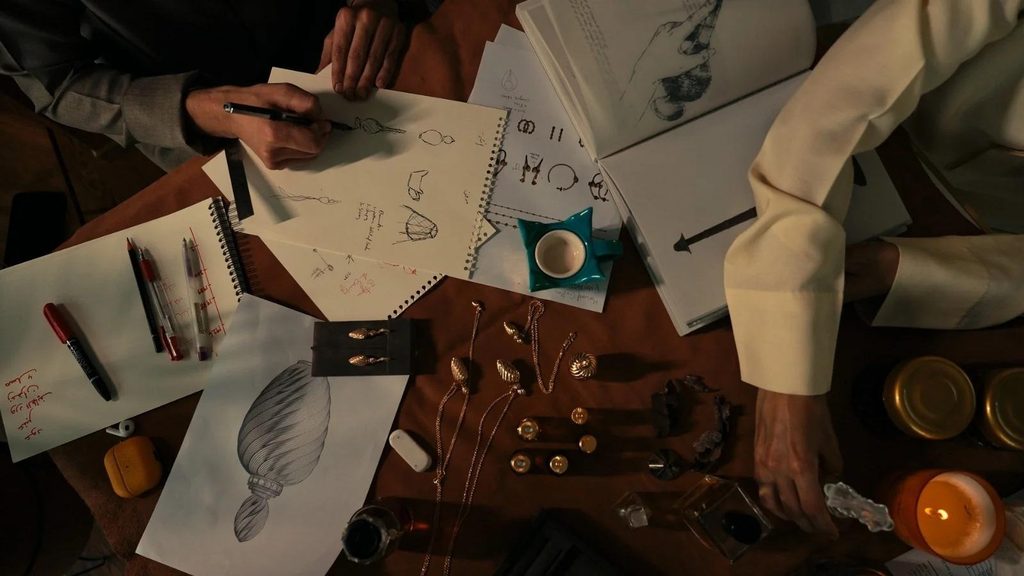
    Similarly, Beirut’s L’Atelier Nawbar uses jewelry as a medium for narrative storytelling. Founded by sisters Dima and Tania Nawbar, the brand represents a multi-generational Lebanese heritage that translates Levantine mysticism, cosmic talismans, and regional resilience into vibrant, hand-painted enamel and hand-carved gemstones. In Dubai, Gafla reimagines traditional Bedouin symbols, such as the Merwed (the classic stick used to apply kohl), transforming them into sleek, diamond-encrusted contemporary pendants that speak directly to a shared regional memory.

    Gafla’s redesigning process for Merwed collection, 2024. Photo by: Gafla Jewellery (https://gaflajewellery.com/en-fr/blogs/news/merwad-collection?srsltid=AfmBOorV78al9SadkO6cmx6TuaXuvDK7L1RaKlLZ_NTZT9gmx42bfKiW) 

    All these local designers and Maisons and using a powerful Indo-Arabian axis reimagining the Historic Trade Winds.

    A critical, often overlooked dimension of this creative renaissance is the strategic revival of the Indo-Arabian Axis. The relationship between India, the historic jewel in the crown of global lapidary arts, and the Middle East is not new; it is a centuries-old maritime romance. Historically, Gulf merchants traded prized natural pearls for Indian diamonds, rubies, and emeralds; a trading which was at its climax during the Mughal Empire.

    Today’s Middle Eastern designers are actively using this historic trade corridor to bypass the rigid, Euro-centric supply chains of Switzerland and France. Rather than relying on Parisian ateliers, regional designers are collaborating directly with master artisans in Jaipur and Mumbai.

    This is a masterstroke of provenance arbitrage. By marrying Middle Eastern creative direction with India’s unparalleled expertise in specialized techniques, local designers are creating a hybrid aesthetic that is deeply rooted on both sides. Jaipur’s lapidary ateliers allow Middle Eastern designers to source and custom-cut colored gemstones with an organic quality; one quality contrasting sharply with the clinical, machine-perfect cuts favored by Western corporate luxury brands. This Indo-Arabian synergy allows for a more agile, expressive, and culturally resonant form of High Jewelry. The Middle East becomes slowly but surely an autonomous incubator for new high jewellery.

    This creative awakening is not happening in a vacuum; it is supported by a robust, state-level institutional infrastructure. Across the GCC, governments have recognized that luxury and creative industries are vital pillars of post-oil economic diversification and cultural diplomacy.

    In Saudi Arabia, the Saudi Fashion Commission, particularly through its groundbreaking 100 Brands initiative, provides rigorous mentorship, financial advisory, and global showcase opportunities to emerging jewelers. Similarly, the Dubai Design District also known as d3 has created a physical and regulatory ecosystem where local designers can co-exist, collaborate, and access international markets.

    Crucially, the financial architecture of the region has shifted. Local venture capital firms and prominent family offices are increasingly redirecting their investment portfolios away from minority stakes in European luxury conglomerates toward direct equity investments in local creative talents. This infusion of smart capital allows independent brands to scale their supply chains, invest in secure inventory, and establish high-profile retail footprints.

    Simultaneously, the traditional historic department stores of Europe have been effectively bypassed. The hyper-digitization of the Middle Eastern market, led by luxury e-commerce behemoths like Ounass and bespoke personal shopping networks like Thread Styling, has democratized access to the consumer. Local designers no longer need the validation of a Paris Maison to reach their audience; they have direct, intimate, and immediate access to the world’s most active luxury consumers through digital platforms. 

    This strong strategic positioning allows luxury analysts to examine the difference between “Intimate Luxury” vs. “Institutional Legacy”.

    Analyzing the competitive landscape requires understanding a fundamental shift in the psychology of the modern Middle Eastern collector. The contemporary GCC consumer is among the most sophisticated in the world. They are globally educated, highly traveled, and already possess the iconic, widely available collections of the major French and Italian houses.

    Consequently, the allure of “Institutional Legacy”, the safe, predictable luxury of wearing the same diamond bracelet as thousands of others, is waning. It is being replaced by a desire for “Intimate Luxury”, pieces that carry emotional resonance, intellectual depth, and cultural specificity.

    GCC designers do not seek to compete with European Maisons on sheer volume or marketing spend. Instead, they win on cultural intimacy. A piece of jewelry from a local designer is a conversation starter, a statement of identity, and a declaration of pride in the region’s booming creative renaissance.

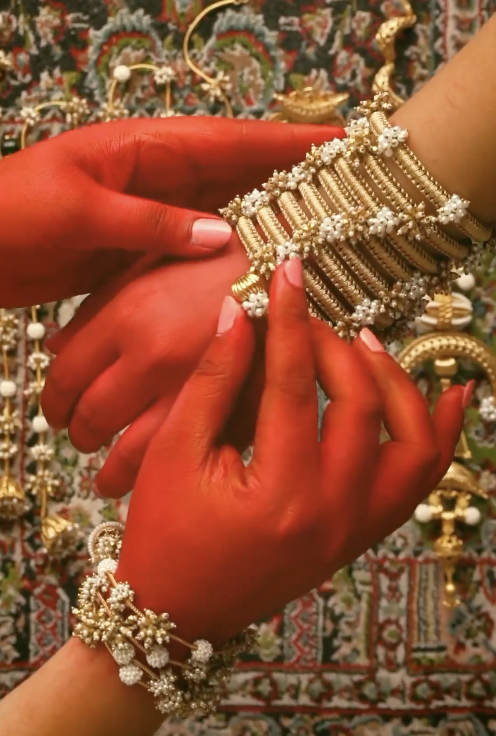
    Jewelry from the BASRAA Collection by Amama, 2024. Photo by Umang Kapoor (https://www.cosmos.so/e/562517543) 

    This situation is so unique that we can question the possible risks and, first, the natural regional ceiling these brands can reach.

    The most pressing strategic question facing GCC designers is scalability beyond their domestic market. The cultural intimacy that gives these brands their competitive edge , Bedouin symbolism, Emirati pearl-diving heritage, Levantine talismanic motifs , is also, paradoxically, what limits their legibility to non-regional consumers despite the fact that Middle East has inspired as well European Maisons in the past.

    A collector in Riyadh intuitively understands the emotional weight of a Merwed-inspired pendant. A client in Shanghai or São Paulo does not. European maisons solved this problem decades ago by building universal mythologies (Cartier’s panther, Van Cleef’s Alhambra clover) , symbols deliberately emptied of specific cultural content to travel globally without friction. Middle Eastern brands have yet to develop a strategic framework for translating cultural specificity into global desirability without diluting the very authenticity that defines them. Until they do, the risk of remaining high-end regional brands even if they are respected is real.

    The Indo-Arabian supply chain is a genuine strategic advantage, but it carries significant operational vulnerabilities. The master artisans in Jaipur and Mumbai upon whom many of these brands depend on, represent an aging labor pool. Skilled Kundan setters and Meenakari enamelers, whose artistry is irreplaceable, are retiring faster than new artisans can take their place. A young entrepreneur who builds their entire value proposition on hand-carved Indian gemstones and artisanal techniques must confront a hard question: what happens when the hands disappear?

    Furthermore, quality control across geographically fragmented ateliers is inherently difficult. Where a single flawed setting can destroy a piece worth tens of thousands of dollars, maintaining the consistency required for high jewelry demands physical presence, deep relationships, and rigorous protocols that take years to build.

    It would be analytically naive to treat European luxury houses as passive incumbents. They are not. Cartier, Van Cleef, Bvlgari, and Chanel Haute Joaillerie have significantly increased their Middle Eastern cultural programming from region-specific high jewelry collections to local atelier partnerships and Arabic-language brand storytelling. They possess vastly superior marketing budgets, global distribution networks, and decades of accumulated brand equity. The competitive moat of homegrown designers is real but narrow. It must be continuously deepened through innovation, not merely defended through rhetoric.

    Still from the Journey of Wonders showcase by Cartier in Dubai, 2025. Photo by: Cartier (https://www.voguearabia.com/article/cartier-a-journey-of-wonders-exhibition-al-shindagha-museum) 

    As “heritage-driven design” becomes commercially validated, the temptation to treat culture as a marketing input rather than a lived practice grows. Superficial deployment of calligraphic motifs or archaeological references without natural genuine scholarly depth or community engagement risks producing a form of self-exoticism that is ultimately as hollow as the Orientalist tropes it claims to replace. Expert consumers will detect this inauthenticity quickly. Doing this will have a severe impact on brand reputation accused of cultural over usage for commercial purposes in a region where cultural pride and symbolism is one of the strongest in the world. As for European brands, the usage of local culture must be cleverly done with details more than a full yearly work and collections inspired by local culture as the one and only inspiration.

    The rise of independent jewelry designers across Beirut, Jeddah, Dubai, and Amman is far more than a fleeting trend; it is a structural realignment of the global luxury economy. By leveraging their rich historical archives, reclaiming the ancient Indo-Arabian trade routes for artisanal production, and utilizing state-backed infrastructure, these designers have successfully built globally competitive brands.

    As they continue to capture the hearts and portfolios of the region’s elite, these “Desert Diamonds” are proving that the future of luxury lies not in the homogenization of global brands, but in the fierce, uncompromising celebration of localized, sovereign heritage. The new Silk Road of Haute Joaillerie has been paved, and this time, the creative direction is coming entirely from within.

  • The Voice That Cannot Be Counterfeited

    The Voice That Cannot Be Counterfeited

    How Luxury Brands Build Their Unbreakable Tone of Voice

    If we look at how luxury brands are typically built, the visual system almost always comes first: the monogram, the colour, the silhouette. Language is treated as decoration wrapped around an image that already does the work. Yet if you take away the logo and the product entirely, hand someone a single sentence pulled from a caption or a press release, and a trained eye can still guess the house behind it. That ability is the result of a communication system built with the same rigour as a print, but expressed through vocabulary, rhythm, and syntax rather than fabric and colour.

    This is where most brands stumble. A visual identity can be briefed and produced by an agency in weeks. A voice cannot. It has to behave like a personality rather than a specification; consistent under pressure, and recognisable without a signature (Aaker, 1997). Tone of voice, in this sense, functions less like a style guide and more like a living organism: it adapts to context yet remains unmistakably itself. This matters now more than ever, since AI-generated copy has made competent, on-brief language instantly available to anyone.

    Fashion houses that understand this operate at two extremes of the same discipline. The Row constructs its voice almost entirely through omission, treating silence as authority. Balenciaga does the opposite, building identity through rupture and deliberate discomfort. Both succeed for the same reason: neither can be reverse-engineered from a single post, because both are systems, not styles. This article examines how that system is built, from campaign copy to a practical framework for testing whether a brand’s voice holds up once its name is taken away.

    The Row and Balenciaga: Two Ends of the Same Discipline

    The tone of voice in fashion tends to sit somewhere on a spectrum between whisper and manifesto. At one end, meaning is built through withholding; at the other, through excess. The Row and Balenciaga occupy these opposites almost perfectly, and comparing them shows that a distinctive voice has less to do with volume than with discipline.

    The Row’s communication is built on the scarcity of language itself. The brand rarely issues statements, avoids explanatory captions, and lets garments circulate without narrative scaffolding (FashionUnited, 2025). Even its most viral product moments, such as the Margaux bag, were left to spread through organic conversation rather than brand-authored commentary (FashionUnited, 2025). This is not an absence of strategy but a strategy of absence: every unexplained image asks the audience to supply meaning rather than receive it, which is precisely what makes the brand’s rare public statements carry disproportionate weight.

    Balenciaga’s voice works through the opposite mechanism: rupture. Its campaign language and visual grammar are built to unsettle expectation, using irony, cultural remix, and calculated discomfort to keep the house at the centre of debate (Latterly.org, 2026). Scholars researching the brand’s 2022 crisis describe this as a deliberate register long before it became a liability, noting that shockvertising is designed to be “startling and offensive by intention rather than accident” (The Conversation, 2025). Provocation, in other words, is not a lapse in Balenciaga’s tone. It is the tone.

    What connects these two brands is not proximity in style but consistency in method. Neither voice could survive being copied for a single caption, because neither is really a caption-level choice. Silence reads only as authority when it is sustained everywhere; disruption reads only as intention when it repeats predictably enough to be recognised as a signature rather than an accident. The lesson for any brand watching from the middle of the spectrum is that tone of voice is not about tone at all. It is a rule system, applied without exception.

    Language as a Strategic Asset, Not a Supporting Layer

    Most brand guidelines still treat language as an afterthought, developing it only after the logo, colour palette, and campaign visuals have already been locked. This order of business reflects a widespread assumption in luxury marketing: that words communicate an identity which visuals have already established. Recent research on brand linguistics challenges this assumption directly, arguing that language does not merely describe brand meaning but actively shapes how consumers identify, experience, and evaluate a brand in the first place (Schmitt, 2017).

    This reframing matters because it changes what a copywriter is actually responsible for. Vocabulary, sentence rhythm, and syntax are not stylistic garnish; they are mechanisms that influence recognition and recall in the same way a colour palette does. A brand that consistently favours short, declarative sentences is making a claim about confidence and control, whether or not that claim is stated outright. A brand that writes in long, carefully qualified sentences is making the opposite claim, regardless of what the product itself communicates visually. The discipline that constructs this kind of coherence has existed under its own name for decades: verbal identity, pioneered as a practice distinct from copywriting or advertising language, with its own frameworks, audits, and specialists (Simmons, in Clifton and Blackett, n.d.).

    Once language is understood as a structural layer rather than a decorative one, a further principle follows: what a brand chooses not to say is as strategic as what it says. The Row’s near-total silence and Balenciaga’s constant provocation are not just different amounts of communication; they are different linguistic strategies operating on the same underlying logic, where every word, or the deliberate absence of one, functions as a signal that visual identity alone cannot conceptualise. 

    From Campaign to Caption: Building a Coherent System

    A recognisable voice rarely lives in a single document. It is distributed across dozens of smaller, seemingly minor decisions: the phrasing of a press release, the caption under a runway image, the register of a customer service reply, the syntax of a manifesto posted without further explanation. None of these formats carries the brand’s identity on its own. What creates recognition is the fact that all of them are governed by the same underlying rules, even as their tone shifts from one channel to another.

    This is where the distinction between voice and tone becomes most significant. Voice is the constant: the personality, vocabulary, and syntactic habits that remain stable regardless of context. Tone is the variable: the way the same personality modulates itself depending on the situation, the platform, or the required emotional register. A brand can sound more formal in a press release and more intimate in a caption without contradicting itself, provided the underlying voice, its values, its vocabulary, and its characteristic rhythm stay traceable underneath both. The failure mode is not variation in tone; it is a voice that disappears entirely once the context changes. 

    This coherence is not merely an aesthetic preference. Keller’s foundational model of customer-based brand equity argues that a brand’s equity is built from the associations consumers hold in memory, and that those associations are strengthened or weakened by every marketing interaction they encounter (Keller, 1993). A verbal identity that behaves inconsistently across touchpoints does not simply look sloppy; it actively erodes the distinct, favourable associations that constitute brand equity in the first place. Each inconsistent message competes with, rather than reinforces, everything the audience has already learned to expect. In practice, this means a manifesto, a product description, and a one-line Instagram caption should be treated as expressions of a single grammar rather than three separate writing tasks. The words change. The system producing them should not.

    The Authenticity Test: Can It Be Recognised Without a Name?

    If a brand voice is built rather than merely styled, it should survive a simple test: strip away the logo, the byline, and any visual context, and ask whether the remaining sentence can still be attributed correctly. This is not a hypothetical exercise. It is a method already used in practice: reviewers are given a mix of a brand’s content and its competitors’ with all branding removed, and asked to identify which text belongs to which house (Atom Writer Blog, 2026). A voice that fails this test, one that could have been plausibly written by any competitor in the category, has not actually been thought through. It has only been decorated.

    This framework gives the abstract idea of “tone of voice” something closer to an empirical standard. A genuine verbal identity should be identifiable through vocabulary alone, through characteristic sentence length, through the presence or deliberate absence of certain words, and through rhythm that persists whether the text in question is a manifesto or a two-line caption. Brands whose voice has become genuinely distinctive are already discussed in these terms, described as recognisable in a blind test even without any visual cue attached (Vista Social, 2025). The Row would likely pass this test through restraint alone; a fragment of unexplained, unadorned description would already feel unmistakably its own. Balenciaga would likely pass through friction; a sentence built to unsettle rather than reassure carries its own fingerprint regardless of context.

    What this test ultimately measures is not creativity but discipline. Imitation is easy to produce at the surface level, a wide sentence here, a knowing irony there, but it becomes far harder to sustain the same restraint or rupture across hundreds of unrelated pieces of copy, written under different pressures, for different purposes, over years rather than weeks. A voice that cannot be counterfeited is therefore not the most original one. It is the one applied with enough consistency that imitation collapses under its own inconsistency the moment it is tested at scale.

    Building the System: Where Emerging Brands Should Start

    For a brand without a century of archive behind it, none of this is out of reach; it is simply unbuilt. The starting point is not a tagline or a mood board of adjectives, but an audit of existing language: pull every caption, product description, and email sent in the last six months, and ask which words repeat, which sentence lengths dominate, and whether a stranger could sort them from a competitor’s without seeing the logo. Most young brands discover the answer is no, not because their writing is bad, but because it has never been treated as a system with rules, only as a series of one-off decisions made under a deadline.

    From there, the useful exercise is not reconstructing a voice from scratch but deciding on a clear set of verbal boundaries, since constraints create distinctiveness faster than aspirations do. A brand that commits to never using superlatives, never explaining a reference, or never posting without a verb in the first sentence has already built a stronger voice than one with a thirty-page style guide full of approved adjectives. This is also where a founder’s personal register, if genuine rather than performed, can substitute for the institutional memory a young house lacks. A standardised way of describing a fabric or a process becomes, with enough repetition, as recognisable as an heirloom monogram.

    The final step is treating that voice with the same protectiveness applied to a logo or a print. If a copywriter, an intern, or a generative tool can produce a caption indistinguishable from the brand’s own without reference to a style guide, the guide has failed. Consistency across turnover, across agencies, and across the pressure to sound like whatever performs well that week is what eventually turns a set of preferences into something closer to a personality, and personalities, unlike taglines, are what audiences actually learn to recognise.

    Conclusion

    A logo can be licensed, a colour palette pulled from a Pantone chart, a silhouette reverse-engineered within a season. None of this requires understanding the brand, only observing it. A voice resists this kind of extraction because it is not a surface-level feature. It is what emerges when values and vocabulary are applied across thousands of small decisions that no single competitor ever sees in full. Copying the words without copying the discipline behind them produces only a plausible facade, not the product itself.

    This has particular urgency now. As generative tools make competent, on-brief copy instantly available to anyone, fluency stops being a differentiator. Far fewer brands can sound like themselves under pressure, across every channel, without a name attached. For emerging brands, this is an opening rather than a disadvantage: a voice built with real constraints and enough repetition can pass the same test as a house with a century behind it, because the test was never about age. It was always about discipline.

    The question worth asking of any brand is not whether its voice sounds distinctive in a single campaign, but whether it would still be recognisable with the name removed. That test, more than any style guide, is what separates a voice from an imitation.

    References

    Aaker, J.L. (1997) ‘Dimensions of brand personality’, Journal of Marketing Research, 34(3), pp. 347–356. Available at: https://journals.sagepub.com/doi/10.1177/002224379703400304 .

    Atom Writer Blog (2026) How to measure brand voice consistency: KPIs, scoring, and automated frameworks. Available at: https://www.atomwriter.com/blog/measure-brand-voice-consistency/.

    FashionUnited (2025) The Row and strategic power of silent marketing. Available at: https://fashionunited.com/news/fashion/the-row-and-strategic-power-of-silent-marketing/2025122969797.

    Jones, C.W. (2025) ‘Balenciaga’s controversial new campaign and the long history of “shockvertising”’, The Conversation. Available at: https://theconversation.com/balenciagas-controversial-new-campaign-and-the-long-history-of-shockvertising-195778.

    Keller, K.L. (1993) ‘Conceptualizing, measuring, and managing customer-based brand equity’, Journal of Marketing, 57(1), pp. 1–22.

    Latterly.org (2026) Balenciaga marketing strategy: provocative campaigns, celebrity hype, and virality. Available at: https://www.latterly.org/balenciaga-marketing-strategy/.

    Schmitt, B. (2017) ‘Brand linguistics: A theory-driven framework for the study of language in branding’, Journal of Consumer Psychology, 27(4), pp. 508–531. Available at: https://www.sciencedirect.com/science/article/abs/pii/S0167811617300058 .

    Simmons, J. (n.d.) cited in Clifton, R. and Blackett, T. (eds.) Brands and Branding. Available at: http://www.culturaldiplomacy.org/academy/pdf/research/books/nation_branding/Brands_And_Branding_-_Rita_Clifton_And_John_Simmons.pdf.

    Vista Social (2025) Brand voice guidelines examples: Why consistency matters. Available at: https://vistasocial.com/insights/brand-voice-guidelines-examples/.

  • The Language of Luxury Spaces

    The Language of Luxury Spaces

    Guest: Sharòn Cohen Moore – Founder of ALTRN, Co-Founder of Hencò & Partners
    Duration: 55 minutes
    Episode: 2


    In this conversation, we explore how luxury brands are translated into physical spaces, and why architecture and design play a crucial role in shaping perception, emotion, and customer experience. Sharòn shares insights from over 25 years of working with leading luxury houses, discussing how thoughtful design strengthens brand identity, creates meaningful experiences, and influences the future of luxury retail and hospitality.

  • NEXT EVENT

    Label:Live council – November 4th- 19:00 CET
    Link:
    Background: #332c0f
    Text Color: #FFFFFF

  • A founders path

    A founders path

    Guest: Zoë Lotte Briët – Founder and CEO Sapēre Publication
    Moderator: Shahzad Haider – Founding Director of Art and Luxury Intelligence.
    Duration: 17 minutes
    Episode: 1

    In this conversation we’re exploring the story behind Sapēre, from the initial idea and the gap that inspired it, to how it evolved into an ecosystem for luxury founders.

    We discuss what Sapēre is, who it’s built for, the vision behind it, and why we believe the future of luxury will be shaped by the people building it.